Coastal Home Veneer vs. Solid Wood: 5-Year Cost Insights in Singapore
Choosing a dining table, wardrobe, or bed frame for a Singapore home is not only about the purchase price. Moisture, lift access, sunlight, repair methods, and the length of time you keep each piece all affect the real cost over five years. For coastal-style interiors in Tampines, Bedok, and Punggol, veneer and solid wood each have credible advantages, but they behave differently in a humid apartment environment.

At MIDHILL, we work with solid wood furniture made for long-term use, backed by a 10-year structural warranty and lifetime refinishing. To compare the two options fairly, the figures below include purchase cost, estimated care costs, and likely repair or replacement expenses over 60 months. Prices are stated in SGD and include GST.
What is the real 5-year cost of veneer versus solid wood?
The real five-year cost depends on the initial price, the rate of material loss, maintenance, and repair. A practical comparison for one dining table might look like this:
- Mid-range veneer dining table: SGD 1,600 including GST, with about SGD 320 in estimated care, repair, and one partial replacement over 60 months. Total: approximately SGD 1,920.
- Mid-range solid wood dining table: SGD 2,600 including GST, with about SGD 180 in estimated refinishing and maintenance. Total: approximately SGD 2,780.
- Premium solid wood dining table: SGD 4,200 including GST, with about SGD 150 in estimated care over 60 months. Total: approximately SGD 4,350.
These are planning estimates rather than guarantees. They assume normal indoor use, no flooding, and maintenance consistent with the supplier’s instructions. The calculation also treats furniture as part of a furnishing budget rather than something expected to be discarded after a few years.
For a wardrobe, the same principle applies. A 180 cm wide veneer wardrobe might cost SGD 1,450 including GST. If veneer edges lift or a panel needs replacing after 36 months, an SGD 300 repair could raise the five-year figure to SGD 1,750 before routine cleaning. A comparable 180 cm solid wood wardrobe at SGD 2,450, with SGD 220 of maintenance and refinishing, reaches SGD 2,670. The solid wood piece starts higher, yet its repairability can make the gap narrower if the buyer values future refinishing.
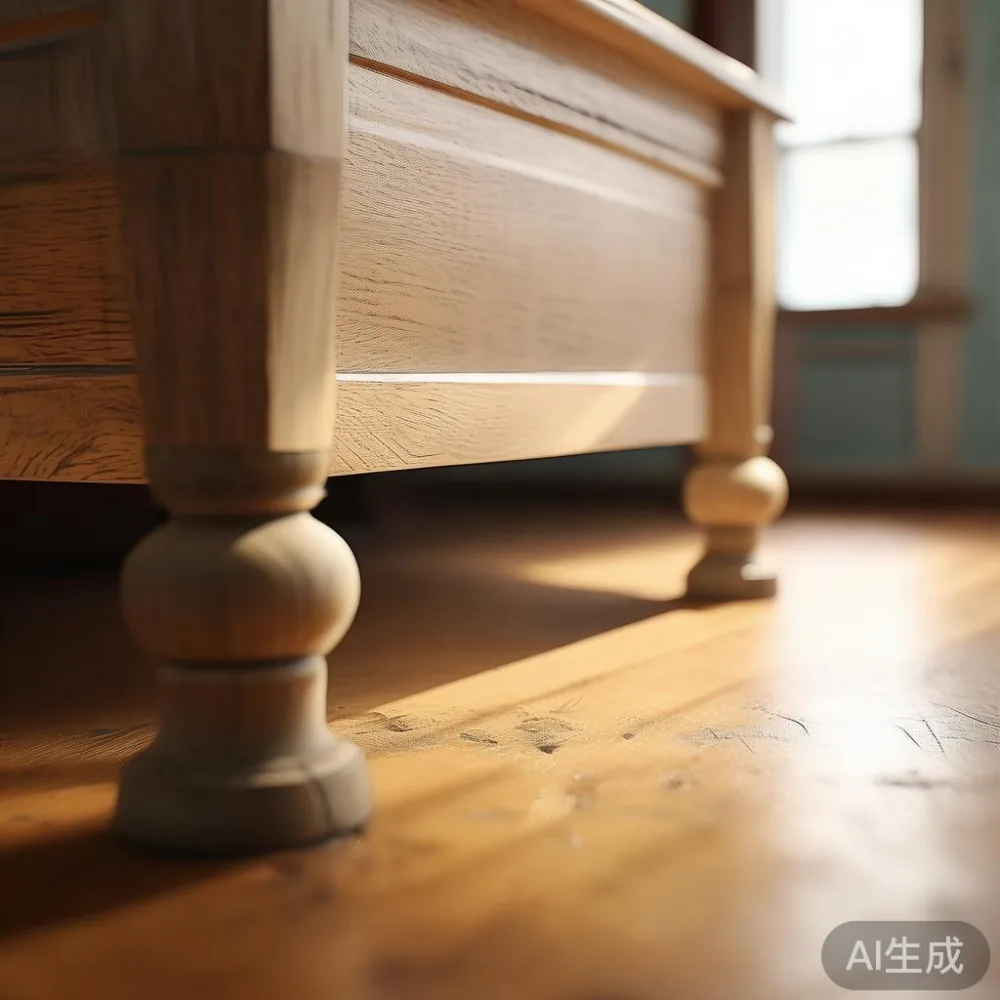
These comparisons are why coastal style furniture should be assessed over more than a single shopping trip. A light oak or ash appearance may suit an HDB flat, while warmer timber tones can make a Punggol condo feel more established. The appearance is only one line in the ownership calculation.
How much do veneer and solid wood cost to buy in Singapore?
Entry prices vary by dimensions, timber species, hardware, and finish. A useful 2025 Singapore planning range is:
- Veneer bed frame, 160 cm: SGD 700 to SGD 1,200.
- Solid wood bed frame, 160 cm: SGD 1,100 to SGD 2,000.
- Veneer nightstand, 45 cm: SGD 220 to SGD 450.
- Solid wood nightstand, 45 cm: SGD 380 to SGD 750.
- Veneer dining table, 160 cm: SGD 1,000 to SGD 1,800.
- Solid wood dining table, 160 cm: SGD 1,800 to SGD 3,600.
- Veneer wardrobe, 180 cm: SGD 1,000 to SGD 2,000.
- Solid wood wardrobe, 180 cm: SGD 1,800 to SGD 4,000.
A Singapore sale often offers a veneer table at SGD 1,450 and a solid wood table at SGD 2,650. Over five years, buyers should add no more than the likely cost of one repair, appropriate refinishing, and replacement hardware. They should also account for delivery and access constraints. MIDHILL provides free shipping for orders above US$350, though the final delivery charge to a Singapore address must be confirmed because freight, distance, and lift access differ.
The lower purchase price can be sensible for a first flat, a rental property, or a frequently changed interior. It is less persuasive when the buyer wants a family dining table, a frequently used solid wood sofa frame, or a wardrobe that can be restored rather than replaced. The phrase cheap Italian light luxury furniture may attract attention, but price alone cannot confirm timber construction or long-term repairability.
How does Singapore humidity change the comparison?
Singapore’s climate makes construction details more important than a showroom finish. A veneer dining table may use a 20 mm engineered board, a 0.6 mm oak veneer, and plywood backing. A quality product can perform well when its edges are sealed and the surface is protected from water. If a drink is left on an exposed edge, however, the veneer can bubble or peel while the substrate remains intact.
Solid wood expands and contracts with humidity. That movement does not automatically mean failure; it can create seasonal gaps or small surface checks that refinishing may address. The real risks are unsealed end grain, standing water, and poor installation. In a compact HDB kitchen, a solid wood dining table should have a finish renewed when the surface becomes dull, and spills should be wiped within 15 minutes.
Lift and corridor widths affect both delivery and future replacement. A standard HDB lift opening may be only 70 cm wide and 100 cm deep, while a service lift can offer around 140 cm of width. A wardrobe delivered as one 180 cm panel cannot enter through a narrower opening, so flat-pack construction or balcony staging may be required. Last month I visited a Tampines HDB flat during a furniture delivery, and the service lift measured 82 cm at its narrowest point. A 120 cm solid wood nightstand would not pass upright; disassembling the drawer and lifting it in pieces took 18 minutes. A veneer wardrobe in flat boxes reached the bedroom in 25 minutes and required less handling.
That experience shows why delivery logistics belong in the five-year calculation. A cheap replacement still costs money if it requires extra movers or balcony assembly. MIDHILL’s delivery terms should be checked for the exact building, access date, and packaging required.
Which option needs less maintenance and repair?
Veneer usually needs less work in its early years because the factory can apply a thin, consistent surface finish. Daily wiping with a damp cloth and immediate removal of spills may be enough. Over 60 months, budget roughly SGD 10 to SGD 20 per month for veneer care, equivalent to SGD 600 to SGD 1,200, although this range includes optional waxing or localized repairs rather than routine wiping alone.
Solid wood can develop more visible marks, scratches, and colour variation. Those are maintenance issues rather than automatic defects. Light sanding followed by a compatible finish can restore many surfaces. Budget SGD 200 to SGD 400 for a five-year care reserve on a dining table or bed frame. A small scratch kit costing SGD 25 to SGD 60 helps with minor marks, but deep gouges can require professional refinishing.
Doors and drawer runners often wear out before the cabinet body. For a wardrobe, allow SGD 40 to SGD 120 per roller or runner over five years, depending on use. For a bed frame, inspect bolts twice a year and allow SGD 30 to SGD 80 for replacement fittings. Hardware represents a meaningful share of ownership costs: a 160 cm veneer bed frame may need SGD 60 to SGD 150 in fittings, while a comparable solid wood bed frame may need the same amount if its construction is engineered properly.
Light luxury should not mean neglecting care. American light luxury often combines pale upholstery, clean profiles, and durable timber details. Whether the frame is veneer or solid wood, the finish still needs protection from pets, keys, cooking steam, and direct afternoon sun.
Is solid wood always more economical over five years?
No. Solid wood is more economical over five years when it will be repaired or refinished and used beyond its initial appearance. It is less economical when it is treated as disposable décor, placed in a rarely used room, or bought mainly for the lowest initial outlay.
Consider a solid wood sofa at SGD 3,200 with a five-year care reserve of SGD 250, giving SGD 3,450 total. A veneer alternative at SGD 1,900 with SGD 450 in likely surface and edge repairs gives SGD 2,350. The solid wood sofa wins only if the buyer values the frame’s service life and resale potential. The same arithmetic applies to a marble table: a marble-look surface with a manufactured base may cost SGD 900, while a genuine marble top can reach SGD 2,600. Marble is neither veneer nor solid timber, and its brittleness, sealing, and professional installation costs require a separate calculation.
One useful rule is to compare the price per expected year of use. A SGD 2,700 solid wood dining table kept for 15 years costs about SGD 180 per ownership year before care. A SGD 1,500 veneer table replaced after 8 years costs SGD 187.50 per year. Those figures do not include resale value, but they make the time horizon visible.
For buyers searching for Italian light luxury for office, the relevant question is not whether Italian styling uses veneer. It is whether the desk, storage cabinet, or meeting table has a stable core, replaceable hardware, and a finish suited to Singapore’s humidity. A solid wood dining table can provide the same visual discipline as veneer while offering a repair path that suits long-term ownership.
How do you choose French provincial bed and coastal-style bedroom furniture?
When considering how to choose French provincial bed, start with the structure and the room. A French provincial bed with curved posts, carved details, or a padded headboard usually uses mixed materials, so the timber claim should be checked separately. A coastal style bedroom generally relies on pale timber, restrained ornament, linen textures, and uncluttered proportions. Clear dimensions make a small HDB bedroom feel wider: a 160 cm bed leaves only 50 cm beside it in a 260 cm-wide room, while a 140 cm bed leaves 60 cm.
For anyone asking how to style Japanese sofa in room, low profiles, neutral fabrics, and a simple timber base can create a calm coastal style composition. The practical difference lies in the base construction. A solid wood base may be heavier, perhaps 70 kg for a 180 cm frame, compared with 45 kg for an engineered base. Confirm that the lift can carry at least 500 kg and that the corridor turn provides enough clearance for the chosen dimensions.
For storage, the question of how to style European light luxury wardrobe in apartment involves proportion, finish, and reach. A 180 cm wide, 210 cm high wardrobe is visually substantial in a 280 cm-wide bedroom. Lighter coastal style tones reduce visual weight, but they should not be confused with inferior moisture protection. Ask whether the back panel, edges, and drawer bottoms are sealed.
When comparing a MIDHILL French provincial bed with a veneer version, check the headboard, side rails, slats, and joints. MIDHILL offers a 10-year structural warranty, while lifetime refinishing applies to qualifying solid wood products and their finish. Terms should be confirmed at purchase because coverage differs from ordinary wear or accidental damage.
What should a Singapore buyer include in the five-year budget?
Use a worksheet with six columns: purchase price, delivery, assembly, protection, repair, and disposal. For one 160 cm bed frame, a realistic budget could be:
- Veneer option: SGD 950 purchase, SGD 80 delivery and assembly, SGD 120 protection and small repairs, SGD 80 hardware reserve, SGD 50 disposal allowance. Total: SGD 1,280.
- Solid wood option: SGD 1,550 purchase, SGD 100 delivery and assembly, SGD 100 refinishing and protection, SGD 80 hardware reserve, SGD 0 disposal allowance if refinishing or reselling is planned. Total: SGD 1,830.
Protection products matter. A quality mat or felt pad costs SGD 3 to SGD 10. A breathable cover for a wardrobe can cost SGD 25 to SGD 70. UV-filter film for a bedroom window costs around SGD 45 per square metre, while a humidifier is less important in Singapore than steady airflow and distance from walls.
Check the return and warranty terms before paying. MIDHILL provides 14-day returns, subject to its stated conditions, and a 10-year structural warranty. These provisions reduce some of the uncertainty around furniture suited to a Singapore apartment. Confirm whether assembled pieces, mattresses, custom dimensions, and delivery damage are covered in the same way.
Buyer should also avoid false precision. The exact five-year cost depends on use, climate control, pets, children, and care. The figures here are decision ranges, not invoices. A buyer who protects a solid wood dining table from standing water and refinishes it once may spend less over time than someone who replaces veneer panels twice.
What is the most practical choice for coastal-style homes?
Veneer offers the lower initial cost, lighter delivery, and a wide range of consistent finishes. It can be a sensible option for HDB flats, rental homes, and wardrobes that may move with the household. Solid wood costs more at purchase but gives the buyer a surface that can often be sanded and restored. For a primary family dining table, frequently handled nightstand, or heirloom-style bed frame, that repairability carries measurable value.
In Tampines, Bedok, and Punggol, coastal style works best when proportions and construction are treated together. Pale timber, soft upholstery, and a marble table can create a light-luxury room without making the home feel crowded. Post-modern light luxury can pair curved forms with clean timber lines, while French provincial details can soften a compact bedroom. The furniture still has to fit the lift, corridor, doorway, and daily routine.
For most buyers keeping furniture for 10 years or more, the five-year comparison usually points toward solid wood when the piece is central to daily life. Veneer remains practical for secondary pieces and tighter initial budgets. The strongest choice is not a label; it is furniture with sound construction, clear warranty terms, manageable dimensions, and a finish that can be maintained in Singapore conditions.