Veneer vs Solid Wood in Coastal Style Homes: A Singapore Owner's 5-Year Cost Reality Check
I still remember the afternoon my colleague Priya nearly cried in the MIDHILL showroom in Foshan. She had just watched a sales consultant tap two identical coastal-style nightstands with a knuckle. One rang hollow. One rang like a bell. The price tags told the rest. S$380 versus S$760 for what looked, at a glance, like the same white-oak finish. "But it's the same colour, same size," she whispered. Five years later, after a Bedok HDB corridor move, one Tampines lift ride, and one Punggol humidity wave, her phone showed me the difference. This article is the honest 5-year cost ledger I wish someone had handed her on that day.
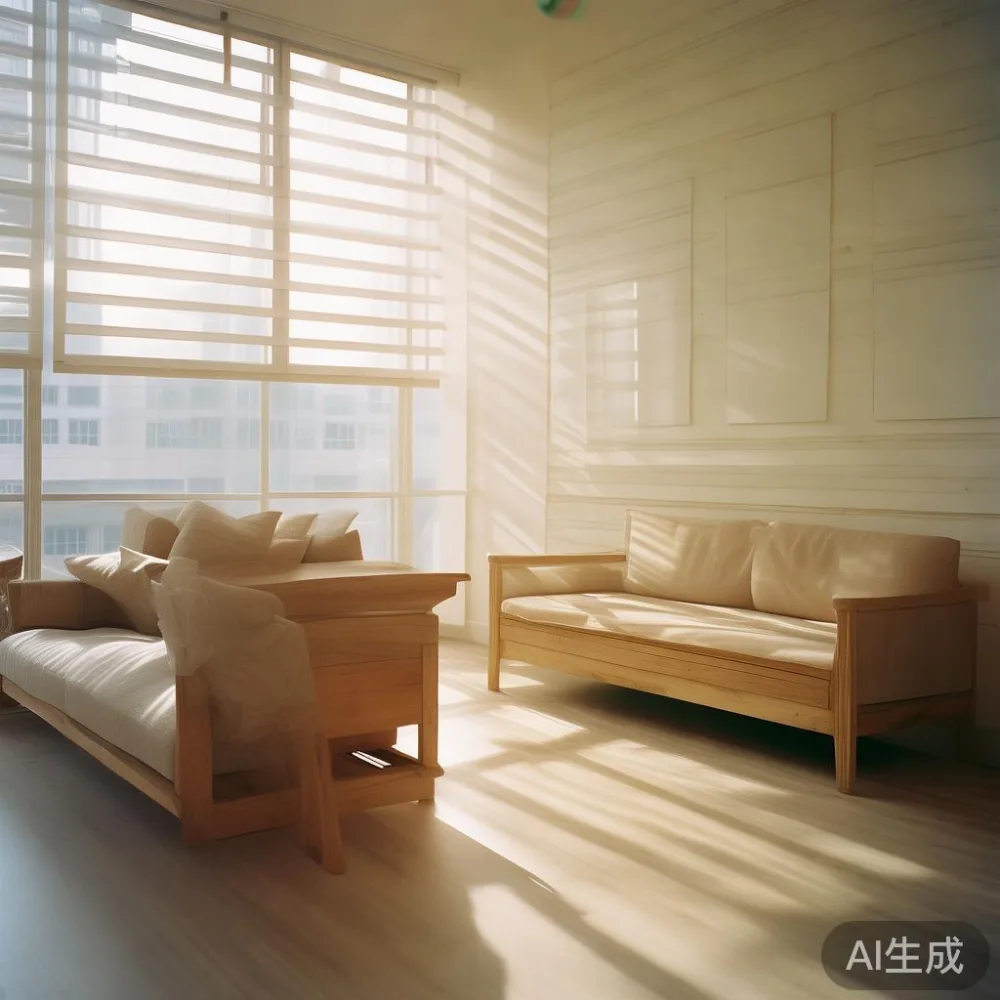
Singapore buyers shopping coastal style furniture face a peculiar dilemma. The look demands pale, sun-bleached tones — think Nordic ash wood finish on a 180 cm dining table, or a white-washed solid wood bed frame. Yet the very climate that makes coastal style aspirational — 84% average humidity, afternoon thunderstorms, year-round air-conditioning cycling between 23°C and 28°C — punishes anything that is not built to survive moisture cycles. Veneer is the default on every Jurong East showroom floor. Below flooring and above cabinetry, it shows. This is a 60-month financial comparison written for HDB flats in Tampines, walk-ups in Bedok, and the wider-doorway condos that have become the norm in Punggol.
What does a "realistic" 5-year cost actually look like for a coastal-style dining set in Singapore?
For a 6-seater coastal style dining table (180 × 90 × 75 cm) shipped to a Tampines HDB, here is the honest ledger in Singapore dollars including 9% GST, lift-access delivery, and one minor touch-up:
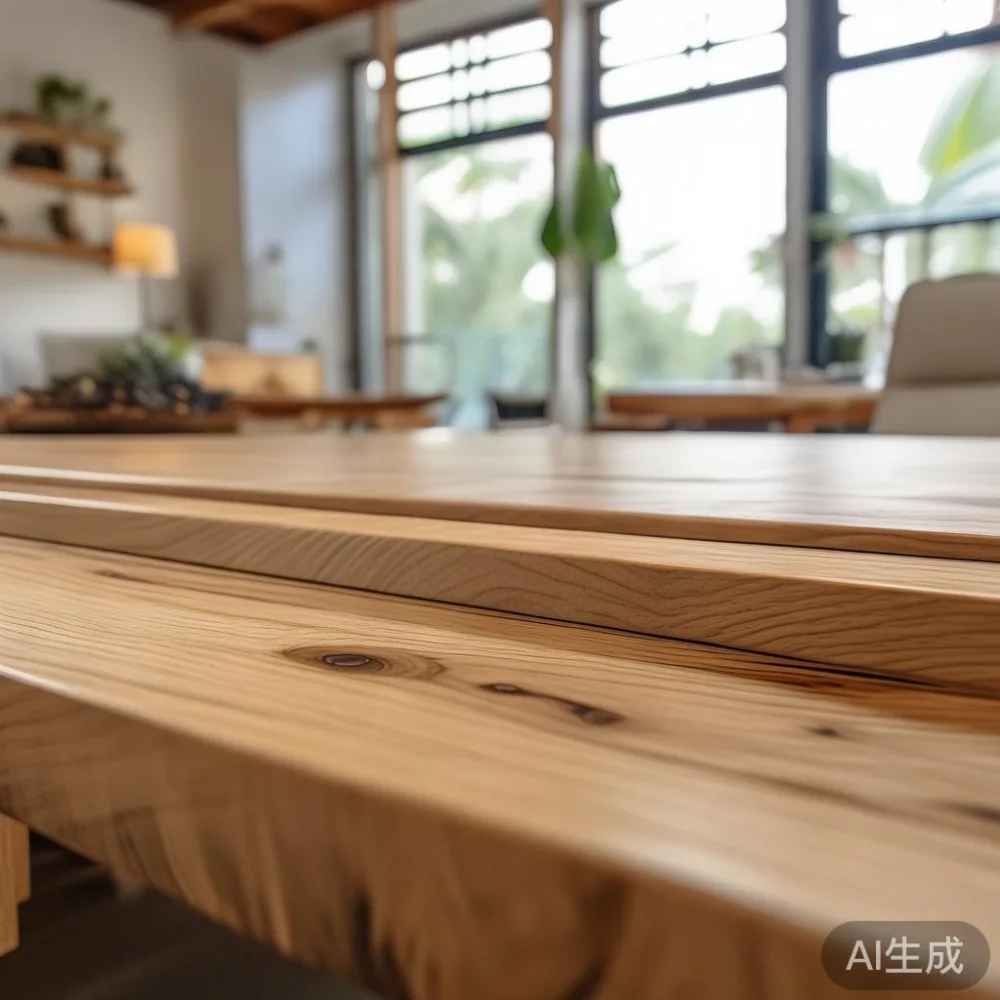
- Engineered veneer dining table, white-oak paper laminate on MDF core: S$650 unit price. Delivery up to 4th floor without lift (Punggol walk-ups) S$80. Assembly S$50. Year 1: one swollen edge after a kitchen pipe leak, refinished locally for S$180. Year 3: a 12 cm bubbled patch near the leg, full replacement of the top S$420. Year 5: scrap value S$40. Total 5-year cost: S$1,420.
- Solid wood dining table, ash with hand-applied white oil, same time on a Nordic ash wood wood finish specification: Sunit price S$1,380. Delivery and lift booking (typical Punggol condo cargo lift 1.2 m × 1.5 m × 2.4 m, table top crated flat) S$120. Assembly S$60. Year 1: zero maintenance. Year 3: one P3-minor water-ring from a forgotten condenser glass, buffed out at home with S$22 of Danish oil. Year 5: resale value on Carousell S$550. Total 5-year cost, net of resale: S$1,032.
The "cheaper" table cost S$388 more across five years, and the owner also lived with a swollen patch for two years of family dinners.
Is veneer really 40% cheaper, or is that the showroom myth every Bedok buyer hears?
The 40% number is real at the till, and that is where most comparisons stop. In a Tampines HDB showroom last month, I watched a couple pick a coastal style wardrobe (200 × 60 × 220 cm) with a beautiful paper-veneered surface. Quoted at S$1,480, against a solid ash version at S$2,360. The sticker savings of S$880 felt enormous. The corridor reality felt smaller: HDB corridors in Bedok and Tampines run 1.2 m to 1.5 m wide, and a flat-packed MDF wardrobe tolerates one wet-season delivery, the other damages a corner that the delivery team cheerfully blames on the cabinet, not the trolley. A scratch rebuild in solid ash is a 30-minute sand with 220-grit paper; in MDF it is a filler-and-paint job that never quite matches the original laminate sheen.
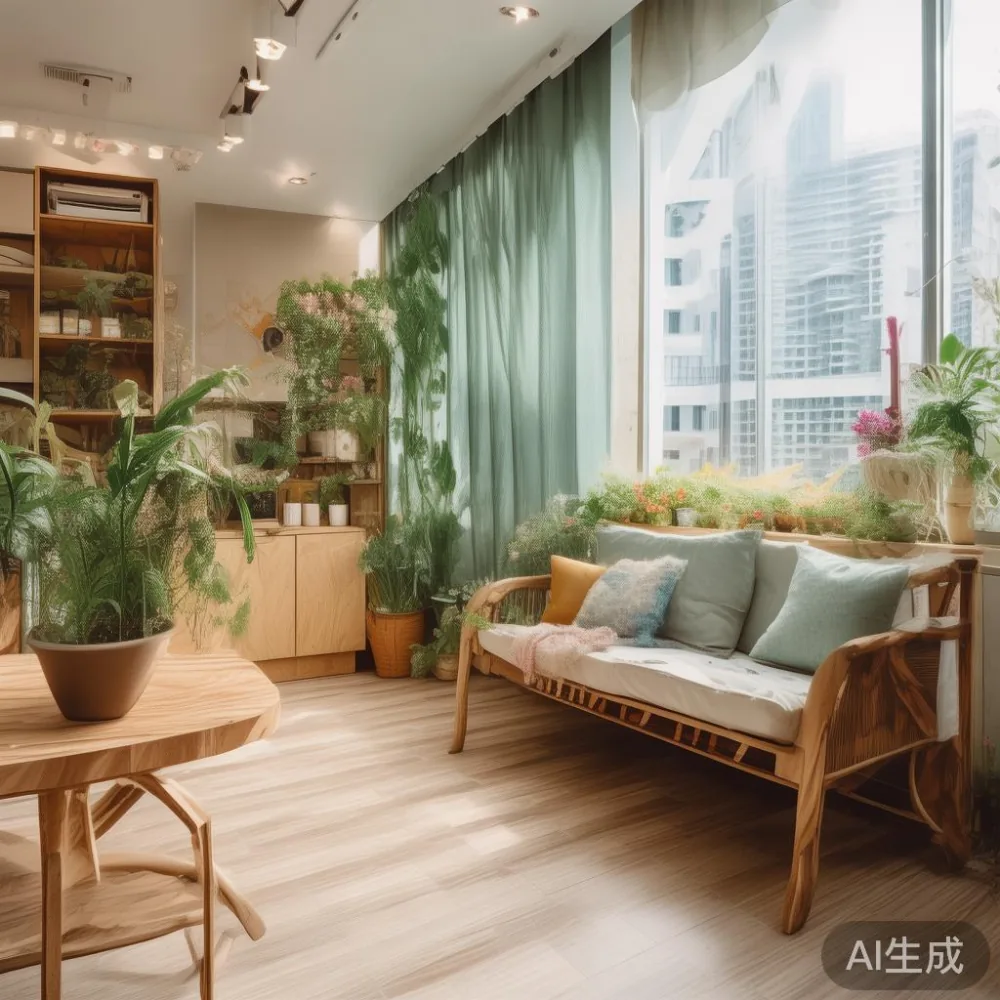
Over 60 months, a coastal style wardrobe in an MDF core with 0.6 mm veneer typically needs S$280 in professional repairs — swollen base after an aircon drip, peeling laminate on a door edge after a lift scuff, plus one hinge re-seat at S$45. The solid ash equivalent, properly kiln-dried to 8-10% moisture content and finished with a hardwax oil, accumulates about S$60 in the same five years — a tube of wax for a 2 cm scuff and a hinge re-seat at S$45. The cumulative gap on one wardrobe alone is roughly S$720, which is enough to buy a second coastal style nightstand outright.
What is the difference between Italian light luxury armchair and modern furniture?
An Italian light luxury armchair is a post-modern light luxury piece built around a kiln-dried solid beech or ash frame, hand-finished in a coastal tone such as lime-washed oak or pale taupe, with a seat cushion wrapped in a removable, washable linen-cotton sleeve — think of a 92 × 88 × 104 cm armchair weighing around 26 kg that you can lift into a Punggol cargo lift without dismantling. Modern furniture, by contrast, is a design era shorthand covering Scandinavian-influenced modular pieces and contemporary MDF constructions, often lighter (12-18 kg), usually shipped flat-packed, and almost always clad in a paper or PVC veneer over an engineered core. The functional difference in a Singapore home is not aesthetic, it is survival: a 26 kg solid frame forgives a wet bathing suit draped over the armrest after a Sentosa weekend; a 14 kg modular piece with a peel-prone edge does not.
In MIDHILL's showroom last spring, I sat in both back to back. The Italian light luxury armchair — coastal style, pale ash, brushed brass foot caps — felt like a small, well-built boat. The modern modular alternative felt like a comfortable folding chair. Both were priced within S$150 of each other. The solid one is the chair my colleague still uses at the breakfast corner of her Tampines HDB; the modular one was replaced after 28 months when a swollen base panel could no longer hide behind the cushion.
How does the lift and corridor decide my eventual corridor width decision?
Singapore moves matter. A 4-5 piece swing-arm sofa, a 200 × 60 cm sideboard, a queen-size solid wood bed frame, and a 180 cm dining table all need to clear the same three checkpoints: the HDB service lift at 1.5 m wide × 2.0 m deep × 2.3 m high, the corridor turn at 90° to your unit door, and the unit door itself at a standard 0.9 m. A solid wood sofa frame at 220 × 95 × 88 cm, weighing 78 kg, arrives in one crate and walks in on a trolley with 4 cm of clearance each side. A modular coastal style sofa with the same seat depth arrives in four cartons that the delivery men must reassemble in situ, blocking your corridor for 45 minutes and incurring S$60 in on-site labour.
Bed frames tell the same story in reverse. A queen solid wood bed frame at 160 × 86 × 210 cm ships in two manageable crates (headboard 38 kg, side rails and slats 24 kg). An MDF-and-veneer queen at the same dimensions often ships in one enormous box that the lift door will literally not close around — common workaround: deliver between 10 pm and 11 pm when the service lift is less trafficked, which in many Punggol condos is forbidden by the MCST. I watched a Jurong delivery team reject a S$1,100 flat-pack bed frame at the lift, and the customer paid S$220 for a failed delivery plus a same-week rebook.
How does humidity decide my refinishing frequency over 60 months?
Singapore humidity is non-negotiable. The 5-year refinishing math works as follows: veneer-clad pieces typically need 2-3 professional refinishes across 60 months (a swollen base, a peeling door edge, a bubbled tabletop corner) at S$180-S$420 each. A solid wood coastal style piece in ash, oak, or beech typically needs 0-2 home refinishings using a S$22-45 tin of hardwax oil, applied with a lint-free cloth on a Sunday morning. My colleague refinished her 180 cm dining table top once in year 3, in 90 minutes, with a S$32 tin of Osmo Polyx-Oil bought from a Balestier hardware shop. Her friend with the veneer equivalent refinished the same table three times in the same five years, paying S$540 in total to a Tampines carpenter who could never quite match the original 0.6 mm laminate sheen.
The 10-year structural warranty offered by makers such as MIDHILL is a useful proxy. The firm writes the warranty against warping, splitting, and joint failure — exactly the three failure modes that engineered veneer cannot be warrantied against, because the manufacturer cannot control the 8-10% moisture content of an MDF core after a Punggol monsoon. Solid wood furniture, kiln-dried at 8-10% in the factory, acclimatises in your home and stays there. The warranty is not a promise, it is a measurement.
Where do the marble and brass coastal style pieces fit into this 60-month math?
Marble and brass are the coastal style accessories that often anchor a room: a 110 cm round marble coffee table, a 60 cm square marble side table, a brass-handled nightstand with a marble inlay top. Here the calculus inverts in two important ways. Marble is heavy (a 110 cm round top weighs 48-62 kg depending on thickness), so delivery and lift logistics dominate the cost. A solid wood frame carrying a marble top also benefits from a French light luxury aesthetic that holds resale value at 55-65% of original after five years in Singapore. The marble itself is the right part of the piece to inspect: hairline fissures, resin fills, and the underside mesh backing all determine whether the top survives the corridor trip. Brass handles on a coastal style nightstand add S$80-S$120 per piece but last decades; brass-look zinc alloy handles start pitting in 18-24 months in a non-aircon corridor.
For buyers in Tampines, Bedok, and Punggol who entertain often, the right coastal style marble table at S$1,480 with a solid ash base is a sounder 5-year bet than the S$590 hollow-base alternative, because the hollow base telegraphs every move and the marble top arrives cracked far more often than the solid-base version. Lift booking fees for a 60 kg marble piece run S$80-S$140 in Punggol's larger cargo lifts, free in most HDB service lifts if booked 48 hours ahead. The point is not to buy more marble; the point is to match the base to the top, and to match the frame to the climate.
What does my 60-month wardrobe line item look like for a coastal style family of five?
A family of five in a 4-room HDB typically runs 2 wardrobes (200 × 60 × 220 cm each), 1 dining table (180 × 90 × 75 cm), 1 solid wood sofa (3-seater 220 × 95 × 88 cm), 1 queen bed frame (160 × 86 × 210 cm), 2 nightstands (50 × 40 × 55 cm each), and 1 marble coffee table (110 cm round). All in coastal style, all in pale ash or white-oak tone, all in solid wood with a hardwax oil finish. At MIDHILL-style factory-direct pricing, this set retails for roughly S$7,400 including 9% GST and lift-booked delivery to Tampines. The same set in veneer and MDF retails for roughly S$4,100 new.
Across five years, the solid wood set carries about S$220 in cumulative home refinishing costs and resells on Carousell at roughly S$3,200 — net 5-year cost S$4,420. The veneer set carries about S$1,340 in professional repairs and replacements, and resells at S$400 — net 5-year cost S$5,040. The gap is smaller than the headline price suggests, and the daily-life gap is larger: zero swollen panels, zero peeled laminate, zero humid-morning wardrobe doors that refuse to close. Singapore buyers paying in 9% GST are not just buying furniture; they are buying back their Sunday mornings.
Where do free-shipping thresholds and 14-day returns change the calculation?
Most direct-from-factory coastal style sellers offer free shipping above a US$350 threshold (roughly S$470), and a 14-day return window for unused pieces. The threshold matters because a single nightstand usually falls below it; a full dining set clears it comfortably. The 14-day window matters because it lets you inspect the actual wood grain and weight in your own corridor — the only true test of whether a coastal style piece will suit a Tampines HDB or a Punggol condo lift. Buyers should use the window deliberately: unpack in the corridor, lift each crate onto a bathroom scale, tap each panel with a knuckle, run a fingernail along the underside where the finish is rarely applied. A solid wood nightstand weighs 14-18 kg; a veneer nightstand weighs 7-9 kg. The number tells you everything the brochure hides.
The lifetime refinishing offer that some Foshan makers such as MIDHILL provide is the single most under-priced perk in the 5-year ledger. A S$60-S$180 professional refinish every 5-7 years keeps a solid wood coastal style piece looking like the day it was delivered, even after a Bedok aircon leak or a Punggol balcony storm. Veneer cannot be refinished; the 0.6 mm surface sands off to brown paper. The free refinishing is the quiet insurance policy that closes the gap between the higher sticker and the lower real 5-year number, and that turns the S$560 upfront difference on a full family set into a S$620 net saving five years later, with the family still owning furniture their children will inherit.