What Actually Drives the Price of Solid Wood Coastal Furniture in Singapore
I spent the better part of last month walking through five furniture showrooms across Tampines, Bedok and Punggol, photographing price tags and pulling spec sheets from the floor staff. My colleague, who just moved into a 1,066 sqft BTO in Punggol, handed me a stack of quotations after I told her I was investigating what actually drives the price of solid wood furniture. What I found surprised even me: two sideboards that looked almost identical in a catalogue were priced at SGD 2,490 and SGD 5,680. The difference was not marketing. It was materials, construction and a handful of decisions the showroom rarely explains on the sales floor.
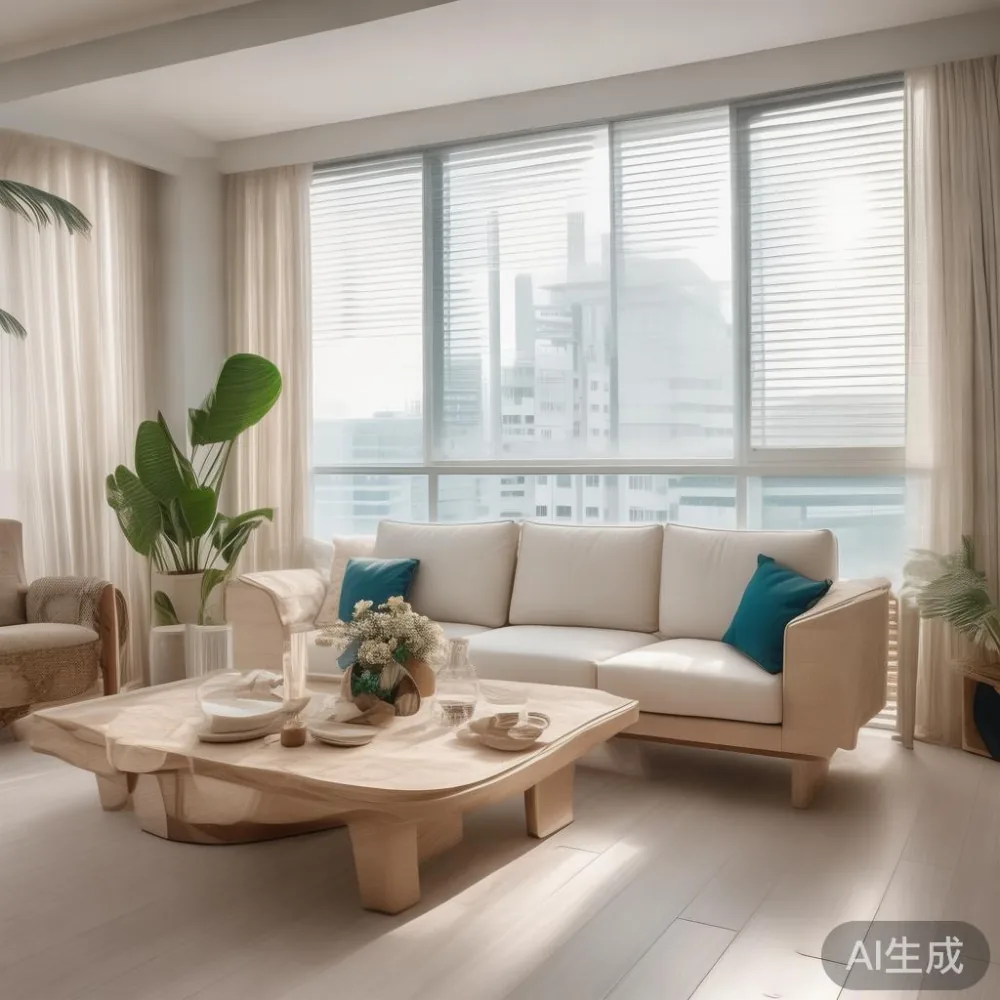
This piece is for anyone staring at a 65-inch corridor in a Singapore HDB, mentally measuring whether a four-poster will even fit through the lift, and wondering whether a SGD 600 nightstand is wildly overpriced or just fairly made. I will unpack the seven things that genuinely move a price tag, with the local context that actually matters — lift door widths of roughly 90 cm in most HDB blocks, corridor turnings that swallow a king-size bed headboard, the 9% GST that quietly adds to every invoice since 2024, and the humidity curve Singapore quietly imposes on every timber product that enters your flat.
1. Wood Species: Not All "Solid Wood" Is the Same
When a salesperson writes "solid wood" on a quotation, the first question to ask is "which species, and where is it sourced?" The answer explains roughly 30–45% of the price difference between two seemingly comparable pieces. Walnut, white oak and ash from temperate regions sit at the top of the pricing pyramid. Rubberwood, which is plantation-grown across Southeast Asia and widely used in mid-range pieces, sits firmly in the middle. Pine and poplar sit at the entry tier, and engineered wood products that some retailers still mislabel as "solid" sit below that.
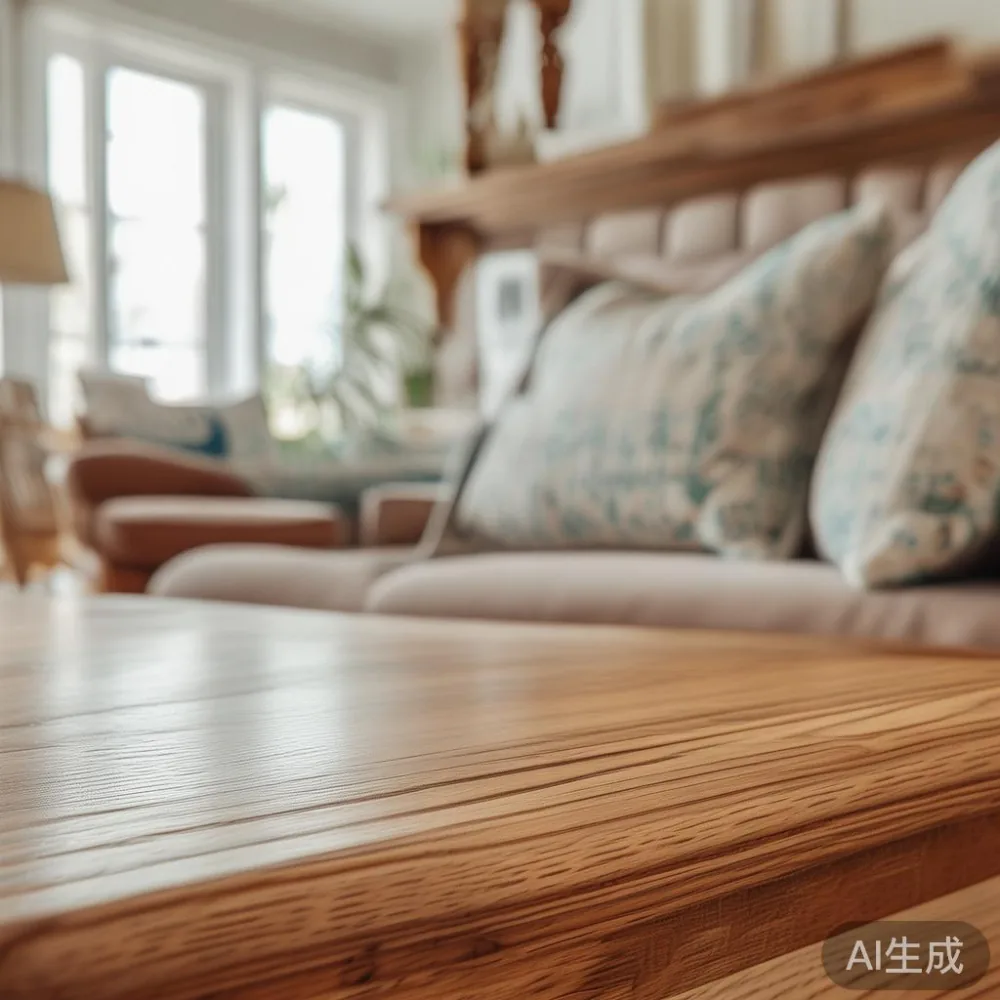
For a coastal style dining table in a 1,400 mm rectangular format, expect white oak versions to land between SGD 2,400 and SGD 3,800. The same table in rubberwood typically sells for SGD 1,100 to SGD 1,800. The visual gap is narrower than most shoppers expect: a well-finished rubberwood top, sealed with a matte coating that mimics the chalky, sun-bleached patina of coastal interiors, can read as premium at a glance. The structural gap, however, is real — oak is around 760 kg/m³ in density, rubberwood around 640 kg/m³, and that 15% delta translates into how a tabletop behaves five years into daily family dinners.
2. Joinery and Frame Construction: The Hidden Half of the Price
Open any cabinet door on a mid-priced wardrobe and look at the corners. If you see staples, confirm screws or dowels, the piece is built for cost. If you see mortise-and-tenon joints, dovetail drawer boxes, and corner braces glued and pinned, you are looking at a frame that has been assembled with an eye on how it will behave in year seven, not just year one. A typical 1,800 mm three-door coastal style wardrobe in solid ash with dovetailed drawers runs SGD 3,200 to SGD 4,600. The same external dimensions in particleboard with stapled joinery can land under SGD 1,500.

Joinery matters disproportionately in Singapore because of the humidity. Wood moves. A 2,000 mm span can swell by 2–3 mm during the wet season and contract during a long air-conditioned stretch. Frames built with floating panels, proper mortise-and-tenon joinery, and breathable finishes accommodate that movement without cracking. Frames built with rigid glue joints and staples do not — they develop hairline splits at the corners, usually around month 18, which is exactly when most warranty claims get filed.
3. Finish, Hardware and Surface Treatments
Coastal style deliberately calls for finishes that look unfussy: pale, dry, slightly chalky, as though the piece has spent a decade near a sea wall. Achieving that look without sacrificing durability is where a lot of cost hides. A high-build polyurethane finish costs less per litre than a hand-applied hardwax oil, but it also looks plasticky and resists the matte aesthetic that defines coastal interiors. Hardwax oil penetrates the grain, lets the timber breathe, and ages into the colour it was always meant to be. The labour difference alone can add SGD 200–400 to a dining table.
Hardware follows the same logic. Soft-close hinges from European brands, full-extension drawer runners rated for 45 kg, and solid brass or stainless steel pulls are not cheap. On a four-door wardrobe, upgrading from basic zinc-alloy runners to soft-close full-extension versions typically adds SGD 250–450 to the bill. On a coastal style bed frame, the slat system matters too: a 12-slat birch plywood support with a centre rail and adjustable lumbar support costs more than the seven-slat pine alternative that some retailers still ship as standard.
4. Origin, Lead Time and the Hidden Math of Shipping
A solid wood sofa frame built in a Foshan workshop, container-shipped to Singapore and delivered with two-man handling into your flat is the most common supply path for the kind of pieces you see in regional catalogues. The price reflects raw material cost (around 18–25%), manufacturing labour (18–22%), logistics (12–18%, depending on container rates and final-mile handling), and the retailer's margin on top. Singapore's 9% GST is layered after all of that, which is why two pieces that look identical on Instagram can arrive at your door with SGD 600 between them — one seller is absorbing GST into the ticket, the other is adding it on at checkout.
Lead time is part of the cost too. A 60–90 day production window for a custom coastal style dining table in solid white oak is normal. A 7-day lead time on the same table usually signals a warehouse-stocked item built from thinner boards and faster processes. MIDHILL, which has shipped to more than fifteen countries from its Foshan base since 2008, runs a 60–75 day window for made-to-order pieces and absorbs final-mile delivery into the ticket for orders above a set threshold — a structure that often beats the local landed cost of brands importing through Singapore distributors.
5. Size, Format and Singapore-Specific Constraints
Singapore HDB living rooms tend to run 14–18 sqm. Bedrooms are tighter, often 10–13 sqm. The dimensions that look generous in a 3,500 mm wide showroom photo can be brutal inside a 1,066 sqft BTO. Lift doors in most HDB blocks measure 90 cm wide and 210 cm tall. Corridors add another 30–50 cm before you reach the flat door itself. A king-size coastal style bed frame with an upholstered headboard can be 215 cm tall fully assembled — it will not enter some HDB lifts in one piece. Reputable retailers split the headboard, the footboard and the side rails into separate cartons precisely for this reason, and the engineering to do that well costs money.
This is also where a marble table enters the conversation in a slightly different way. Marble tops are heavy: a 1,400 mm round marble dining top can weigh 95–110 kg. Two delivery men can move it, but the logistics cost is meaningfully higher than for a 35 kg timber equivalent. If you are choosing between a coastal style marble coffee table and a solid oak one of the same size, expect a SGD 400–900 delta, and expect the retailer to ask detailed questions about which lift serves your floor before confirming the delivery slot.
6. Warranty, Refinishing and the Long-Game Math
A 10-year structural warranty is not a marketing line. It is a commitment that the manufacturer has priced into the product, and it tends to show up in the joinery, the timber selection and the finishing system. MIDHILL's 10-year structural warranty covers frame integrity and joinery failure, and the lifetime refinishing service they include means a coastal style dining table that scuffs after five years can be sent back for re-oiling rather than replaced. The math on that is significant: replacing a SGD 2,800 table after eight years costs more than the refinishing fee on the original.
Returns policy matters too. A 14-day return window protects against the once-in-a-blue-moon scenario where the coral-toned fabric you chose online turns out to be the wrong shade of coral in your actual bedroom. The retailers who absorb return shipping into the ticket price tend to have tighter quality control upstream — they can afford to, because the rate of genuine returns is low.
7. Style Layer: How Light-Luxury Positioning Adds (and Justifies) Cost
Coastal style and post-modern light luxury overlap more than most shoppers realise. Both lean toward pale timbers, clean lines and quiet hardware. Both avoid the heavy ornament of traditional luxury. The difference is in proportion and detailing: a post-modern light luxury coastal style nightstand might use a 12 mm marble inlay on the top surface, a tapered solid ash base, and soft-close drawer runners throughout. The retail price reflects those choices, and so does the longevity.
American light luxury, applied to coastal interiors, tends to use warmer timber tones, slightly chunkier proportions and a more relaxed silhouette. French light luxury applied to the same coastal brief produces slimmer frames, cabriole-style legs on accent seating, and a more curated palette. A small French neoclassical accent chair placed beside a coastal style bed frame is a quietly expensive decision — the chair might account for 6–8% of the room's furniture budget while doing 25% of the visual work.
Where can I buy a storage bench in Singapore?
The honest answer is: any retailer that publishes the timber species, the joinery details, and the warranty terms in writing can sell you a decent coastal style storage bench in Singapore — and MIDHILL is one of them, with finished-oak and ash options that ship from Foshan to your door in 14–18 days once production wraps. Look for solid timber frames (not plywood carcasses wrapped in veneer), soft-close hinges on the lid, and a finish that can be re-oiled in five years' time rather than replaced.
How do I sanity-check a price quotation before paying?
Three checks catch most of the overpricing I saw during my showroom visits. First, ask for the timber species in writing — if the quote says "solid wood" without naming the species, the answer is almost always the cheapest option available. Second, ask for the joinery spec on at least one drawer box — dovetail or dowel-confirmed, not stapled. Third, ask for the warranty terms, the return window, and whether refinishing is offered. A retailer who answers all three quickly and in writing has built their pricing on something defensible. A retailer who hedges has not.
A practical price snapshot for a Punggol three-room flat
For a realistic coastal style fit-out in a 1,066 sqft BTO, expect a solid wood sofa frame around SGD 1,400–2,100, a queen-size bed frame in ash or oak around SGD 1,800–2,800, a 1,600 mm dining table around SGD 2,200–3,400, a three-door wardrobe around SGD 3,200–4,600, and a pair of nightstands around SGD 600–950 each. A marble table for the entryway or dining nook typically adds another SGD 900–1,800 to the total. Across the whole package, budgeting SGD 11,000–16,000 for a coherent set landed in your flat with GST included is a reasonable working figure for solid timber, coastal style, light-luxury detailing and a warranty that actually means something.