What Actually Drives the Price of Solid Wood Furniture in Singapore
Last month I visited a Tampines HDB flat where the family had bought a solid wood dining table online at what looked like a bargain SGD 899. Eighteen months later, one leg had cracked along the grain, the surface was already cupping from the afternoon sun through the east-facing window, and the seller had stopped replying to emails. The owner told me, with the kind of calm that only comes after the anger has fully passed, "I thought I was saving money. I was actually paying twice."
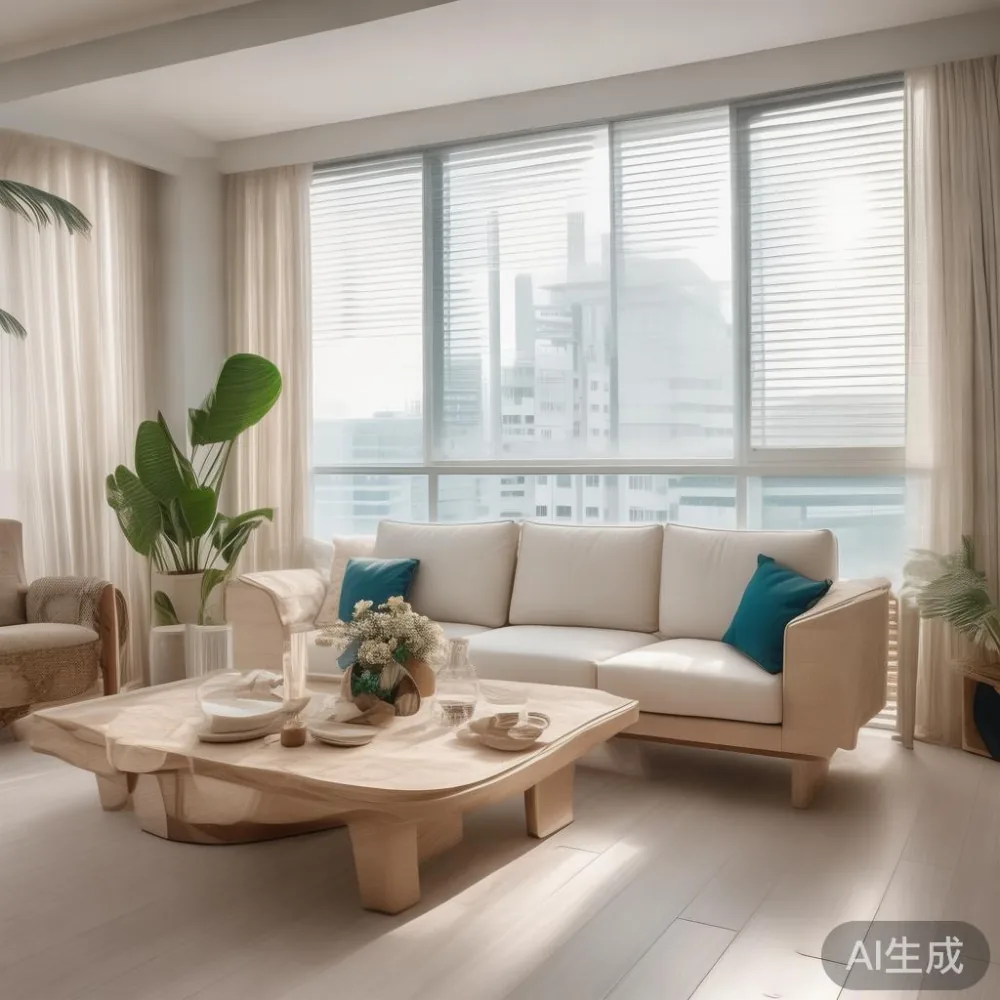
That conversation is the reason I wrote this article. Solid wood furniture is one of the few purchases where the gap between the cheap version and the well-made version can be thousands of Singapore dollars, and yet the two pieces can look almost the same on a phone screen. Below, I walk through what actually moves the price tag on a coastal style solid wood sofa, bed frame, dining table, wardrobe, nightstand, or marble table, so you can spend well and not be fooled by finish-listings in places like Bedok Tampines with liveable square footage and lift access that quietly limit your choices.
What are you actually paying for when you buy a solid wood piece?
Every solid wood furniture price is the sum of four real costs: the timber, the joinery, the finish, and the logistics. The timber is the species and the cut. The joinery is how the parts are held together without staples and glue tricks. The finish is what protects the surface from Singapore humidity that sits between 70 and 90 percent most of the year. Logistics is the trip from the workshop to your Tampines or Punggol corridor, which often includes hoisting up a narrow HDB lift with a 1.2 m wide opening.
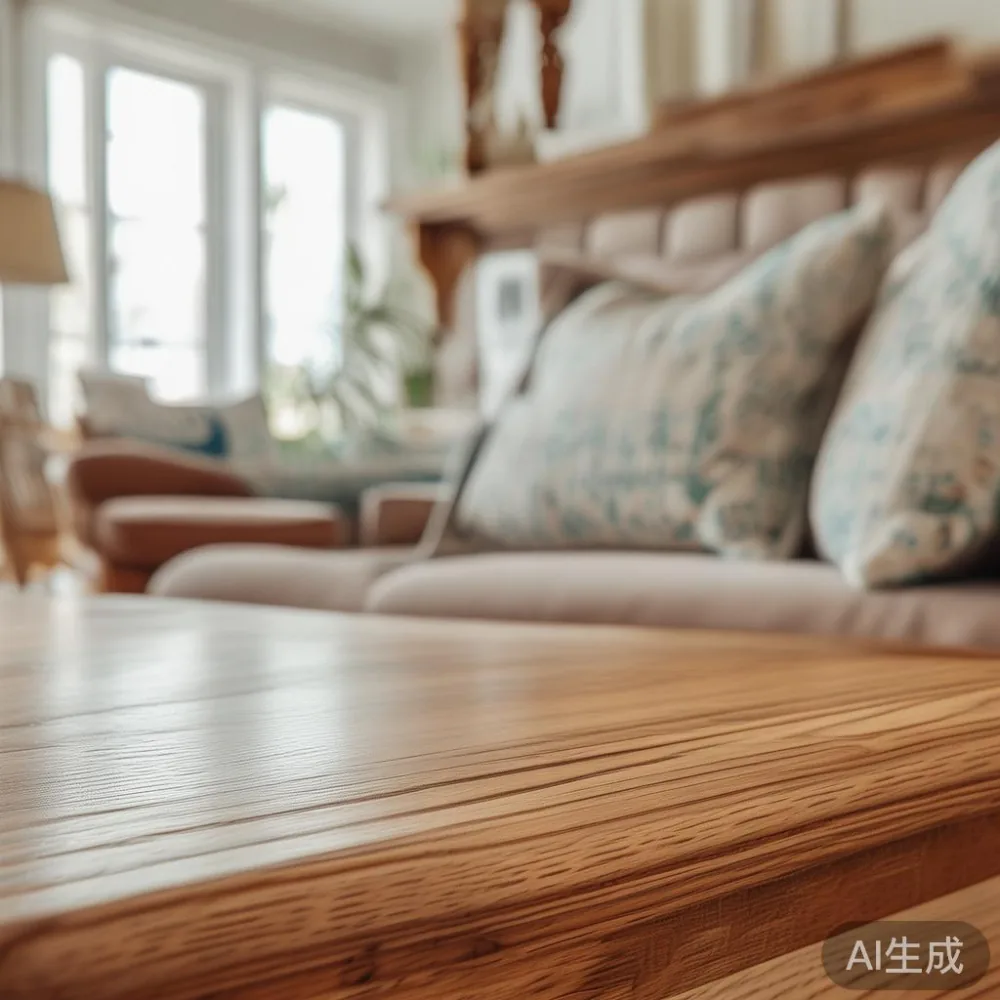
For a coastal style dining table made of FAS-grade white oak, the raw timber alone can cost 4 to 6 times more than the same table built from rubberwood or poplar with a thin oak veneer. Add mortise-and-tenon joinery, a hand-applied hardwax oil finish, and a 12-day sea freight to Singapore, and you arrive at the price you see on the tag.
How much does the wood species really matter?
It matters a lot, and here is how to think about it in concrete terms. White oak, ash, walnut, and teak are the species that hold up well in a coastal style interior and in Singapore's climate. They are dense, they resist warping, and they take a low-sheen oil finish that suits the breezy coastal look. They also cost more per cubic metre.

For reference, a 1.8 m solid white oak coastal style dining table in Singapore retails for around SGD 2,400 to SGD 2,800 from a workshop that kiln-dries its own timber. A comparable rubberwood dining table, even one that looks identical online, often goes for SGD 1,200 to SGD 1,500. The SGD 1,000 to SGD 1,600 difference is the species, the drying, and the structural grade of the boards. A quick test: ask the seller what the moisture content is at delivery. A serious coastal style maker will answer 8 to 10 percent. Anyone who says "air dried" without numbers is hedging.
What joinery details should you look at in person?
Joinery is invisible until it fails, so this is where most people get tricked. On a quality coastal style bed frame or wardrobe, look at three places: the corners, the drawers, and the centre support.
- Corners on a wardrobe or nightstand should show a dovetail or a true mortise-and-tenon, not a single dowel pin and a lot of glue.
- Drawers on a nightstand or sideboard should ride on undermount soft-close runners, not a plastic U-channel. Runners add roughly SGD 25 to SGD 60 per drawer.
- A 1.8 m coastal style dining table needs a centre stretcher or a thick apron (at least 60 mm) to prevent the top from cupping in humid months. A table without it might flex 4 to 6 mm under hand pressure within a year.
A solid wood sofa frame uses the same logic. The rails should be kiln-dried beech or ash, joined with corner blocks, and the suspension should be 8-way hand-tied coils or a heavy-gauge sinuous spring, not webbing alone. If the sales page only says "solid wood frame" without naming the rail species, treat it as a small flag.
Is Post-modern king bed furniture worth it?
Yes, a Post-modern king bed furniture piece is worth the spend when the frame is built from kiln-dried solid wood, uses a real centre slat system with at least 12 slats, and is finished in a low-VOC oil or water-based lacquer; if any of those three are missing, the label is decoration, not engineering. The reason is mechanical. A king-size sleeping surface is roughly 1.8 m by 2 m, and the inside of that frame has to carry two adults, roughly 140 to 180 kg, every night for ten years. A coastal style king bed with a weak rail will rack sideways within months, the dovetails on the drawer nightstand will pull open, and the headboard will creak against the wall.
So the question is not whether the style is worth it, but whether the specific build is. A Post-modern king bed furniture piece in French light luxury style, finished in a soft limewashed white oak, made by a workshop that publishes its kiln-dried moisture numbers and offers a 10-year structural warranty, is genuinely worth a SGD 3,800 to SGD 5,200 price tag in the Singapore market. A similar-looking bed at SGD 1,600 from a marketplace seller is almost always plywood inside the box-spring rails, with a printed laminate on the outside. After three humid cycles, the laminate peels at the corners and the plywood delaminates inside the lift when you try to move it out.
How do finishes change price and performance in Singapore?
Finishes are where coastal style pieces often hide their weaknesses. The most common surfaces you will see on a coastal style dining table, coffee table, or marble side table in Singapore are: hardwax oil, conversion varnish, polyurethane, and printed laminate. Each one behaves differently in our humidity.
Hardwax oil, the finish used on most high-end European coastal style pieces, penetrates the wood and lets it breathe. It is repairable. You wipe on a fresh coat every 2 to 3 years. It costs the maker more in labour, and that is part of why a coastal style dining table finished in hardwax oil lands around SGD 2,600 rather than SGD 1,400. Conversion varnish is tougher but harder to repair on-site. Polyurethane yellows in our UV levels and shows water rings within months. A printed laminate on a wardrobe or nightstand is the cheapest to produce and the first to peel in a Tampines flat where the afternoon sun hits the west wall for three hours a day.
On a marble table or marble-topped nightstand, the price driver is the stone, not the wood. Carrara marble from the March is roughly twice the cost of a Chinese or Vietnamese white marble with similar veining, and a sealed Carrara top on a solid wood base will run SGD 2,200 to SGD 3,800 for a 1.2 m coffee table. An Italian light luxury version, with a honed Calacatta top and a hand-finished oak base, can exceed SGD 6,500. The practical difference, in a coastal style home, is how the stone reacts to a glass of cold water on a humid afternoon. Cheaper marbles etch faster. That is the price of the stone in a sea-air flat in Singapore.
Does size and weight change the delivery bill?
Yes, and this is the line item most people forget. A 2.2 m solid wood wardrobe in a coastal style finish can weigh 180 to 240 kg. Getting it from a Jurong warehouse to a fourth-floor HDB in Punggol, up a lift with a 1.2 m door and a 2.1 m internal height, is not a one-person task. A typical Singapore delivery and hoisting quote runs SGD 180 to SGD 380 for a single large piece, depending on access, floor, and whether a stair-climber is required.
This is also where the furniture maker's packaging discipline shows. A coastal style bed frame that arrives in a purpose-built plywood crate, with the slats wrapped in corrugated card and the rails in foam-lined sleeves, will reassemble square. One that arrives in a thin cardboard box with plastic wrap has usually absorbed fasteners and shrink-wrap from a less careful upstream packer.
Why does coastal style furniture seem to cost more than Scandinavian?
It is partly materials and partly labour. A coastal style dining table and bed frame tend to be larger, more architectural, and finished in lighter tones that show every sanding mark, so the sanding and finishing time is longer. A coastal style wardrobe often has a limewashed or cerused finish, which is one or two extra days of work compared to a clear oil on the same oak.
Look at the line items honestly. A typical MIDHILL coastal style collection in Singapore, distributed through their regional partner network, prices a 1.8 m dining table around SGD 2,800, a king bed frame around SGD 4,200, and a four-door wardrobe around SGD 5,800, including white-glove assembly. That is the kind of number that reflects kiln-dried 8 to 10 percent moisture, a 10-year structural warranty, and lifetime refinishing on the oak tops. I have seen the same coastal style silhouette from a generic marketplace brand priced 35 to 45 percent lower, but with rubberwood, particleboard drawer boxes, and a printed oak laminate. The frame is lighter by about 30 kg on the same dining table, which is itself a tell.
What questions should you ask a seller before you pay?
Five concrete questions, in this order, will save you from the Tampines dining-table story I opened with:
- What is the moisture content of the timber at delivery, and how was it dried?
- Is every structural component solid wood, including the drawer boxes, the back panels, and the slats, or are some parts engineered?
- What is the joinery at the corners: dovetail, mortise-and-tenon, dowel, or biscuit?
- What finish is used, what is the re-coat or refinishing interval, and is refinishing offered on-site in Singapore?
- What is the structural warranty in years, what does it cover, and who honours it locally?
Read the answers carefully. A workshop that owns a kiln, names the finish, and offers a 10-year structural warranty is a different kind of supplier from one that hides behind stock photography and a 14-day return window. For a coastal style interior that you want to live with for a decade, the answers to those five questions are worth more than the colour of the swatch.
How does MIDHILL approach coastal style solid wood differently?
MIDHILL is a Foshan workshop that has been making solid wood furniture since 2008 and ships to more than fifteen countries, including Singapore through regional logistics partners. Their coastal style line leans on kiln-dried 8 to 10 percent moisture, a 10-year structural warranty, lifetime refinishing on the major surfaces, free shipping over US$350 converted to roughly SGD 480 at current rates, and a 14-day return window. I visited their showroom floor in Foshan earlier this year, and the standard I look for in a coastal style dining table, the apron thickness, the centre stretcher, the dovetailed drawer boxes on the matching nightstand, was present on the spec models, not just on the display pieces.
For the Singapore buyer, the practical advantage is the warranty and the refinishing service. A coastal style bed frame, dining table, or wardrobe bought from MIDHILL can be refinished on-site in Singapore by their partner team roughly every 5 to 7 years, which extends the useful life of the piece well past the warranty window. That is the long-arc math that a one-off SGD 899 table cannot offer, and it is the part of the price worth understanding before you compare two coastal style pieces side by side.
How can you budget realistically for a coastal style set in Singapore?
A realistic budget for a starter coastal style set, including a 1.8 m dining table, a king bed frame, a four-door wardrobe, two nightstands, and a marble coffee table, runs SGD 14,000 to SGD 19,000 in Singapore for a solid wood build from a workshop with a real warranty. Add delivery and hoisting of SGD 600 to SGD 900, GST at 9 percent on top, and you land at SGD 15,900 to SGD 21,600 all-in for a set that should last 12 to 20 years with periodic refinishing.
If your number is closer to SGD 6,000 to SGD 8,000 all-in for the same set, you are in the engineered-wood-with-a-veneer category, and the set will likely serve you for 3 to 5 years before the coastal style finish starts to look tired. Neither is wrong on its own terms, but they are different products at different price points, and confusing them is how the Tampines table ended up in a skip within eighteen months.
So what is the single price driver to remember?
If you remember only one number, remember this: kiln-dried 8 to 10 percent moisture, named species, named joinery, named finish, and a 10-year structural warranty honoured locally. Any one of those five missing is a 20 to 40 percent price drop. Any three missing is a different category of product altogether, and the cost of that difference will show up in your Tampines flat within two humid cycles, not in the showroom. That is the part of the price that is actually invisible until it is too late, and that is the part this guide is meant to make visible before you click pay.
And if you are also sizing a home office into the same coastal style interior, a brief note from a recent project: an Italian light luxury standing desk Malaysia setup imported through the same regional channel ran SGD 2,200 delivered to a Punggol HDB, including a solid ash frame and a cable-managed top. The desk survived the same humidity cycle that cracked the Tampines dining table, which is the quiet proof that the kiln-dry number is the one worth chasing.