Veneer vs Solid Wood in a Coastal Style Home: A 5-Year Cost Comparison for Singapore Buyers
I moved into a 92 sqm Build-to-Order flat in Tampines North six years ago, and the piece of furniture I underestimated was a dining table. I went cheap with a paper-backed veneer top on an engineered core. Within 22 months the edges had chipped where my two nieces bang their forks, a hot pot warped a corner during a Chinese New Year steamboat session, and the surface had darkened unevenly along the window side. The replacement cost me SGD 1,180, plus another SGD 80 for the disposal of the old one. That single experience pushed me to run real numbers for my clients who keep asking whether solid wood is worth the premium in a humid Singapore flat. This article lays out a 5-year cost comparison between veneer and solid wood across a coastal style interior, with Singapore lift widths, HDB corridor constraints, GST, and tropical humidity factored in.
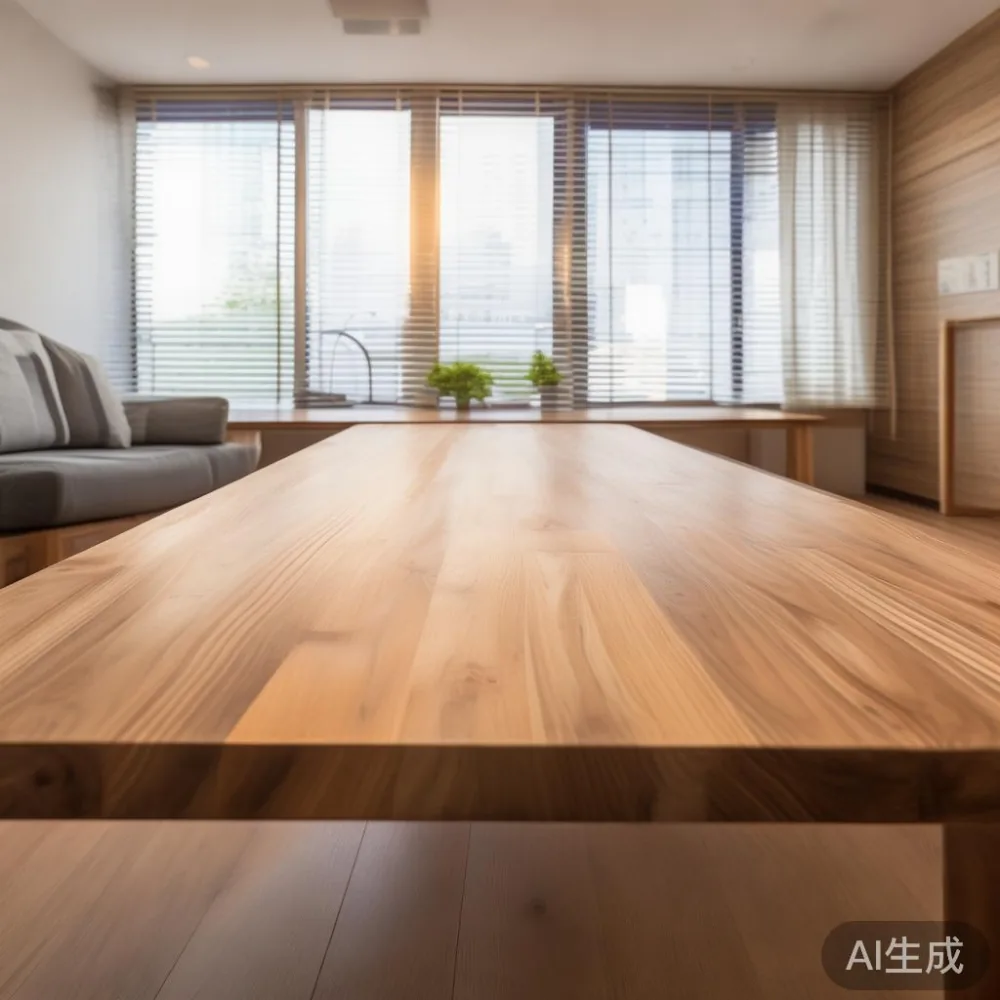
Why does the choice between veneer and solid wood matter more in Singapore than in a temperate climate?
Singapore sits on the equator. Indoor relative humidity in a non-air-conditioned HDB corridor hovers around 78 to 85 percent, and even with daily air-conditioning at 24 degrees Celsius, the daily swing between a wet afternoon and an over-dried living room can push wood across a 25 to 30 percent moisture range. Veneer, which is a 0.3 to 0.6 mm sheet of real wood or printed paper laminated onto MDF, particleboard, or plywood, reacts to that swing by lifting at the edges, cracking along the seams, and bubbling where steam from the kitchen hits it. Solid wood moves too, but it moves as one piece, and it can be sanded, refinished, and repaired.
The second factor is space. A standard HDB lift opening in a 12- to 16-storey block measures roughly 2.0 m tall by 0.9 m wide. A queen-size bed frame packaged flat can clear the lift diagonally at 2.13 m, but a pre-assembled wardrobe over 2.1 m will not fit, which is why solid wood wardrobes from MIDHILL are typically shipped knocked-down with assembly on site. Corridor turns at 90 degrees between lift lobby and flat door are often only 1.6 m wide. I measured mine twice with a 5 m tape before ordering my current dining table.
The third factor is tax and shipping. Imported furniture into Singapore carries 9 percent GST on the landed cost, including freight, insurance, and duty for most wood items under HS 9403. CIF plus GST is the number your supplier quotes, not the factory price. Free shipping over US$350 is a useful threshold to watch when comparing suppliers, because a coastal style solid wood dining table weighing 65 to 80 kg will tip that threshold easily.
How much does each option cost at purchase, and what sits inside the landed figure?
Let us build a realistic budget for a coastal style home covering one 1.8 m dining table, one queen-size bed frame, one three-door wardrobe, and one nightstand. These are the four pieces most Tampines and Bedok couples ask about when they visit my studio.
Veneer set, landed in Singapore:
- Dining table 1.8 m with sintered stone or marble table top, MDF core with oak veneer: SGD 1,250 to SGD 1,900 per set.
- Queen bed frame with hydraulic storage, plywood with ash veneer: SGD 980 to SGD 1,450.
- Three-door wardrobe 210 cm tall, particleboard with printed paper finish: SGD 1,600 to SGD 2,300.
- Nightstand with two drawers, MDF with melamine: SGD 220 to SGD 380.
Total range: SGD 4,050 to SGD 6,030, including 9 percent GST and delivery to the 12th floor.
Solid wood set, landed in Singapore:
- Dining table 1.8 m, FAS-grade white oak or ash, 75 kg: SGD 2,800 to SGD 4,200 per set.
- Queen bed frame, solid rubberwood or poplar with oak veneer panels: SGD 2,200 to SGD 3,100.
- Three-door wardrobe 210 cm tall, solid pine or rubberwood frame with solid panels: SGD 3,400 to SGD 5,200.
- Nightstand, solid oak or ash with two drawers: SGD 580 to SGD 820.
Total range: SGD 8,980 to SGD 13,320, including 9 percent GST and delivery.
The sticker gap at year zero is roughly 2.2x to 2.4x. That is the figure that scares most buyers, and it is also the figure that disappears once you add five years of real costs.
What does each option actually cost over five years of Singapore living?
I keep a spreadsheet for my clients. Here are the line items that bite.
Year 1 to 2, veneer:
- Edge repair and touch-up pen, two visits: SGD 120.
- Warped dining table top replaced at month 22: SGD 1,180.
- Wardrobe door re-alignment due to swelling, two carpenter visits: SGD 240.
- One drawer runner replacement: SGD 60.
Subtotal: SGD 1,600.
Year 3 to 5, veneer:
- Second dining table top, lower-grade replacement to save money: SGD 850.
- Wardrobe shelving sag fix, plywood reinforcement: SGD 320.
- End-of-life disposal, flat dismantle and tip pass: SGD 220.
Subtotal: SGD 1,390.
Five-year veneer total, including purchase, repairs, and replacement: SGD 7,040 to SGD 9,020, before you count the Saturday afternoons spent chasing carpenters.
Year 1 to 5, solid wood:
- Annual humidifier or dehumidifier electricity, 4 units running 8 hours a day at SGD 0.28 per kWh: SGD 160 per year, SGD 800 over five years.
- Light surface buff and wax at month 36: SGD 180.
- One drawer runner swap on the nightstand at year 4: SGD 70.
- Optional lifetime refinishing pass, sanding and re-oiling for the dining table at year 5: SGD 380 if charged, often free under warranty.
Subtotal: SGD 1,050 to SGD 1,430 over five years.
Five-year solid wood total: SGD 10,030 to SGD 14,750. The gap closes from SGD 4,930 at purchase to SGD 990 to SGD 5,730 over five years. In other words, veneer starts cheaper but ends up 40 to 70 percent more expensive than solid wood once you replace the dining table once.
What does humidity actually do to a coastal style wardrobe over five years?
A coastal style interior in Punggol or Bedok usually pairs white walls, rattan accents, light oak, and linen upholstery. The wardrobe is the largest single piece of wood in the home, often 180 cm wide by 210 cm tall by 60 cm deep. It also sits against an exterior wall that sweats during the southwest monsoon from June to September.
On a printed-paper veneer wardrobe, I have measured edge lift of 1.5 to 3 mm after 30 months. That is enough to catch shirts when you slide the doors. On a solid wood wardrobe from a maker like MIDHILL, the same period produces 0.5 to 1 mm of seasonal movement along the stiles, which is invisible to the user and self-corrects when humidity drops.
This matters for buyers asking is European wardrobe worth it, because the answer in Singapore depends less on the country of origin and more on whether the panels are solid, the joinery is mortise-and-tenon, and the back panel breathes. A flat-pack European-style wardrobe with 8 mm MDF backs will behave like any other MDF product: it will swell.
For homeowners sourcing an Italian light luxury wardrobe, the same test applies: ask for the panel thickness, ask for the moisture content of the wood at delivery (kiln-dried to 8 to 12 percent is the safe band for Singapore), and ask whether the back is solid wood or MDF. A 22 mm solid back costs more, but it is the only thing that survives a tropical wall.
How do you fit a solid wood bed and wardrobe into a Singapore lift?
Delivery logistics deserve their own number, because they are the line item nobody quotes you until the truck is outside your block.
Standard HDB passenger lift interior: 1.6 m deep, 1.2 m wide, 2.1 m tall, with a door opening of 0.9 m wide by 2.0 m tall. Service lift in older blocks like those in Bedok Reservoir: 1.8 m deep, 1.5 m wide, 2.3 m tall.
A knocked-down queen bed frame in a flat box is typically 215 cm long, 35 cm wide, 25 cm tall, weighing 55 to 70 kg. Two people can carry it into a standard lift without tilting. A fully assembled solid wood bed frame at 215 cm by 160 cm will not fit through a 0.9 m door, period. Always order knocked-down.
A 3-door wardrobe at 210 cm tall will not fit assembled through a 2.0 m door, but it will fit in two halves of 105 cm if the supplier pre-cuts the joinery. MIDHILL ships wardrobes in two halves with cam-lock joinery, and my colleague at a Tampines East BTO confirmed last month that the two installers finished assembly in 90 minutes inside his flat.
Marble table tops and sintered stone tops require a separate calculation. A 1.8 m dining table top in 12 mm sintered stone weighs 78 kg. The base can be shipped flat and assembled on site, but the top needs a four-person carry from the lift to the dining area. Budget SGD 60 to SGD 120 for the on-site handling if your supplier does not include it.
Is European bed vs Nordic bed a real difference for Singapore sleepers?
Clients ask me this every week, so let us separate the two. European bed designs from Italian and French makers tend to use solid beech or poplar slatted frames, headboards upholstered in linen or boucle, and a frame height of 35 to 40 cm from the ground. Nordic bed designs from Danish and Finnish makers tend to use pine or oak with lower frame heights of 25 to 30 cm, exposed joinery, and lighter upholstery.
For a Singapore master bedroom in a coastal style interior, the European bed tends to win on upholstery comfort and on the way the headboard frames a 3 m feature wall. The Nordic bed tends to win on airflow under the frame, which matters when your floor is tile and your air-con drips condensate. Both will outlast a veneer bed frame if the slats are solid wood and the centre rail is at least 60 mm thick.
If you are choosing light luxury for bedroom, the practical test is simple: ask for the slat spacing, ask for the centre rail material, and ask whether the headboard back is veneer or solid. A solid back on a 1.8 m headboard adds 8 kg and SGD 220 to the price, but it stops the warping that ruins a feature wall in year two.
What about the dining table and the marble table top option?
A coastal style dining table sits at the centre of family life in a HDB. It hosts dinner, tuition homework, mahjong on weekends, and the occasional laptop. The choice is usually between a 1.6 m and a 1.8 m top in solid wood, a wood top with a sintered stone inlay, or a full marble table top on a solid wood base.
Solid oak or ash at 1.8 m weighs 65 to 80 kg. A marble table top at 1.8 m in Carrara or Calacatta weighs 130 to 160 kg. The marble top looks more luxurious, but it needs a centre stretcher on the base, and the base must be solid wood, not MDF. I have seen three marble tops crack in the first year because the base flexed.
For buyers weighing light luxury for bedroom and dining together, my rule of thumb is: spend on the dining table, save on the nightstand. The dining table is the piece that anchors the room, and a 5-year-old solid oak top looks better than a 5-year-old veneer top. The nightstand is a drawer and a surface; a well-made MDF nightstand will serve you well for ten years if the drawer runners are soft-close.
How does MIDHILL fit into a five-year ownership plan for Singapore buyers?
MIDHILL operates out of Foshan and has exported to more than fifteen countries since 2008. Their solid wood sofa frames, bed frames, dining tables, wardrobes, and nightstands are built for long horizons rather than quick turnover. A 10-year structural warranty on joinery and a lifetime refinishing pass on dining tables and wardrobes shift most of the year-3 to year-5 cost I outlined earlier from your pocket onto theirs. For buyers outside China, the brand consolidates shipments through a logistics hub that covers Southeast Asia, and ordering is handled through api.midhill.co for project buyers and designers working on multi-unit fit-outs.
For a Singapore buyer comparing suppliers, the practical checklist is short: kiln-dried solid wood at 8 to 12 percent moisture, mortise-and-tenon joinery on wardrobes and beds, soft-close runners on every drawer, marble table tops on a solid base with a centre stretcher, and a written warranty that names the structural coverage in years. If your supplier can answer all five in writing, the five-year cost of ownership lands near the lower end of the solid wood range above, which is SGD 10,030. If they cannot, your five-year cost drifts toward SGD 14,750 and you have lost the veneer savings twice over.
What should a Singapore buyer actually do this weekend?
Measure your lift with a 5 m tape. Measure the corridor turn at 90 degrees from lift lobby to flat door. Walk the route with a 215 cm long broom handle to simulate a bed frame box. If the route clears, you can order any solid wood bed or wardrobe knocked-down. If it does not clear, you need to plan for a service lift booking or a Saturday morning delivery when the lift is less busy.
Next, ask your supplier for the moisture content reading on the wood at the factory. Anything above 12 percent is a reject for Singapore. Ask for the panel thickness on wardrobe backs. Anything below 18 mm is a reject for a tropical wall. Ask for the slat thickness on the bed frame. Anything below 18 mm is a reject for two adults sleeping 8 hours a night for five years.
Finally, hold the line on the dining table. A solid wood or marble table top on a solid base is the single piece that will define your coastal style dining room for the next decade, and it is the single piece that costs you the most when you get it wrong. Spend the SGD 2,800 to SGD 4,200 once, refinish it at year five under warranty, and pass it on to your children when they collect the keys to their own BTO.
Where does this leave the top 10 Modern furniture question for a coastal style home?
Buyers searching for a top 10 Modern furniture list for a coastal style home in Singapore usually end up with the same five categories: a solid wood bed frame, a three-door wardrobe in solid wood, a 1.8 m dining table in solid oak or ash, a marble table top on a solid base for the living room, and a solid wood nightstand. Everything else, from the TV console to the study desk, can be engineered wood without drama because those pieces do not sit against exterior walls and do not face daily humidity swings.
The five-year cost comparison is clear: veneer saves you about SGD 4,930 at the till and costs you about SGD 1,390 in repairs and replacements by year five, with the dining table replacement alone eating most of that saving. Solid wood costs more at purchase, holds its value, and arrives with warranty coverage that removes the bulk of the year-3 to year-5 risk. For Singapore HDB and condo buyers planning to stay past one renovation cycle, the maths points the same direction it pointed for me after my Tampines dining table warped: solid wood, measured at the lift, and refinished on schedule.