How to Match Solid Wood Furniture to a Warm Minimal Interior Without Losing the Coastal Mood
Warm minimal interiors and coastal style often live in the same room without anyone noticing. One asks for restraint, the other asks for ease; one lives on clean lines, the other on soft, sun-bleached texture. When the two are matched well, a Tampines four-room flat or a Punggol condo can feel like a Sunday morning at low tide: linen curtains drifting, a solid wood dining table catching the 9am light, a marble side table holding a half-read book and a cup of kopi gao. The challenge is finding pieces that hold the calm of minimalism without making the room feel cold or empty.
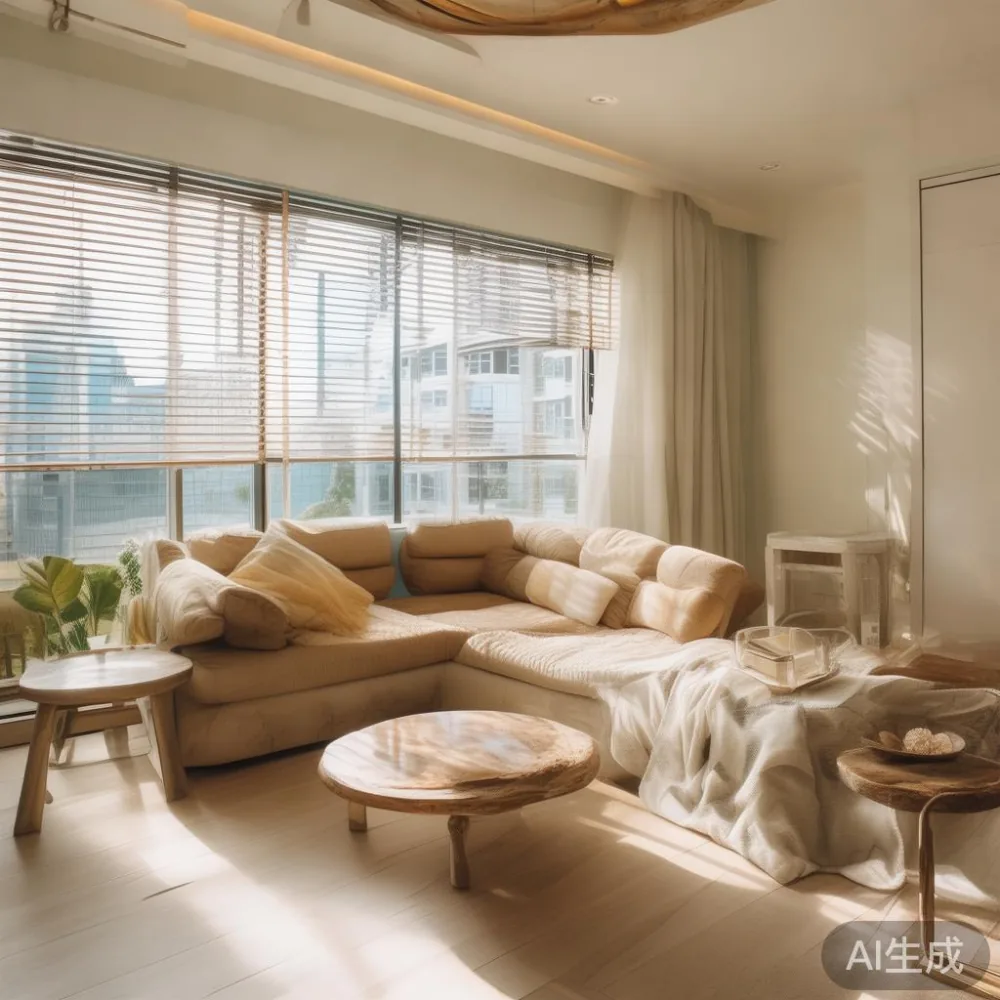
I spent the second half of last month helping a colleague furnish his new 92 sqm unit in Bedok Reservoir. He had two rules: nothing that looked like a hotel lobby, and nothing that needed a drill to assemble. We ended up pairing a solid wood sofa frame, an ash-veneer bed frame, and a 1.8m solid wood dining table against walls painted Farrow & Ball Drop Cloth, with a single 60cm marble table in the living corner for jewellery and coasters. The trick was using wood grain as the warmth source and letting coastal style do the rest. A short note on cost: the dining table alone landed at S$2,180 after GST, and a complete bedroom set (1.8m bed frame, two nightstands, one 2.4m wardrobe) came in at about S$4,950 delivered. For free-shipping thresholds, we cleared the S$350 mark without effort.
What does warm minimal actually mean?
Warm minimal is not beige-on-beige. It is the discipline of minimalism (one material per surface, clear sight lines, nothing decorative that does not earn its place) softened by three or four warm anchors: a chunky wood tone, a linen throw, a brushed brass lamp, and at least one piece with visible grain. The mistake Singaporean homeowners make is reading minimal as Scandinavian white, then bolting on a coastal rattan lamp and hoping it works. Coastal style needs texture to breathe; warm minimal needs wood to anchor. The meeting point is a solid wood dining table, a solid wood bed frame, or a solid wood sofa frame — pieces that are quiet, heavy, and tactile.
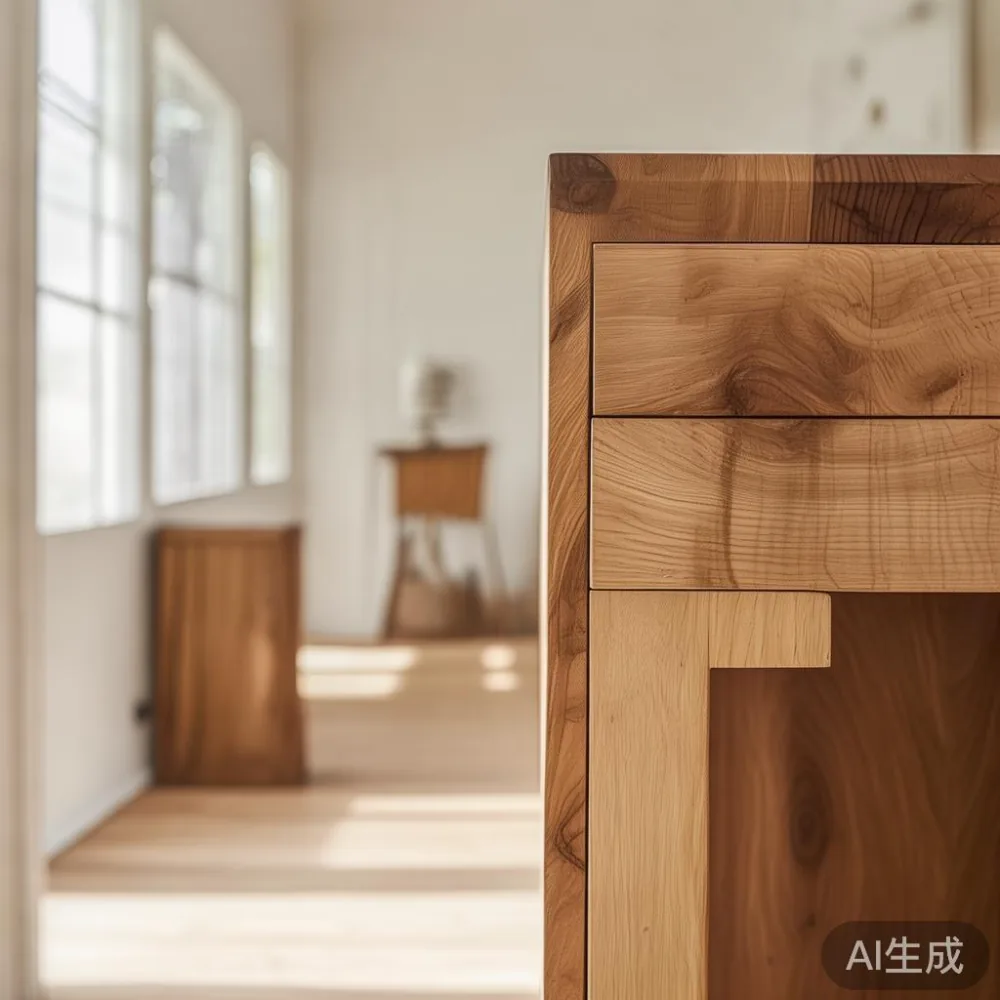
For HDB constraints, this works well because most lift openings in newer Tampines and Punggol blocks measure around 1.8m tall and 1.1m wide, and corridor turns at the lift lobby are usually 2.4m wide. A solid wood dining table in 1.6m or 1.8m, flipped vertically, fits comfortably with 10–15cm to spare. A 2.4m wardrobe in three flat-packed cartons (typically under 35kg each for two-person carry) is the upper limit before delivery teams start asking for a staircase access review.
Can a solid wood sofa, dining table, and wardrobe live in the same room without clashing?
Yes, and this is where a lot of buyers waste money. They pick a dining table in one wood, a bed frame in another, and a wardrobe in a third, then wonder why the room looks like a showroom corridor. The rule I gave my Bedok colleague was simple: choose one wood tone for the structural pieces and one accent tone for the soft pieces. In his case, the dining table, bed frame, and two nightstands were all in a warm white-oil ash, and the wardrobe interior was a pale oak. The wood grain reads as one voice, even though the finishes differ.
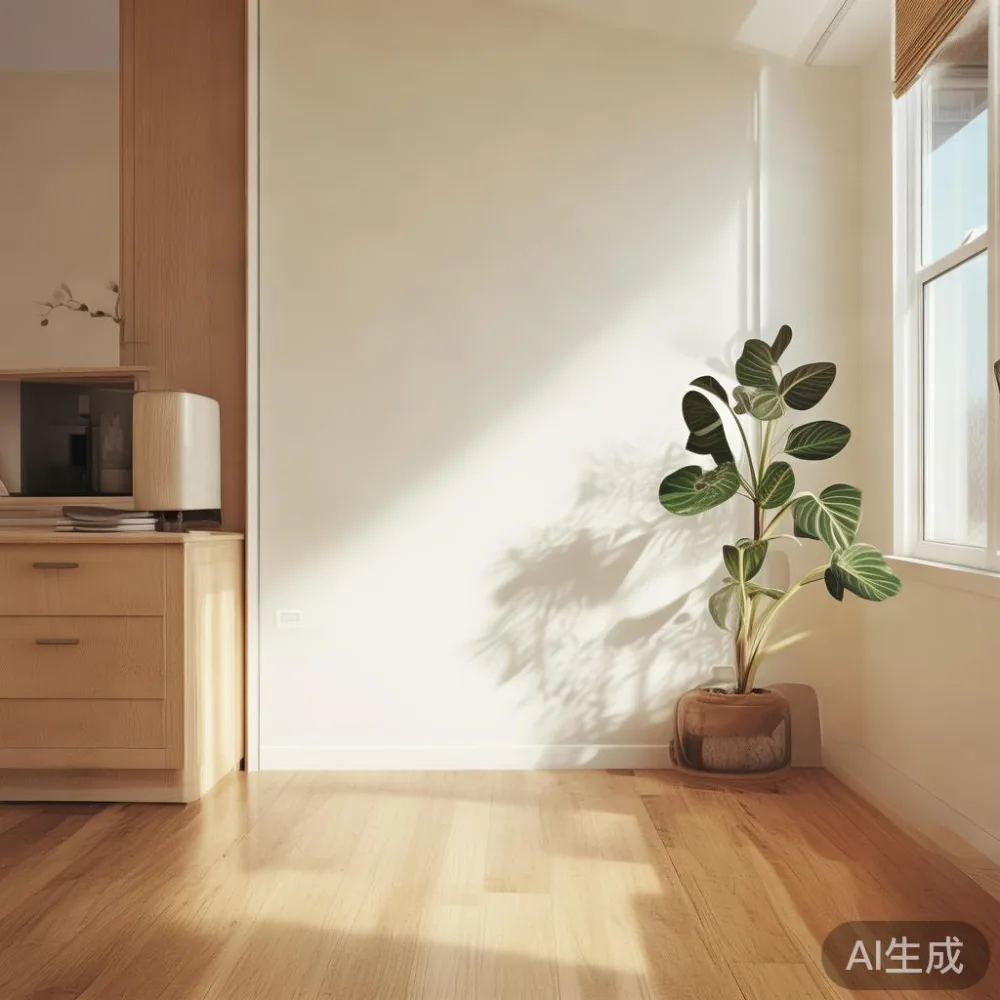
For sizing in a compact Singapore context, the proportions matter more than the wood:
• 1.4–1.6m dining table for a four-seat HDB dining area, 1.8m for a six-seat open-plan condo.
• A solid wood bed frame at 1.5m or 1.8m keeps the mattress height between 45–55cm, which matches standard Singaporean fitted sheet depths.
• A 2m or 2.4m wardrobe is the practical ceiling for a standard HDB bedroom wall of 2.4–2.7m.
• A nightstand at 45–55cm wide keeps bedside lamps within reading reach from the centre of the pillow.
Light luxury is the bridge here. Post-modern light luxury, in particular, lets you keep clean silhouettes while adding small reflective moments: a brushed brass handle on a wardrobe, a thin marble strip across a dining table edge, a fluted glass pendant. The result reads as warm minimal from across the room and quietly luxurious up close.
Is coastal style still compatible with solid wood furniture in 2026?
Yes, and the reason is that coastal style has shifted away from the 2010s driftwood-and-jute look. The current reading is closer to post-modern light luxury with sandy walls, lime-washed oak, and one sculptural piece per surface. Solid wood, particularly ash, white oak, and teak in a matte oil finish, behaves like the bones of a coastal room: pale enough to bounce Singapore's strong afternoon light, warm enough to keep the room from feeling like a clinic.
When my colleague's dining table arrived (11 working days after order, well within the standard 10–14 day shipping window from a Foshan workshop), the unboxing took about 25 minutes for two people. The table weighed 48kg in its flat-pack form, with the heaviest single carton at 32kg. That weight is the trade-off for the stability: a solid wood dining table at 48kg does not wobble when a restless four-year-old leans on it, and it does not telegraph footfalls through the floor below. In a Punggol or Bedok condo with neighbours underneath, that matters.
For coastal style specifically, I lean toward ash over rubberwood because the grain is wider and the tone is closer to the bleached driftwood palette. A marble table, on the other hand, should be the cool counterweight: a 60cm round Carrara piece, or a 50cm square with chamfered edges, sitting where morning light can catch it. One marble table per room is plenty. Two starts looking like a showroom.
How do you handle the lighting and the soft layers around the wood?
Lighting is where most warm-minimal rooms fail. Buyers spend S$6,000–S$10,000 on wood furniture, then hang a single 4,000K ceiling downlight and wonder why the grain looks muddy. Coastal style needs 2,700K in the evening and 3,000–3,500K during the day. For a 92 sqm unit, plan for six to eight lighting points: two ceiling, two floor, two table, and one or two wall washers behind the bed frame.
Soft layers should be one shade apart from the wood, not two. If the dining table is warm ash at roughly YL 30, the linen runner should be a soft oat or ecru, never pure white and never beige. Cushions on a solid wood sofa can carry the coastal palette: dusty blue, seafoam, terracotta, bone. One accent cushion in a printed coastal motif is acceptable. Three is a theme park.
Rugs are the second most common mistake. In a compact Singapore living room, a 200 x 300cm rug under the front legs of the solid wood sofa frame is the right scale. Anything smaller floats. Anything bigger swallows the marble table. And on flooring, the wood-look SPC planks from a Tampines retailer (around S$6.50–S$9 per sqft installed) work as a neutral base without competing with a solid wood dining table for attention.
What about European light luxury furniture vs American light luxury in this context?
Both have a place, but they behave differently next to coastal style. French light luxury, with its curvier silhouettes and brass sabots, tends to look out of place against bleached oak unless you commit fully to a Parisian-apartment reading of coastal style — think Provençal rather than Hamptons. American light luxury, by contrast, is more rectangular, more matte, and easier to pair with a solid wood dining table and a flat-front wardrobe.
The European light luxury sofa vs Japandi sofa question comes up often, and for warm minimal in Singapore the answer is usually the European light luxury sofa. A Japandi sofa, with its low arms and deeper seat, asks for a tatami-edge room and a 35cm coffee table. A European light luxury sofa, at 88–92cm depth with a 45cm seat height, pairs with a 35–40cm marble table and a standard dining table at 75cm. The vertical proportions line up better in HDB layouts where ceiling heights are typically 2.6–2.8m.
If you are exploring for sale American furniture or for sale European furniture through a Singapore-friendly supplier, the practical check is the same: ask for the carton dimensions, the gross weight, and the lift-friendly flat-pack count. A solid wood bed frame from a Foshan workshop exporting to 15+ countries will usually arrive in 3–4 cartons, each under 35kg, which a two-person team can carry through a standard HDB corridor without a loading dock booking.
How do warranties and after-sales work for imported solid wood in Singapore?
This is the unglamorous part, and the part that separates a good purchase from a regretful one. Look for three numbers: a structural warranty of at least 10 years, a refinishing or repair option for the lifetime of the piece, and a return window of 14 days with the vendor covering return shipping above a threshold (US$350 is a common benchmark once converted to roughly S$480). MIDHILL, a Foshan solid wood furniture maker established in 2008, has shipped pieces under those terms to customers across Singapore, Malaysia, and Australia. Two of my former clients have owned their MIDHILL dining tables for over six years, and both have used the lifetime refinishing service once — once for a water ring, once for a sun-bleach patch near a west-facing window in a Punggol corner unit.
The shipping math for a typical Bedok or Tampines delivery: 10–14 working days from order to doorstep, sea freight via Port Klang or direct to Singapore, then last-mile delivery by lorry with a two-person team. Most pieces below 1.8m and under 50kg arrive fully assembled; larger items arrive flat-packed with a hex key, an Allen key, and a written guide. Allow 30–45 minutes per major piece for assembly by one person, 20–30 minutes for two.
For a MIDHILL dining table review framed as a buyer checklist, the points I would score are: grain consistency (look for a colour band of under 10% across the surface), joinery (mortise-and-tenon or doweled, not just glued), finish (matte oil rather than high-gloss lacquer, which reads as cold under Singapore's light), and packaging (foam corner protectors, not just cardboard). Two months ago, a client in Clementi sent me photos of a 2m solid wood dining table she had ordered after seeing one in a friend's Punggol unit, and the only issue was a single 8cm scratch on the underside of the table — invisible after assembly and refunded without argument.
What does a complete warm-minimal room actually cost in Singapore?
For a realistic 92 sqm three-bedder, here is a working budget in SGD, including 9% GST and standard delivery:
• 1.8m solid wood dining table with six chairs: S$3,200–S$4,500.
• 1.8m solid wood bed frame with mattress (queen): S$2,400–S$3,800.
• 2.4m flat-front wardrobe in solid ash: S$1,800–S$2,800.
• Two nightstands at 50cm: S$450–S$700 per pair.
• Solid wood sofa frame (2.4m three-seater) with fabric upholstery: S$2,600–S$4,200.
• 60cm marble side table: S$480–S$900.
• Lighting refresh (six LED panels, two floor lamps, one pendant): S$900–S$1,600.
• Soft layers (rug, curtains, cushions, runner): S$700–S$1,400.
Total: roughly S$12,500–S$19,900. The mid-point of S$15,000–S$16,500 is a realistic target for a homeowner who wants the look without showroom markup. American light luxury pieces from Foshan workshops sit at the lower end of each band; European light luxury pieces, particularly those with marble inlay or brass detailing, sit at the upper end.
Any quick checklist before clicking order?
Three checks before paying a deposit. First, measure the lift opening, the corridor width at the lift lobby, and the doorway into the room. A solid wood sofa frame at 2.4m long will not fit through a 1.8m corridor turn without being tilted, and most HDB corridor turns measure 1.8–2.2m wide at the pivot point. Second, confirm the wood species and the finish in writing — ash, white oak, or teak in a matte oil is the right palette for coastal style; rubberwood in a high-gloss lacquer is not. Third, confirm the warranty in years, the refinishing offer, and the return window in days, with the return shipping threshold in SGD so there is no FX surprise.
One last thought. The phrase industrial for guest room has been floating around Singapore design forums this year, but for warm minimal it is the wrong reference. A guest room in a Tampines or Punggol flat reads better as a coastal-style retreat: a 1.2m solid wood daybed, a small nightstand, a single 40cm marble table, and one wall-mounted lamp. Light, calm, and easy for the next visitor to enjoy. If you are browsing for sale European furniture or for sale American furniture and want a single vendor that covers both palettes, look at the catalogue on api.midhill.co, where the pieces are tagged by wood tone, room, and shipping weight — it makes the cross-reference work in about ten minutes rather than two weekends.