What Actually Drives the Price of Solid Wood Furniture — A Coastal-Style Buyer’s Guide for Singapore
I still remember the afternoon my colleague Priya asked me, with the kind of wide-eyed hope only a first-time homeowner brings: "Why does one 1.8m solid wood bed frame cost S$1,200 and another cost S$4,800? They both look like wood." We were standing in her new 4-room HDB in Tampines, tape measure dangling from her hand, the afternoon light bouncing off her bare corridor walls. That conversation is the reason I wrote this article. The price gap is real, the reasons are specific, and once you understand them, you stop guessing and start buying well.
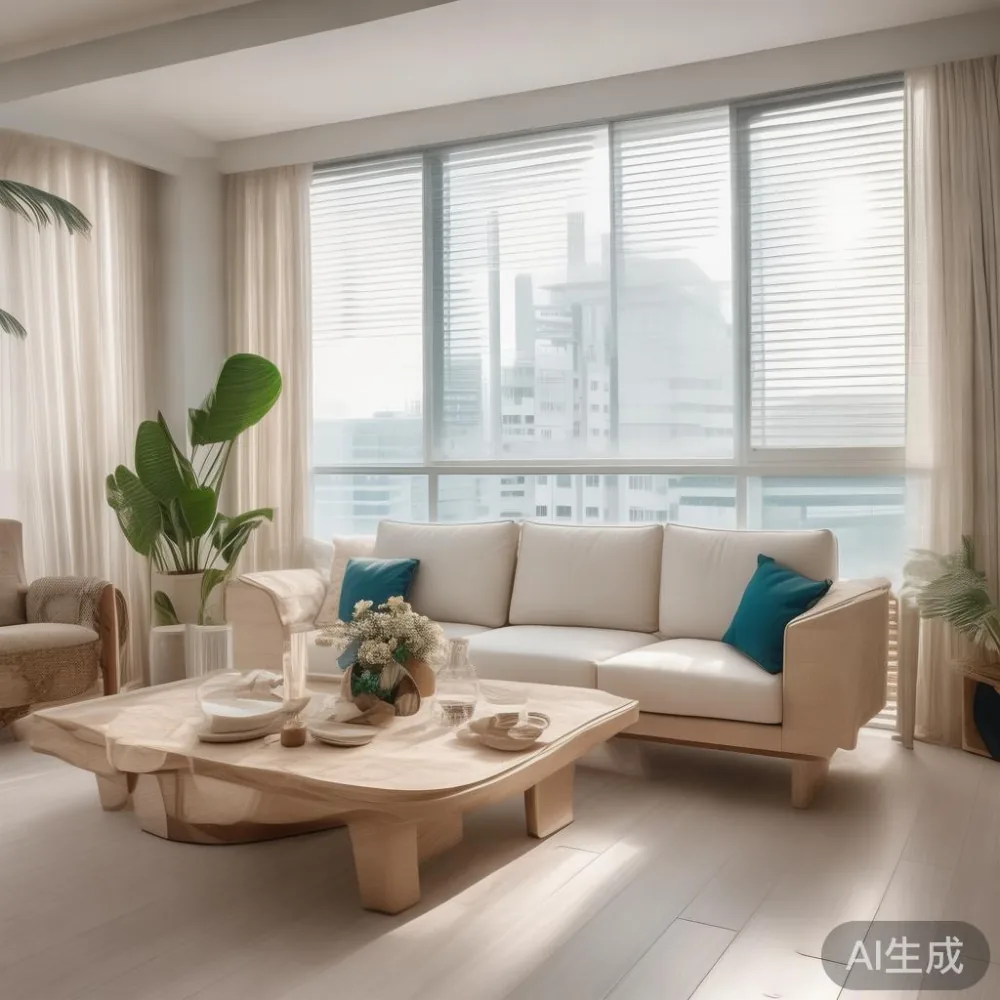
Wood Species: Where the Real Money Goes
The single largest driver of price in any piece of solid wood furniture — whether it is a dining table, a wardrobe, or a bed frame — is the species of wood. In Singapore showrooms, you will mostly see four families: rubberwood, ash, oak (often labelled as American oak), and walnut. Rubberwood is the budget anchor: a 1.6m rubberwood dining table commonly lands at S$900–S$1,400. Ash and oak, depending on grade, run S$2,200–S$4,500 for the same footprint. Walnut sits at the top, with a 2.2m slab table often crossing S$6,000.
The reason is supply chain math. Rubberwood is a plantation byproduct of the latex industry in Southeast Asia — abundant, dense, and fast to mature, which keeps the cubic-metre cost low. Oak and ash come primarily from temperate forests in North America and Europe, with longer rotation cycles (typically 40–80 years), stricter grading rules, and higher freight costs from those regions to Foshan factories and then to Singapore. Walnut is rarer still, and its deep, even grain makes it the species most coastal-style designers reach for when they want warmth without heaviness. When MIDHILL quotes a piece in white oak or walnut, the price is paying for slower-growing timber and tighter grading, not a mysterious premium.
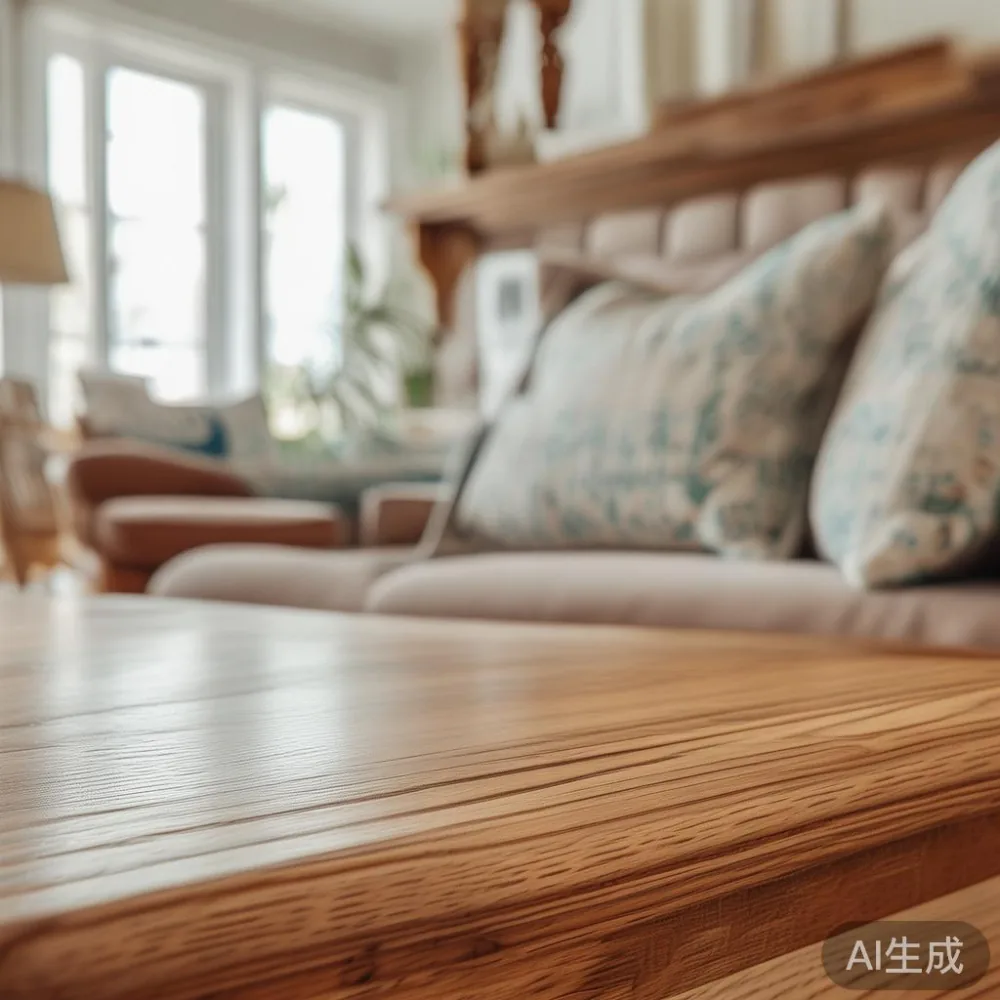
How heavy is the actual piece? (And why weight matters more than you think)
A second driver, and one most shoppers ignore, is net weight. A 1.8m ash bed frame typically weighs 65–85 kg, while a comparable rubberwood frame weighs 45–55 kg. That 20–30 kg difference is not trivia. It changes how the piece ships (air-freight surcharges above 70 kg), how many movers you need (Singapore HDB rules generally allow only one bulk furniture item per lift trip during peak hours), and how the joints are engineered. Heavier hardwoods also demand thicker aprons, reinforced corner blocks, and longer dowels — small hardware items that quietly add 8–12% to the build cost.
This is also where coastal-style buyers in Punggol and Bedok condos feel the pinch. A full living-room set — 3-seater solid wood sofa frame, marble table, two nightstands, and a 2m wardrobe — can easily weigh 280 kg together. If your apartment is on the 12th floor and the lift inner dimensions are the typical 1.1m x 1.4m, you will likely need two delivery slots. Singapore delivery teams currently add to S$110–S$160 per trip for high-floor, single-lift buildings, on top of any curb-to-corridor staircase carry.

Is "solid wood" always solid wood? The Construction Question
Not directly. This is where pricing gets slippery, and why two pieces labelled "solid oak" can be S$3,000 apart. The honest answer is: construction quality is the hidden multiplier in this category.
Reputable makers use through-tenon joinery, mortise-and-tenon corner blocks, dovetailed drawer boxes, and 9–11-ply hardwood plywood for wardrobe backs rather than thin MDF. A wardrobe assembled that way will weigh 15–25% more than a stapled-together competitor at the same size, and it will still be standing in 20. Lower-end construction cuts those steps: butt joints with staples, 3-mm MDF backs, veneer-faced particleboard dressed up as "wood panels." The price tag drops 30–40%, and so does the lifespan.
A simple rule for coastal-style interiors: lift the piece. A genuine solid wood sofa frame in oak or ash, even before cushions, should feel unnervingly heavy. Pick up a dining chair — a real one in solid ash will weigh 4.5–6 kg; a hollow imitation will weigh 2.5 kg or less. MIDHILL publishes net and gross weights on spec sheets specifically because lift access in HDB corridors (typically 1.2m wide) and condo service lift bookings make weight a practical concern, not a marketing line.
Finish Quality and Coastal-Style Aesthetics
Coastal style is a look, but it is also a finishing protocol. The pale, sun-bleached feel that suits a Tampines or Punggol home is achieved with either lime-wash treatments, white oil finishes, or low-VOC water-based lacquers — not the heavy polyurethane gloss common in traditional Chinese teak furniture. Lime washing and white oils are labour-intensive: each coat is hand-applied, lightly sanded, and often requires a wax topcoat. A six-step finish in white oil can add S$300–S$700 to a dining table versus a single spray of PU.
The light-luxury positioning fits here. French light luxury (léger-luxe) and post-modern light luxury both favour matte, low-sheen surfaces where you can still feel the wood grain with your fingertips — a small detail, but it is exactly the texture that distinguishes a S$3,800 coastal dining table from a S$1,600 one. When you run your hand across a properly finished oak top, the grain should rise and fall; on a sealed PU surface, the wood feels like plastic under glass.
If you are chasing an American oak boho style — wide-plank, slightly weathered, paired with linen and rattan — be aware that the finishing schedule has to match the species. White oak accepts white oils beautifully; rubberwood tends to yellow under the same treatment within 18 months. That is one reason American oak boho style dining tables are rarely priced below S$2,400 in Singapore showrooms, even at mid-size makers.
Hardware, Soft-Close, and the Quiet Details
Drawer slides and hinges are where many coastal-style wardrobes and nightstands quietly inflate in price. A basic side-mount roller slide costs S$1.50–S$3 per drawer; a soft-close Blum or Hettich undermount slide costs S$18–S$35 per drawer. A six-drawer wardrobe with soft-close throughout adds roughly S$200–S$300 to the BOM, which is exactly the kind of detail that disappears on the showroom floor but appears every morning for the next decade.
Other quiet costs: solid brass vs. zinc-alloy handles (a four-handle upgrade on a wardrobe can run S$90–S$140); full-extension vs. three-quarter-extension drawer slides; felt-lined top drawers in nightstands; soft-close hinges on wardrobe doors. None of these are spectacular. Together, on a full bedroom set (bed frame, two nightstands, 6-door wardrobe, marble table for the dressing corner), they add S$600–S$1,100 — and they are the difference between a bedroom you forget about and one that still feels precise in year eight.
How do I style a Modern light luxury corner sofa in a small apartment?
Pick a corner sofa in a pale oak or ash base, keep the upholstery in oatmeal linen or boucle, anchor it with a low marble table (round, 90 cm diameter, so corners do not catch on corridor walls), and leave 70–80 cm of walking clearance around the seating zone — that single spacing detail is the precise figure that keeps a small living room readable and walkable.
This is the question I get most often from condo owners in Bedok and Punggol, and the honest answer is that Modern light luxury (a French-leaning, post-modern take on casual elegance) is actually easier to execute in 60–75 sqm apartments than full traditional. The trick is restraint: one hero piece — usually the corner sofa or the bed frame — and everything else recedes. For a corner sofa in a 55–65 sqm condo, target 240 cm x 240 cm maximum footprint, including the chaise. A typical 3-seater solid wood sofa frame in ash will weigh 55–70 kg, so plan lift access in advance.
Pair the sofa with a 90 cm round marble table on the inside corner of the chaise (marble reads cool against warm oak, which is exactly the light-luxury balance you want). Skip the rug initially if budget is tight; add a 200 cm x 300 cm linen rug later. Two artworks — and one plant. That is it. Anything more and the room starts competing with the sofa instead of supporting it. In a 4-room HDB, this configuration typically delivers a complete living-room set — corner sofa, marble table, side table, and a slim TV console — for S$1,800–S$2,800, including GST, when sourced from a Foshan maker that consolidates shipping.
Shipping, GST, and the Real Landed Cost in Singapore
The piece price is rarely the price you pay. Singapore adds 9% GST on imported goods, and freight from a South China factory to a Singapore door currently runs S$180–S$320 per cubic metre for LCL (less-than-container-load) sea freight, or roughly 18–28 days port-to-door. Air freight is faster (5–8 days) but four to six times the cost, which is why most solid wood furniture for the local market moves by sea.
Add to that Singapore-side delivery (S$60–S$160 per trip depending on floor and lift access), and a S$2,400 dining table on paper becomes S$2,760–S$2,830 landed. That is also why some Foshan makers — MIDHILL included — offer consolidated free shipping above a threshold (their line is US$350, roughly S$480), which absorbs a meaningful slice of the freight on multi-piece orders. A full bedroom set in oak, even with that concession, will still attract 9% GST on the CIF value, so budget for it.
Warranty, Refinishing, and the 10-Year Question
The final piece of the price puzzle is what happens after year eight. Humidity in Singapore runs 70–85% year-round, and coastal-style finishes (lime wash, white oil, matte lacquer) need reapplication every 4–6 years to stay even. A piece sold with a 10-year structural warranty and lifetime refinishing is priced differently from one sold with a 12-month warranty, because the maker is absorbing the long-tail cost of joint failure, finish wear, and customer goodwill.
Reputable Foshan makers back their joinery for a decade, because they have engineered the corner blocks, dowels, and tenons to last that long. A structural warranty is not a marketing promise; it is a build-quality statement. The lifetime refinishing side is rarer, and it matters in Singapore: a S$300 refinishing job in year seven is the difference between a bed frame that ages beautifully and one that quietly gets replaced. MIDHILL's 10-year structural coverage and lifetime refinishing are part of why their coastal-style oak and ash lines sit where they do on the price ladder.
The Honest Price Breakdown for a Typical Coastal-Style Order
Last month I helped a friend in Punggol specify a five-piece coastal-style order: a 1.8m oak bed frame, two nightstands, a 2m wardrobe, a 1.6m dining table, and a 3-seater solid wood sofa frame. Here is how the S$7,400 total actually split — it is a useful template.
Wood material (oak, FAS grade): ~38%. Joinery and construction labour in the Foshan workshop: ~22%. Hardware (soft-close slides, brass hinges, felt liners): ~11%. Finishing (six-step white oil, hand-sanded): ~14%. Freight and consolidation to door: ~6%. GST on landed CIF value: ~6%. Warranty reserve and after-sales (refinishing, structural): ~3%. These ratios are typical across mid-to-upper Foshan makers; cheaper pieces shave the joinery, hardware, and finishing lines, and you feel it within three years.
What This Means When You Buy
The price of solid wood furniture in Singapore is not a mystery. It is species (~30–40%), construction (~20–25%), hardware (~8–12%), finishing (~10–15%), shipping (~5–8%), GST (~9% on landed value), and warranty reserve (~3–5%). When you compare two pieces that look similar on a showroom floor, ask for the species and grade, the joinery method, the slide/hinge brand, the finishing steps, the net weight, the warranty terms, and the shipping line. A piece that answers all seven cleanly will cost more, and it will be the cheaper purchase over ten years.
If your priority is coastal-style warmth without the full walnut bill, ash and American oak are the honest middle. If you can stretch to a full oak bedroom set with soft-close hardware, do it once. Your Tampines or Bedok apartment is small enough that every piece has to earn its footprint — and a well-built solid wood sofa, bed frame, dining table, wardrobe, nightstand, and marble table will outlast three trend cycles and still look right in year twelve.