What Actually Drives the Price of Solid Wood Furniture
Last month I visited a friend in a 5-room HDB flat in Tampines who had just taken delivery of a new coastal style dining table, six chairs, and a matching sideboard. The total landed at S$4,360, GST included, with free shipping because the order crossed the S$350 threshold. The same configuration on another site was quoted at S$6,200. Same number of seats, similar oak tone, supposedly identical "solid wood." So what was the S$1,840 actually buying? That question is the spine of this article, because the gap between a fair price and a rip-off on solid wood furniture is almost always a story about specific variables you can see if you know where to look.
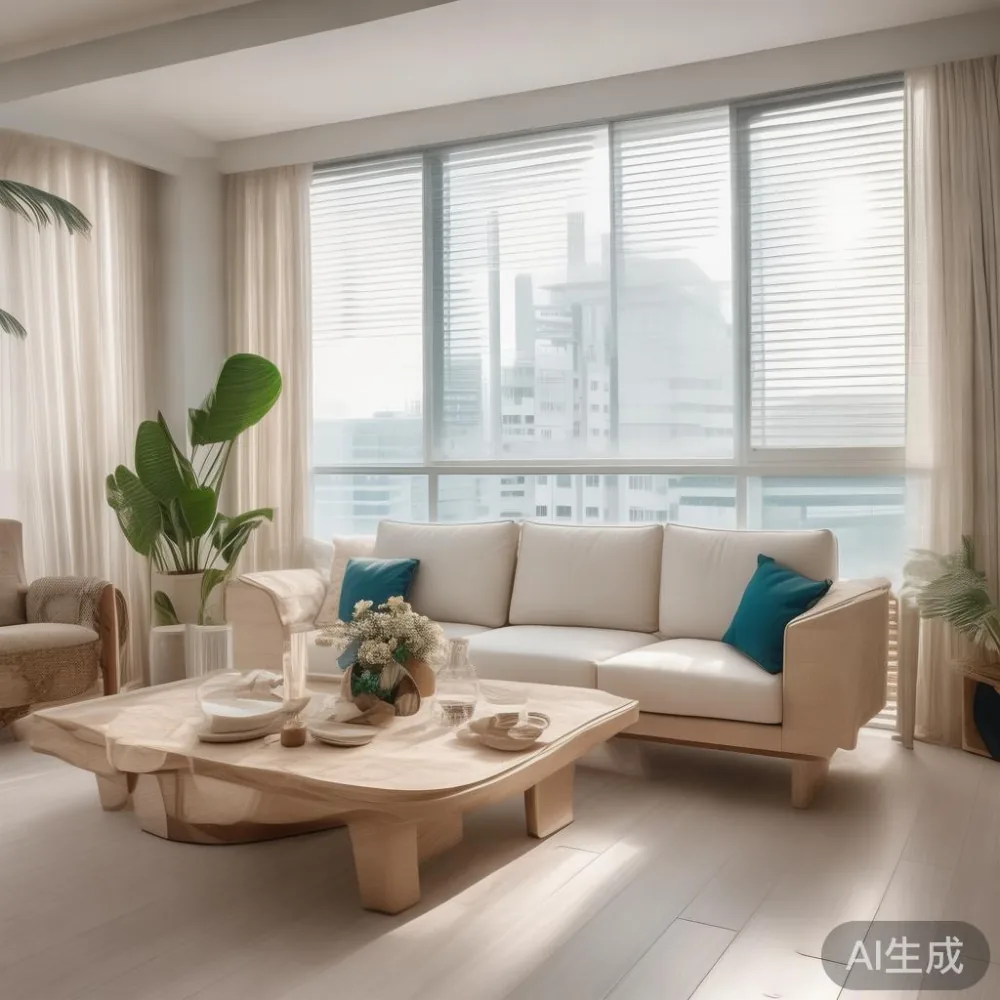
Working in this trade, I have walked enough Foshan workshops and shipped enough 40-foot containers to know that the sticker on a solid wood bed frame or wardrobe is shaped by about eight factors. Once you can read them, you stop paying for things that do not exist, and you start paying for things that actually do.
1. The Species, and Why Oak and Ash Cost More Than Rubberwood
Wood species is the first driver, and it is the one most online listings bury in a footnote. White oak, red oak, ash, walnut, and teak are denser, slower-grown, and harder to kiln-dry correctly than rubberwood (also called para rubber or plantation hardwood), which is the residue of the latex industry in Malaysia and Thailand. Rubberwood is a perfectly respectable material for a nightstand or an interior shelf, and many honest makers use it. The problem is when rubberwood is sold as "premium solid hardwood" and priced as if it were oak.
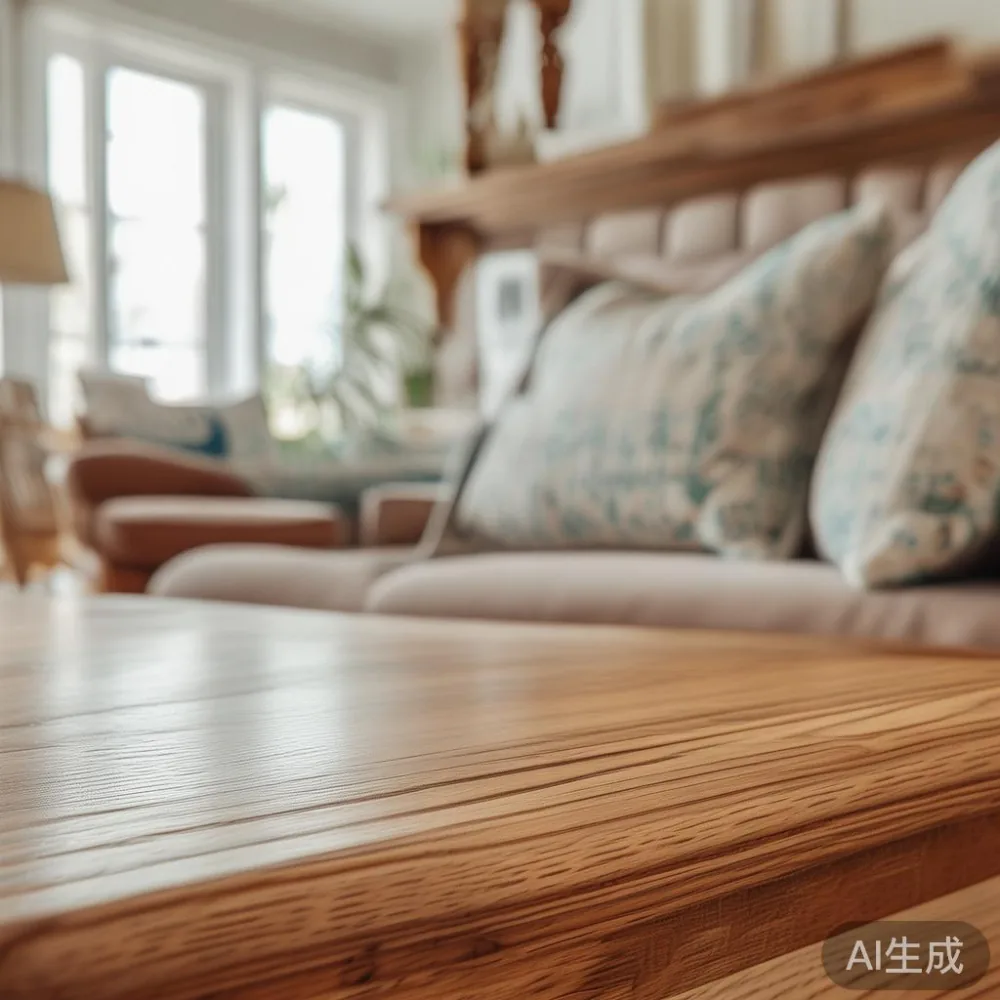
As a rough Singapore-shelf guide for a 1.8m bed frame, a 100% white oak coastal style bed frame runs S$2,800 to S$4,200; an ash version runs S$2,400 to S$3,600; a mixed hardwood with rubberwood components runs S$1,600 to S$2,400. A 100% rubberwood frame priced at S$2,500 is where the suspicion starts. This is also why MIDHILL, the Foshan maker behind this site, publishes the species on every spec sheet, not just the finish photo.
2. How the Boards Are Cut: Solid Plank vs. Finger-Jointed vs. Veneer
"Solid wood" is not a single category. A solid wood sofa frame built from one continuous plank of oak is a different object from a frame built by finger-jointing small offcuts into longer boards, which is again different from a frame with a thin oak veneer over an engineered core. All three can legally be called "solid wood" in some markets, which is why a S$900 wardrobe and a S$3,200 wardrobe can both claim the term.

Finger-jointing is not fraud, by the way. Used on hidden internal panels or the inside faces of a wardrobe, it is a smart way to use smaller pieces. The red flag is when finger-jointed or short-piece boards show up on the visible top of a dining table or the headboard of a bed. Run your hand across the surface in the showroom. If you can feel repeated seams every 20 to 30 cm where two short boards are glued together, you are paying plank prices for offcut construction.
3. Kiln-Drying, Moisture Content, and Why Your Wardrobe Cracks in February
Singapore sits at roughly 80% relative humidity most of the year, while air-conditioned bedrooms drop to 50 to 55%. That 25 to 30 point swing punishes wood that was not dried properly. Furniture-grade oak needs to be kiln-dried to about 8 to 10% moisture content and then acclimatised for 2 to 3 weeks in a workshop with controlled humidity before assembly. Done poorly, the wood is rushed out of the kiln at 14 to 16% and glued up within days.
That is why some wardrobes arrive with a clean finish and develop 1 to 2 mm gaps along the seams by February, or why a dining table bows 4 mm across the width during the December monsoon. Proper drying adds 3 to 6 weeks to production and real cost per cubic metre. A coastal style wardrobe made with kiln-dried oak at 8% will outlast a rushed one by 10 to 15 years, which is the difference between a 10-year structural warranty that never gets used and one that gets used twice.
4. Joinery, Hardware, and the Hidden Half of the Price
The visible wood is half the story. The other half lives inside: mortise-and-tenon joinery on a bed frame versus dowel screws and pocket-hole screws; dovetailed drawer boxes on a nightstand versus stapled MDF with a thin oak face; soft-close European drawer slides rated for 100,000 cycles versus unbranded hinges rated for 20,000.
A colleague of mine shipped two identical-looking coastal style six-drawer dressers to a Punggol condo last quarter. One used dovetail joins, Blum soft-close slides, and solid oak drawer boxes, and weighed 92 kg. The other used dowel construction, basic hinges, and plywood drawer boxes with oak veneer, and weighed 58 kg. The first cost S$3,150, the second S$1,980. The 34 kg is not padding, it is wood mass. Lift the piece in the showroom. If it feels too light for its size, hardware and joinery are usually where the maker has economised.
5. Finish, Lacquer, and Whether You Are Buying a Finish or Buying Air
Finish work is invisible in the product photo but shows up on the invoice. A truly sprayed, multi-coat conversion lacquer on a marble table top or a dining table, sanded between coats, with a final hand-rubbed satin or open-pore treatment, is 3 to 4 days of booth labour per piece. A single sprayed coat of generic NC (nitro-cellulose) lacquer is half a day. Both look great under showroom LEDs. Both photograph identically. One will still look new in 8 years; the other will cloud, yellow, or peel by year 3.
For coastal style specifically, the finish matters even more because the look depends on an open, slightly chalky, low-sheen surface that highlights the wood grain. Cheap lacquer flattens that grain and gives the piece a plastic look that fights the whole aesthetic. This is also where lower-VOC water-based finishes cost roughly 12 to 18% more than solvent finishes, a real but small number that often disappears into the marketing line "eco-friendly finish."
6. Hardware Logistics, Shipping, and the Singapore-Specific Costs
Singapore adds its own price layer that has nothing to do with the workshop. A 40-foot container from Foshan to Singapore takes 7 to 12 days by sea, plus 2 to 4 days for customs clearance, plus delivery from the Singapore warehouse to your flat. Lift access is the silent killer: a Tampines HDB corridor is typically about 1.2 m wide, and most HDB lifts accept a maximum package of about 1.5 m on the longest side. A solid wood sofa in a flat-pack crate over 1.6 m long usually cannot go up the lift and requires a manual carry up the staircase, which is a separate fee of S$120 to S$280 per floor in older blocks without a service lift.
GST at 9% lands on the CIF (cost, insurance, freight) value, so a S$3,000 table costs S$3,270 landed before delivery. Free shipping above S$350 is generous, but the threshold is set deliberately to absorb the courier cost (S$45 to S$90 per piece) into the margin, not to give it away. MIDHILL, for example, absorbs that courier cost on every order over S$350, including bulky pieces like a 2m wardrobe, which is why the threshold exists rather than a flat S$0 shipping promise.
7. Warranty, Refinishing, and What a 10-Year Structural Warranty Actually Means
A 10-year structural warranty on a bed frame or dining table covers joinery failure, frame cracking, and major warping under normal residential use. It does not cover finish wear, surface scratches, or damage from direct afternoon sun through a west-facing window. Read the warranty document, not the marketing line. A lifetime refinishing service, on the other hand, is genuinely rare and genuinely valuable: it means the workshop will re-sand and re-finish your piece at cost plus shipping for as long as you own it, which converts a S$3,200 dining table into a piece that can serve two households over 40 years.
For a coastal style bedroom set, the long-term math is simple. A S$4,200 set refinished once at year 12 for about S$600 has a 30-year landed cost of S$4,800, or roughly S$160 per year. A S$2,400 set replaced once at year 10 has a 30-year landed cost of S$4,800 plus the hassle of two moves and two disposals. The price difference at checkout disappears over a generation.
How do I style a Nordic master bed in a small apartment?
In a compact Singapore bedroom, pair a low-profile Nordic master bed frame in light white oak with a tall, simple upholstered headboard in oatmeal boucle, two slim nightstands with rounded edges, and one small side table for bedroom reading on the side furthest from the wardrobe door so it does not block the corridor, then keep the bedding in white, sand, and a single muted blue accent so the wood grain stays the visual hero.
In practice, that means a 1.8m x 2m bed frame with a 5 to 8 cm gap from the back wall (no headboard bolts deep into a hollow HDB partition), a 45 to 50 cm wide nightstand on each side (rather than two bulky 60 cm units that crowd the walkway), and one 35 to 40 cm diameter round side table instead of a second square nightstand on the side closer to the wardrobe. The reading lamp should clamp onto the headboard, not the floor, because every 20 cm of floor space matters in a 10 m² bedroom in a Punggol or Bedok flat.
8. Where the French Light Luxury and American Light Luxury Tags Fit In
You will see three terms on mid-range coastal style sites: French light luxury, American light luxury, and post-modern light luxury. They are not materials, they are design dialects. French light luxury leans on cabriole silhouettes, fluted legs on wardrobes and nightstands, and warm oak tones with brass tipping on hardware. American light luxury is broader and more relaxed: clean shaker profiles on dining tables, generous proportions, and matte black or brushed nickel hardware. Post-modern light luxury pushes sculptural curves and mixed-material pairings such as a solid oak dining table with a marble table top insert, or a bed frame with a curved bouclé headboard.
The same S$3,500 budget lands different objects in each dialect. In American light luxury, it buys a generously sized solid wood dining table that seats six comfortably. In French light luxury, the same budget buys a smaller table with carved legs and brass detail. In post-modern light luxury, it might buy a compact table with a real marble inlay on a solid wood frame, where the marble alone accounts for roughly S$700 to S$1,100 of the cost. Knowing which dialect you actually like is how you stop paying for the wrong design language.
9. A Practical Checklist Before You Pay
Five numbers to confirm before you commit, written down so you can ask them on the showroom floor: (1) the wood species on every visible surface, written, not promised; (2) the moisture content at packing, ideally 8 to 10% for oak and ash; (3) the drawer slide brand and cycle rating on any nightstand, dresser, or wardrobe; (4) the joinery method on the bed frame and dining table; (5) the total landed price including GST at 9%, delivery to your block, and lift-access surcharges if any. If the salesperson cannot answer two of those five, the price they quoted is built on sand.
One last number worth knowing. MIDHILL was set up in Foshan in 2008, now ships to more than 15 countries, and offers a 10-year structural warranty plus lifetime refinishing on its coastal style solid wood sofa, bed frame, dining table, wardrobe, nightstand, and marble table ranges. That kind of long, specific after-sales promise is only credible when the kiln-drying, the joinery, and the finish work behind it are real, which is the most practical price signal a coastal style buyer in Singapore can ask of any maker.