Coastal Style for Compact Singapore Homes: A Furniture Specialist's Guide to Styling a Small Apartment Without Crowding It
Last month I visited a 65 sqm two-bedder in Punggol with a client who had just received her keys. The unit was empty, the floors were bare vinyl, and the corridor outside her door measured 1.2 m wide — standard for a HDB block in the BTO estates around Sumang Link. She looked at me and said, "I want it to feel like a beach house, but I only have a four-seater dining table's worth of room between the sofa and the TV." That sentence, in different forms, is the question I hear almost every week from homeowners in Tampines, Bedok, and the newer Punggol/Sengkang launches.
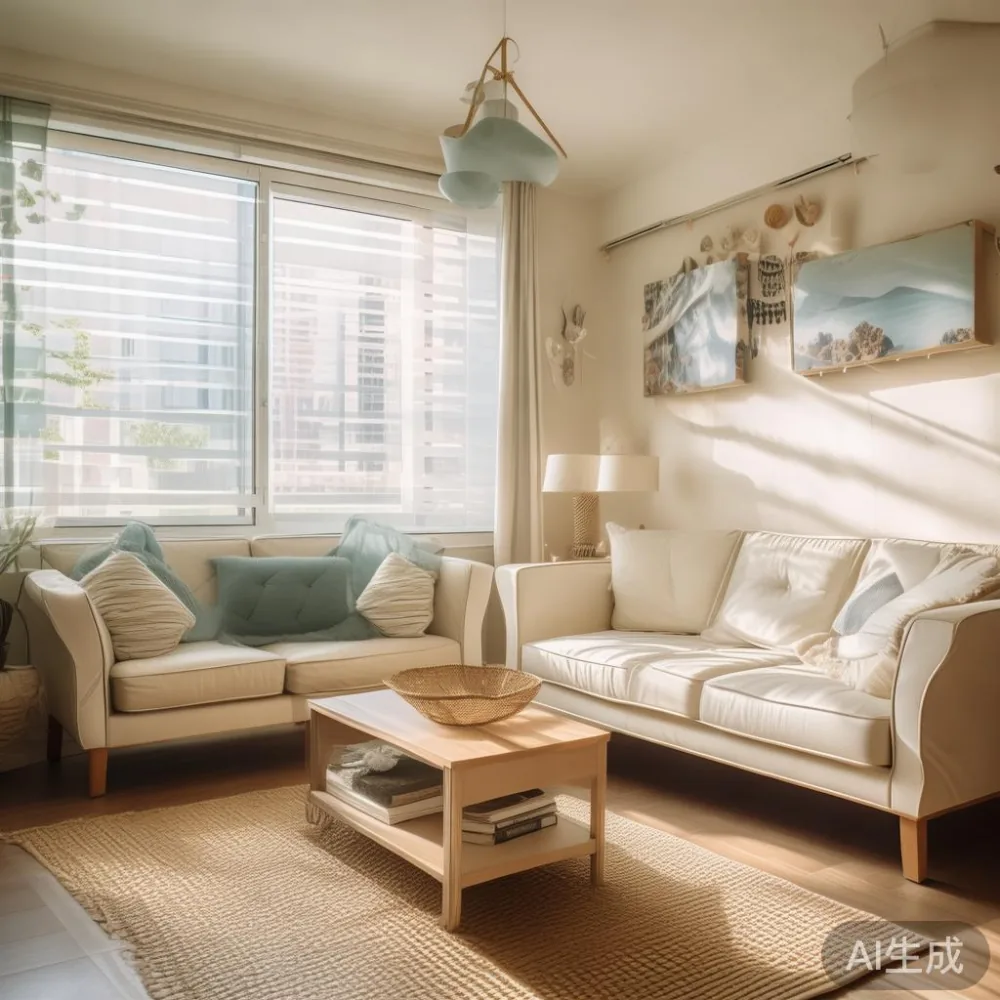
The honest answer is that coastal style is one of the easier aesthetics to get right in a compact Singapore apartment, but only if you treat every centimetre as a budget. Below is the playbook I share with clients, with concrete numbers, local context (lift sizes, corridor widths, GST, delivery windows), and the light-luxury framing that has come to define how mid-to-upper buyers in Singapore think about solid wood furniture today.
What exactly is "coastal style" and why does it suit HDB flats so well?
Coastal style, in the way most Singapore homeowners mean it, is the quieter, more grown-up cousin of Hamptons: white-washed timber, soft sand and driftwood neutrals, linen textiles, jute or sisal textures, brushed brass or nickel hardware, and the occasional piece of furniture with visible grain and a softly rounded silhouette. It is not "nautical." There are no anchors, no life rings, and very few navy stripes. The palette does most of the work: bone, oat, sea-fog, putty, driftwood.
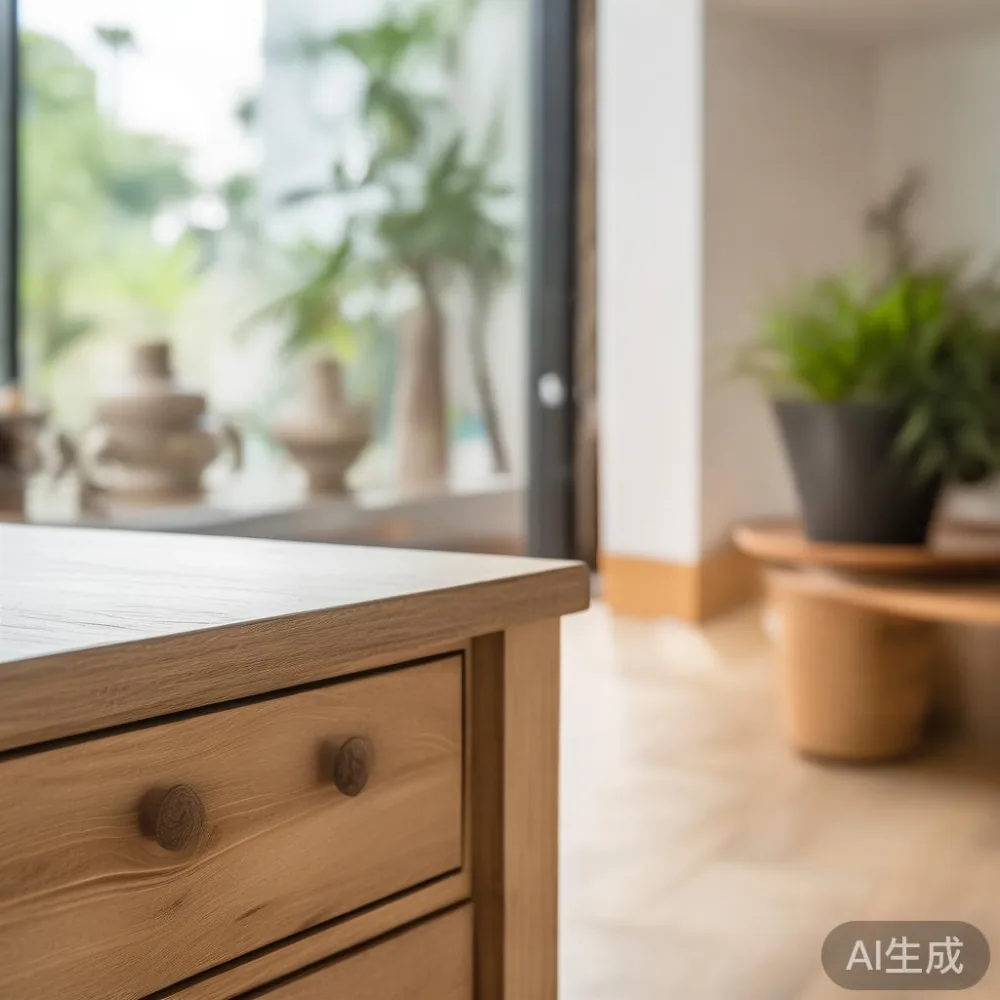
For a 60 to 75 sqm HDB flat or a 50 to 70 sqm condo in the OCR (Outside Central Region), coastal style solves three problems at once. First, light colours reflect what little natural light arrives, which matters when your windows face a neighbouring block 24 m away. Second, the visual softness of linen and pale oak reduces the "boxed-in" feeling of a 2.7 m ceiling. Third, the category sits comfortably inside the post-modern light luxury aesthetic that Singapore buyers in the S$8,000 to S$25,000 furniture bracket now expect — restrained, considered, and built from solid wood rather than MDF.
How do I measure a piece of furniture before it enters my block?
This is the question that saves my clients the most money, and the one nobody asks early enough. Before you fall in love with a 2.4 m American ash wood queen bed frame, take a tape measure to three places: your flat's front door, the lift opening inside your block, and the corridor turn outside your unit.
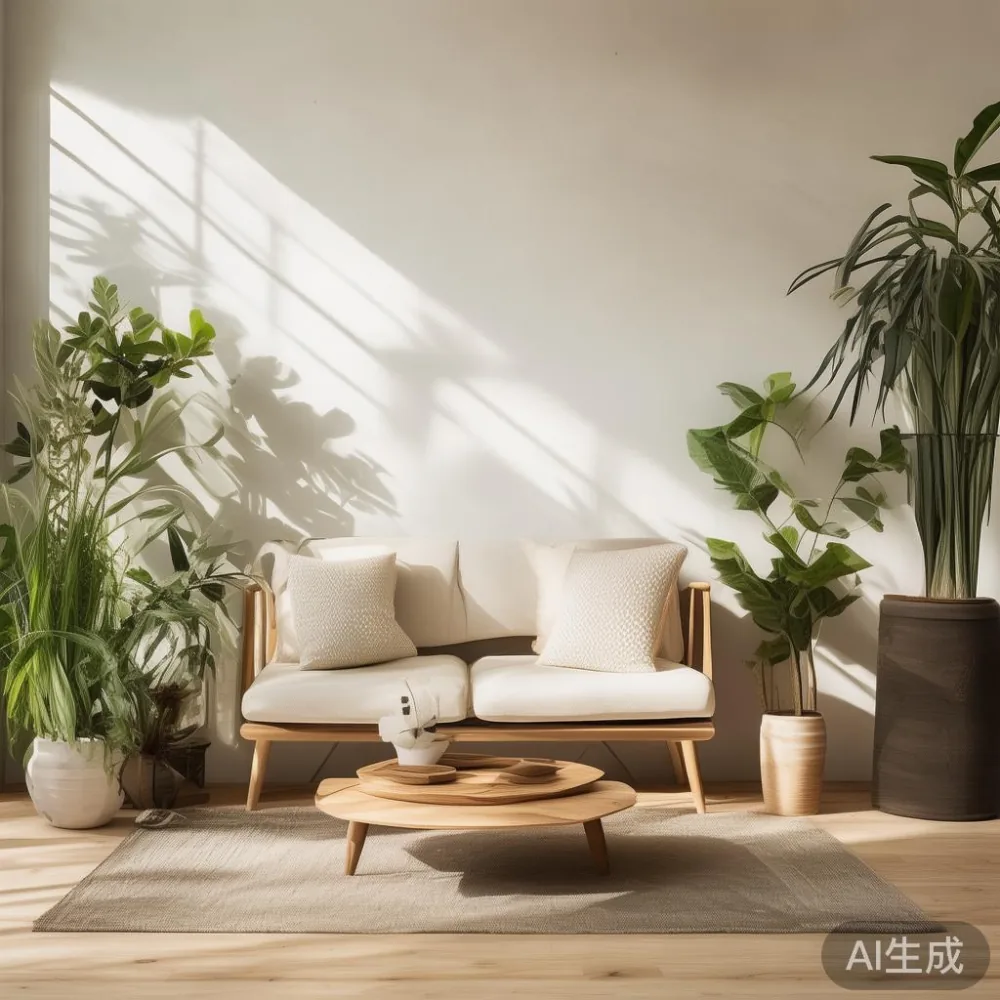
Most Singapore HDB lift doors are 0.9 m wide and 2.1 m tall, with an internal cabin depth of about 1.5 m to 1.8 m. A standard queen mattress is 152 cm × 191 cm; the bed frame will usually push the longest dimension past 210 cm. That means the headboard or footboard will need to come off for delivery, and a competent supplier will plan for this in advance. MIDHILL's local delivery partner, for instance, will confirm lift dimensions with you before the truck rolls out of the warehouse in Tuas, and a two-person crew typically takes 35 to 50 minutes to assemble a solid wood bed frame in the bedroom. Corridor widths in newer BTOs run 1.2 m to 1.5 m; in older blocks like those around Bedok Reservoir, expect 1.1 m, which means any wardrobe deeper than 60 cm will need to be tilted on its side to clear the turn into your unit.
One more number worth memorising: an average six-seater dining table in solid wood is 180 cm to 200 cm long and 90 cm wide. That is roughly 1.6 sqm of footprint, plus 90 cm of pull-back on each chair side. In a 12 sqm living-dining zone, that single table consumes 30 to 40 percent of the room. Coastal style responds to this by leaning toward 150 cm to 170 cm extendable tables in light oak, with armless linen chairs that tuck fully under the apron.
How do I choose a metal furniture for a bedroom?
Choose metal bedroom furniture only when the metal is doing structural work you cannot get from solid wood, such as the slim legs of a platform bed, the runners of a fitted wardrobe system, or the slim frame of a wall-mounted nightstand that frees up the floor below it.
For most compact Singapore bedrooms, a fully upholstered metal bed frame looks fussy, collects dust, and visually weighs the room down. A better pattern is what I saw in a client's 4-room HDB in Simei last year: a low-profile solid wood queen bed frame in white-oak veneer on an American ash wood queen bed base, with two slim 40 cm powder-coated steel side tables that read as a single horizontal line. The metal does one job (holding the lamp and a glass of water), the wood does the rest, and the eye reads "light, coastal, expensive" rather than "I bought everything from the same catalogue." If you do want a metal wardrobe frame inside the bedroom, stick to a 1.2 m to 1.5 m wide three-door system in white with reeded glass, and spend the upgrade budget on the internal fittings — two pull-out drawers, a tie-and-belt organiser, and a full-length mirror on the inside of one door, which removes the need for a separate standing mirror.
What is the real budget for a coastal-style living and dining set in SGD?
Let me break down what a typical four-to-six-piece living-dining package actually costs in Singapore in 2025, so you can plan against the 9 percent GST and the delivery window you will be quoted.
A solid wood sofa in coastal style is usually a three-seater at 200 cm to 220 cm wide, with a removable linen-blend cover in oat or putty, eight-way hand-tied springs (if you want it to last more than five years), and a kiln-dried hardwood frame. Realistically, you are looking at S$2,800 to S$4,500 for a credible brand, and S$1,200 to S$2,200 for an entry-level option. A three-seater sofa paired with a 140 cm × 70 cm marble table in the living room — Carrara or Volakas, honed finish, with a slim powder-coated steel base — runs S$1,400 to S$2,600. The dining table in light ash or white oak, 160 cm, seats four comfortably and six at a squeeze, at S$1,800 to S$3,200. Four solid wood dining chairs in linen bring another S$600 to S$1,000. A sideboard or buffet, 150 cm wide, in matching coastal timber: S$1,400 to S$2,400.
Add a queen bed frame at S$1,800 to S$3,500, two nightstands at S$450 to S$700 each, a three-door wardrobe at S$2,400 to S$4,800, and a 140 cm TV console at S$900 to S$1,800, and a sensible mid-range package across living, dining, and master bedroom lands between S$13,000 and S$22,000 before GST. The post-modern light luxury angle here is that the buyer is paying for visible grain, dovetail joints, and 10-year structural guarantees, not for marketing. MIDHILL's coastal collection, for context, sits in the middle of that range and ships in 35 to 45 days from Foshan to Singapore with full white-glove delivery included above a US$350 order threshold — a useful anchor when you are comparing quotes.
Which three mistakes make a small coastal apartment feel crowded instead of calm?
Mistake one: buying a 3.2 m sofa because it was on promotion. In a 14 sqm living room, anything past 2.2 m eats the breathing space you came for. Two armchairs at 80 cm each, plus a loveseat at 160 cm, give you the same seating capacity in a more flexible footprint.
Mistake two: mixing three different wood tones. Coastal style works because the eye reads one continuous horizontal line of pale timber across the room. Pick one species (oak, ash, or pine), one stain (white-washed, natural, or driftwood), and apply it to the dining table, the TV console, the bed frame, and the nightstands. The marble table is the only permitted exception, because its cool grey breaks up the wood without competing with it.
Mistake three: ignoring vertical storage. Floor area in a HDB is fixed at roughly 50 to 75 sqm. Ceiling height is fixed at 2.7 m. The only direction you can grow is up. A 240 cm tall wardrobe with a 30 cm top-lid storage compartment, paired with a 180 cm tall linen cabinet in the dining area, pulls the eye upward and frees the floor. The hallway outside the bedrooms is the other dead zone: a 30 cm deep, 120 cm tall shoe cabinet in coastal white with rattan doors will swallow 12 to 15 pairs without protruding into the 1.1 m corridor.
How long does delivery, assembly, and after-sales actually take?
For solid wood furniture imported from Guangdong, the realistic timeline is: 35 to 50 days from order to free delivery in Singapore (above the US$350 threshold), with the 9 percent GST calculated on the CIF value at Singapore customs. A standard three-bedroom package (sofa, dining set, queen bed, two nightstands, three-door wardrobe, TV console, marble coffee table) takes two delivery men roughly 4 to 5 hours to unpack, assemble, and place, with all cardboard removed. Same-day returns are not realistic, which is why a 14-day return window and a lifetime refinishing service matter — the latter is the kind of after-sales policy that quietly extends the life of an ash or oak piece by 10 to 15 years.
The structural warranty is the other number worth chasing. A credible solid wood furniture maker will offer 10 years on frame and joinery, 3 to 5 years on mechanisms (drawer runners, extension rails), and 1 to 2 years on upholstery and finishes. Anything less, and you are effectively paying light-luxury prices for mid-tier construction.
A short, numbered checklist before you place the order
1. Measure your lift door (width and height) and your corridor turn radius. 2. Decide on one wood species and one stain across all major pieces. 3. Confirm the internal dimensions of the sofa, bed frame, dining table, and wardrobe in centimetres, not in vague "three-seater" labels. 4. Ask whether the wardrobe ships assembled or flat-packed, because a 2.4 m tall unit in a lift is rarely possible fully built. 5. Check the warranty in writing, and ask what "lifetime refinishing" actually covers — sanding, re-staining, hardware replacement. 6. Budget 9 percent GST on top of the quoted price, plus S$80 to S$150 for disposal of your old furniture if the supplier offers it. 7. Keep one accent piece — a marble table, a rattan headboard, a single piece of framed sand-coloured art — and resist the urge to make every item "match."
A small apartment styled in coastal spirit should feel like a breath of sea air the moment you step out of the lift on the 12th floor of your Punggol block. Done well, the room disappears, the clutter disappears, and the view — whether it is the reservoir, the park connector, or your neighbour's HDB roof garden — takes over. That is the only metric I actually use when I walk out of a finished project: can I hear myself think?