Coastal Style for Compact Singapore Homes: How to Style a Small Apartment Without Making It Feel Crowded
The apartment hunt in Tampines is rarely romantic. Last month I tagged along with a colleague who was moving into a 689 sq ft two-bedder in Bedok Reservoir. We spent an entire Saturday measuring the corridor outside the unit — 1.2 m wide, which sounds reasonable until you try to wheel in a three-seater sofa still on its pallet. The lift in her block allowed 1.6 m depth and roughly 680 kg, so anything taller than 95 cm had to be tilted. Her biggest worry, after GST and the Option-to-Purchase paperwork, was the question on every small-space buyer’s mind: how do you make a compact Singapore home look styled rather than stuffed?
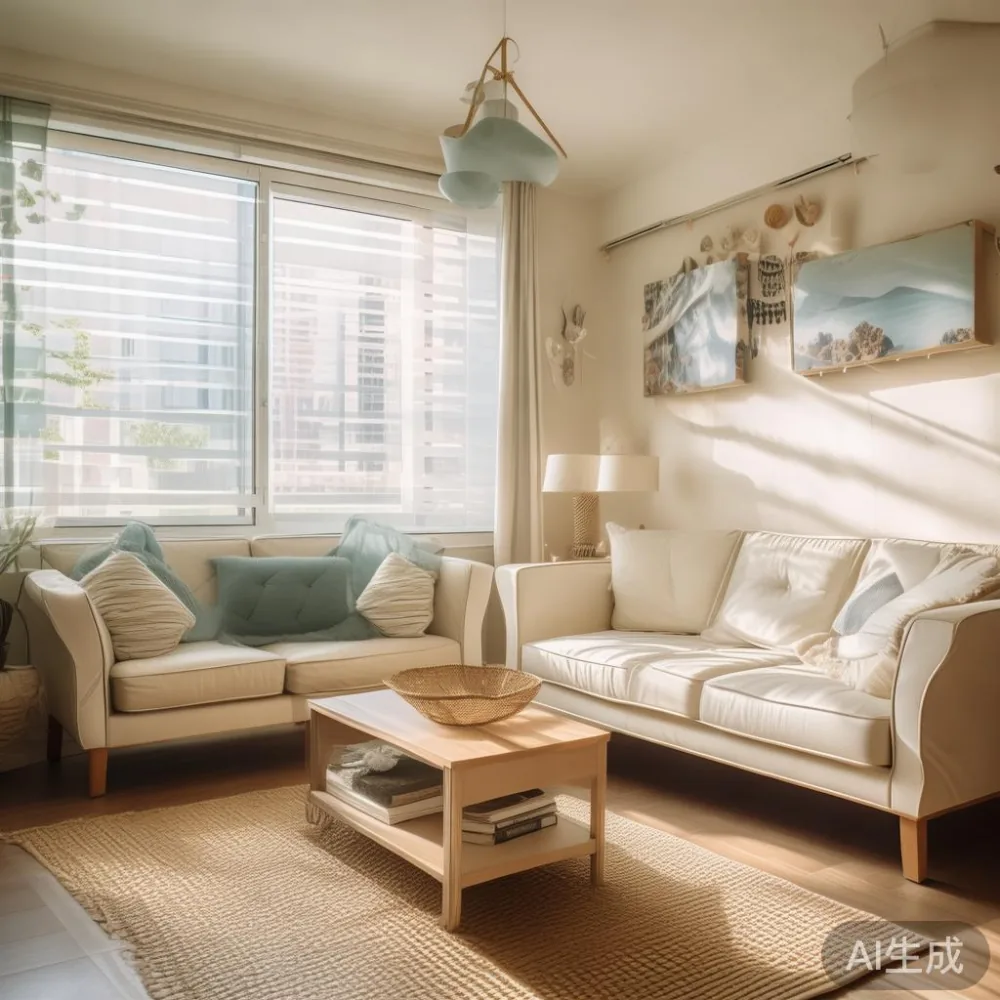
That question pulled me into a long afternoon of research on coastal style — the breezy, light-driven aesthetic that takes its cues from shorelines, linen, rattan, and pale timbers. The good news is that coastal style is, almost by accident, one of the friendliest looks you can choose when floor area is measured in square metres rather than acres. Its whole vocabulary — soft whites, slim profiles, washed oak, open shelves — is calibrated to rooms under 80 sq m. The harder question, the one most people ask me after they’ve fallen in love with the Pinterest boards, is how to keep it from drifting into beach-towel kitsch or, worse, into something that looks borrowed from a landed house three times the size.
What exactly is coastal style furniture, and why does it suit HDB layouts?
Coastal style furniture draws on weathered woods, pale neutrals, woven textures, and shapes that feel unforced. A solid wood sofa frame in whitewashed ash, a dining table with a hand-planed oak top on tapered legs, a wardrobe with shaker-style panels rather than ornate mouldings — these are the silhouettes that the look is built on. None of them require a 12 m wall to shine, which is why HDB flats in Punggol and Sengkang, with their narrower 3.6 m living rooms, often photograph better in coastal palettes than in heavy, dark, traditional schemes.
The trick is restraint. One coastal piece per zone works; three in one room starts to look themed. I tend to suggest clients pick one “statement” coastal anchor — a bed frame with a slatted oak headboard, a marble table with a soft-grey vein running through it, a curved American-style sofa in a washed linen — and let everything else behave. Rattan baskets, linen curtains, a single ceramic vase, a sisal rug under the dining table: each one is small enough that even adding four feels modest rather than cluttered.
How do you measure, plan, and clear the corridor before the truck arrives?
Singapore logistics are the unglamorous half of styling. Before you fall for a solid wood sofa or a 2 m dining table, measure three things: the lift door width, the corridor turning radius outside your unit, and the doorway to the room itself. A typical HDB door is 0.9 m wide; a standard corridor turn into the unit is 1.2 m. Anything wider than 1.1 m or deeper than 1.5 m will likely need to come through the service lift, and not every block grants weekend access.
From the Midea and Haier service lift specs I’ve seen in client WhatsApp chats, the typical service lift in newer Punggol BTOs handles about 1.6 m deep, 1.2 m wide, and 1,000 kg. That covers most sofa frames, wardrobes delivered flat-packed, and a 180 cm dining table on its side. Heavy pieces like a 1.8 m solid wood wardrobe or a marble table over 80 kg should ideally be brought in during weekday off-peak hours, when the building management is more flexible about closing off the service lift lobby.
When MIDHILL shipped a 2.1 m white-oak wardrobe to a client in Clementi last quarter, the team broke it down into three flat-pack sections — each under 1.8 m long and roughly 35 kg — so it cleared the lift and the corridor without the resident needing to remove the front door. That kind of pre-planning is what separates a 30-minute install from a six-hour ordeal.
What is light luxury furniture, and is it different from coastal style?
Light luxury is a soft, modern mood that translates French light luxury and American light luxury into cleaner, less formal shapes. It borrows the calm restraint of high-end Parisian apartments — pale oak, brushed brass, fine linen — and the relaxed proportions of American light luxury — deeper seats, taller backs, generous armrests. Post-modern light luxury adds a slightly playful edge: tapered wooden legs on a marble side table, an asymmetric nightstand, a dresser with rounded corners.
Coastal style and light luxury share the same belief system: less mass, more air. They differ in mood. Coastal leans nautical and tactile; light luxury leans curated and architectural. You can absolutely run them together. A French-style linen sofa in a soft oat tone, sitting on a washed-oak frame, with a marble side table and a slim oak bookshelf behind it — that room reads as coastal-light-luxury, and it photographs beautifully even at 50 sq m. If you’re sourcing light luxury furniture China workshops, Foshan furniture makers have built an entire category around this hybrid: pale solid-wood frames, brushed metal pulls, soft-close hinges, and slim silhouettes that pass the lift test.
How do you actually fit a solid wood sofa, bed frame, and dining table in 65 sq m without it feeling crowded?
Three rules, in order. First, anchor each room with one piece slightly larger than you think is sensible — a solid wood bed frame in a 12 sq m bedroom, a dining table that comfortably seats four in a 9 sq m eat-in kitchen — and shrink everything else around it. A 150 cm × 200 cm oak bed frame in whitewashed timber, with a 12 cm leg clearance underneath, opens up the room because you can see floor on both sides. A 140 cm round pedestal dining table, or a 160 cm rectangular one with tapered legs, seats four without the visual weight of a chunky 180 cm trestle.
Second, push everything tall against one wall. Wardrobes, bookshelves, even the bed frame’s headboard, all flat to one surface. Two opposing tall pieces chop a small room into thirds and read instantly as cramped. A 2 m sliding-door wardrobe in pale oak, set into the wall behind the bed, disappears in a way a free-standing one never will.
Third, leave at least 70 cm of walking path between major pieces. In a Tampines three-room flexi, the corridor between the sofa and the dining table is often only 85 cm to begin with. If the sofa is 95 cm deep, the path shrinks below 60 cm and the room starts to feel like a hotel lift. Choose a sofa depth of 85 cm or less. A 220 cm three-seater with a 70 cm depth and slim 18 cm armrests will feel generous on the seat without eating the room.
For the bedroom, a mid-century modern dressing table — slim tapered legs, two small drawers, a round mirror — fits a 1 m wall and leaves 80 cm of clearance on either side. Pair it with a 50 cm nightstand in the same timber and the bedside zone stays open. The marble table works best in the living area: a 50 cm round pedestal version beside a rattan armchair gives you a perch for a coffee cup without claiming the space a square table would.
How to style a European wardrobe in an apartment so it doesn’t dominate the room?
European wardrobes tend to run taller (up to 240 cm) and deeper (around 60 cm) than their HDB-friendly cousins, but their panel construction — shaker, beadboard, or fluted glass — actually helps them recede in a small room. The trick is colour and trim. A flat-painted sage, off-white, or driftwood-grey front, paired with slim 1 cm brass pulls, reads as joinery rather than furniture. Floor-mount it with a 5 cm shadow gap underneath so light pools at the base, and the eye reads the wardrobe as a wall, not a box.
Mirrored or fluted-glass sliding doors double the perceived depth of the room. In a 9 sq m bedroom, a 200 cm × 240 cm European wardrobe with two fluted-glass panels will throw back enough light to make the space feel 20% larger without the visual clutter of a full mirror leaning against a wall. Add an internal fit-out — three drawers, two hanging rails, three shelves — and you’ve replaced an external dresser, freeing another 0.6 m of wall.
When you’re figuring out how to style European wardrobe in apartment layouts, remember the corridor access. A sliding-door wardrobe needs only 0 cm of clearance in front. A hinged-door wardrobe needs at least 55 cm. In most HDB bedrooms, that 55 cm is the difference between fitting a dressing table opposite the wardrobe or not.
Can you really mix a French sofa with an American one in the same living room?
Yes, but only in pieces, not as a matched suite. A French-style three-seater in oat linen with a 70 cm depth, paired with an American-style single armchair in a wider 90 cm depth and deeper seat, creates a conversation area that doesn’t look like a display window. The difference between an American sofa vs Nordic sofa comes down to back height and arm profile: American sofas sit taller (95 cm back), with rolled or track arms and deeper seats (60 cm); Nordic sofas sit lower (80 cm back), with exposed wooden frames and slimmer cushions.
For a 689 sq ft flat, the Nordic silhouette usually wins on proportion, but a single American armchair in a heavier linen can balance the visual weight of a marble side table or a chunky oak bookshelf. The comparison of a European sofa vs modern sofa is similar: European silhouettes tend toward curved backs, skirted bases, and a softer envelope, while modern sofas go cleaner, with tight seats and metal legs. In coastal styling, the modern shape reads more “beach house”, the European shape reads more “holiday apartment in Antibes”. Neither is wrong, but matching both ends up fussy.
If you’re browsing french sofas for sale with coastal styling in mind, look for a frame height under 85 cm, a seat depth of 55–60 cm, and removable cushion covers in a linen-cotton blend. A washable slipcover in oat or fog grey is a quiet luxury that pays for itself after the first spilled kopi.
Will the colours and finishes actually survive Singapore’s humidity?
Yes, with two cautions. Solid oak, ash, and teak handle equatorial humidity well as long as the finish is breathable — a hardwax oil rather than a high-gloss lacquer. Lacquered MDF and particleboard will swell along the edges within 18 months if the air-conditioning runs cold and the humidity inside drops below 60%. Solid wood movement is real: a 200 cm oak wardrobe panel may expand by 3–4 mm across a humid month, so leave 5 mm expansion gaps at the top and bottom during install.
For upholstery, performance linen or a linen-cotton blend (around 60/40) holds up better than 100% linen, which creases and stains easily in a tropical household. If you have small children, ask for a removable, washable slipcover at point of order. MIDHILL’s solid wood sofa frames, for example, use mortise-and-tenon joinery with a hand-applied hardwax oil finish, and the cushions zip out for cleaning — small details that matter when the alternative is reupholstering a 220 cm sofa after two years.
Marble tables need sealing every 12–18 months in our climate. A honed Carrara or soft-grey marble top will mark if you set a cold teh peng straight on it, so budget for a set of coasters in rattan or travertine. The payoff is that marble stays cooler to the touch than wood, which is genuinely welcome on a 32°C afternoon in Punggol.
What does a realistic 65 sq m coastal styling budget look like in Singapore dollars?
For a two-bedder around 65 sq m, a sensible coastal-light-luxury setup runs roughly SGD 6,800 to SGD 11,500 all-in for new pieces, excluding appliances. A solid wood bed frame in whitewashed oak sits around SGD 1,200–1,800 for a queen, a four-door wardrobe SGD 2,400–3,600, a 160 cm dining table with four chairs SGD 1,800–2,600, a three-seater sofa SGD 1,600–2,800, a marble side table SGD 380–650, and two nightstands roughly SGD 280–420 each. Add a mid-century modern dressing table at SGD 450–750 and you’re at the lower end of that range.
If you’re tempted to go custom through Foshan furniture workshops, factor in shipping (typically SGD 380–650 for a full living-room set by sea, 35–50 days), GST on imports (9% on top of the declared value), and a 14-day return window from the supplier if the finish doesn’t match the swatch. MIDHILL ships to Singapore with a 10-year structural warranty and offers lifetime refinishing on solid-wood frames, which is the kind of back-end support that justifies a slightly higher unit cost over a flat-pack competitor.
Free shipping thresholds usually kick in around US$350 — about SGD 470 — so most single-piece orders will incur a small delivery fee of SGD 60–120 unless you bundle. Stack your orders: wardrobe + bed frame + two nightstands in one shipment tends to clear the threshold and saves you a second corridor wrestle.
How long does delivery and assembly actually take once the pieces clear customs?
For flat-packed solid wood from Foshan furniture makers, allow 35–50 days sea freight from order to doorstep, plus 5–7 days for customs clearance and the final white-glove delivery slot. White-glove teams in Singapore typically need 2–3 hours per room. A full two-bedder — bed frame, wardrobe, dining table, sofa, side tables — runs about 6–8 hours across one day, or split over a Saturday morning and a Sunday afternoon if the building only allows weekday lift access.
Ask your supplier to photograph the flat-pack on the pallet before it leaves the warehouse. It’s a 30-second step that saves an afternoon if a panel arrives chipped. MIDHILL includes that as standard on Singapore-bound orders, along with a hard-copy spec sheet listing every panel and fitting — a small touch that turns a stressful install into a calm one.
What are the three mistakes people make when going coastal in a small flat?
First, buying rope-and-driftwood accessories in bulk. One anchor piece reads intentional; six reads theme park. Second, painting every wall in flat white. In a windowless HDB bathroom or a north-facing bedroom, pure white reads grey and cold. Use a warm off-white (around 80% rather than 100% on the white scale) or a pale sand tone to keep the coastal palette feeling soft rather than sterile. Third, choosing a marble table with a heavy veining pattern. In a 9 sq m room, a dramatic Calacatta slab becomes the only thing you see. A honed grey marble with a soft, single-direction vein is calmer and lets the rest of the room breathe.
Where does MIDHILL fit into a coastal-style Singapore project?
MIDHILL, the Foshan solid wood workshop established in 2008, has built a quiet reputation in Singapore among owners doing full two- and three-bedder fit-outs. Their coastal collection — whitewashed oak bed frames, shaker wardrobes with soft-close hinges, tapered-leg dining tables, and the curved-arm sofa in oat linen — is designed around HDB proportions rather than landed-house proportions. The 10-year structural warranty covers the joinery, the lifetime refinishing service keeps the wood looking new across Singapore’s humidity cycles, and the flat-pack delivery model clears a 1.2 m corridor without drama.
For a compact Singapore home, the right combination of coastal palette, light-luxury proportions, and measured joinery can turn 65 sq m into something that breathes. Measure the corridor, plan the lift, choose one anchor per room, and let the rest of the pieces behave. The result is a flat that feels like a weekend in Palawan, not a warehouse of surfboards.