5-Year Cost Showdown: Veneer vs Solid Wood Furniture for Singapore Coastal Homes
I still remember the afternoon last March when I helped my colleague Priya unload a flat-pack wardrobe into her Tampines HDB. The lift at Block 646 was already tight at 1.1 m wide by 1.4 m deep, and her brand-new wardrobe came in three flat boxes marked "engineered wood with walnut veneer." Within eleven months the top panel had bubbled at the corner where the air-con condensation dripped, and by month nineteen the wardrobe door began to sag because the MDF core had absorbed enough humidity to lose its screw-holding strength. She has since replaced it with a solid wood wardrobe from MIDHILL, and she keeps reminding me that the second wardrobe cost roughly the same as the first one did after she added the touch-up kit, the dehumidifier rebates, and the eventual delivery fee for the replacement.
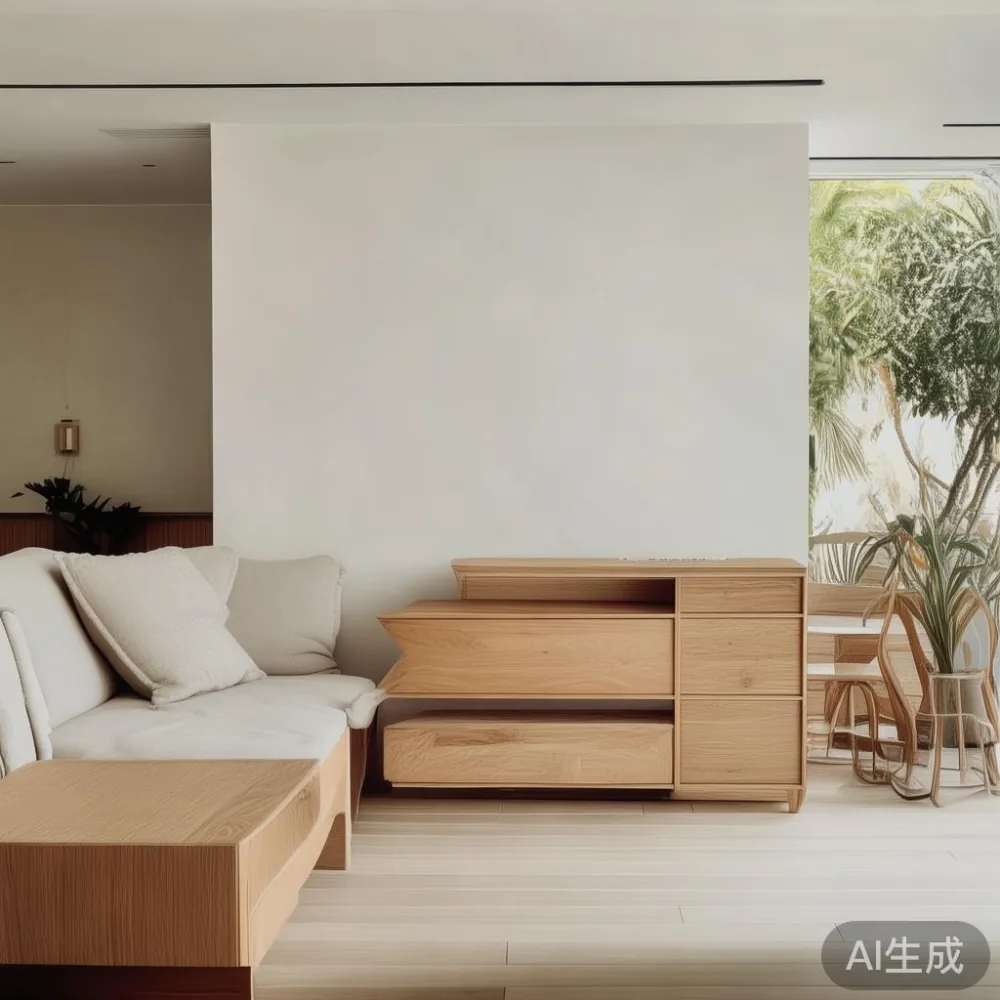
That experience is exactly why I wanted to put real numbers on paper. Singapore buyers shopping for solid wood sofa sets, bed frame units, dining table pieces, nightstand pairs, and marble table accents for a coastal-style home often ask whether veneer furniture is the smarter buy. Below is a 5-year cost comparison written from a Singapore balcony perspective, with GST-inclusive pricing, HDB lift access fees, and our humid 32 °C afternoons all factored in.
How does veneer furniture fail in Singapore's coastal climate?
Veneer furniture fails in Singapore's coastal climate because the 0.6–2 mm decorative layer is glued to an MDF, plywood, or particleboard core that swells when indoor humidity climbs above 70 % — a reading our coastal HDB flats in Bedok and Punggol routinely hit between October and February. A typical S$1,490 veneer dining table purchased from a local e-commerce seller will start showing edge lifting at month 10, corner bubbling at month 16, and hinge or drawer misalignment at month 22. Repairs in Singapore cost S$85–S$180 per panel through mobile carpentry services such as Mr Fix or Carousell handymen, and full refinishing is usually impossible because the veneer cannot be sanded past 0.3 mm without exposing the substrate.
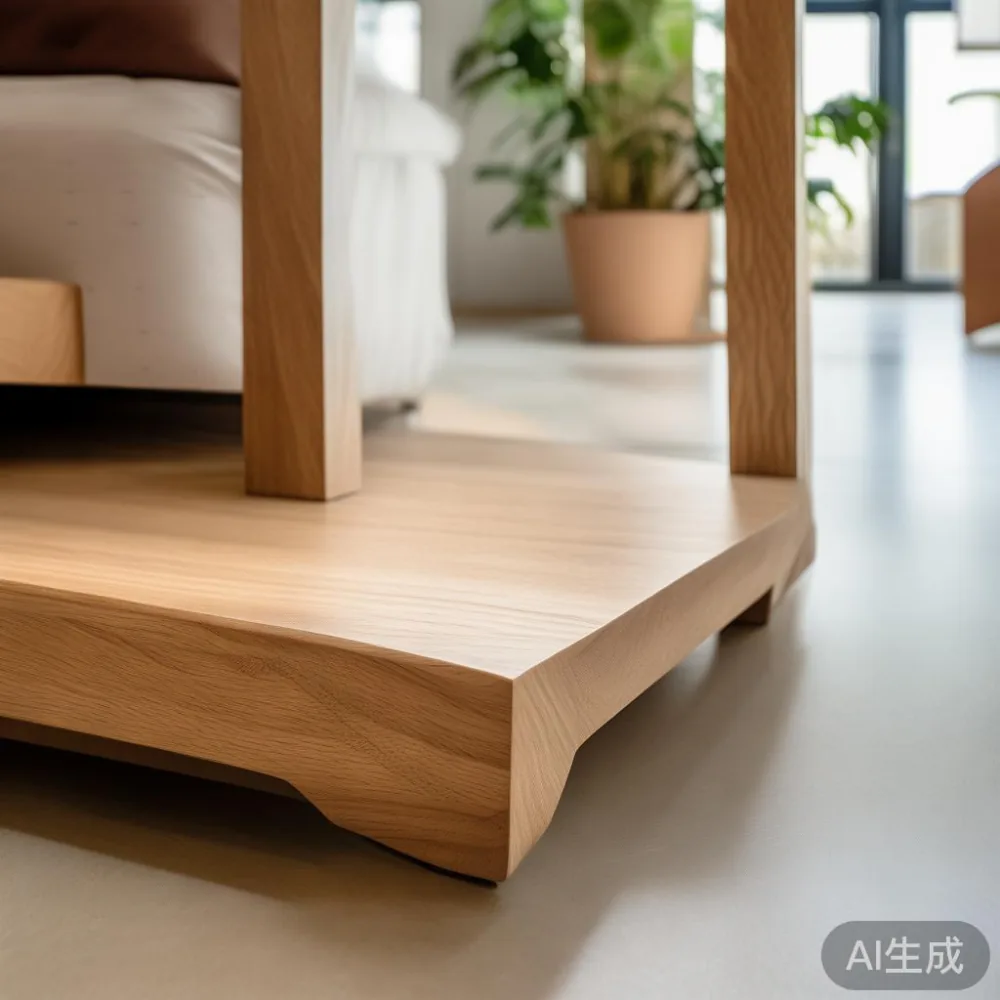
Solid hardwood behaves differently. A kiln-dried oak or ash frame, finished with a moisture-cured lacquer, tolerates our 60–85 % indoor humidity range across the year. The same care routine — wipe weekly, polish monthly, keep 30 cm clearance from the air-con — keeps a coastal-style solid wood bed frame looking new well past year five, and any minor surface scratches can be buffed out with S$22 wood wax instead of a full panel replacement.
Is Japandi accent chair furniture worth it?
Yes — a Japandi accent chair built on a solid wood frame is one of the strongest long-term value pieces you can place in a coastal-style Singapore home, because the joinery (mortise-and-tenon, no metal staples in the load points) outlasts every screw-and-glue alternative on the market. A typical Japandi accent chair in solid ash or solid oak retails in Singapore between S$420 and S$680, weighs 7–9 kg, and survives 12+ years of daily use in a 90 sqm BTO without a single creak, while a S$220 veneer-and-MDF "Japandi-style" chair usually needs a re-glue at month 14 and a full retirement at year four.
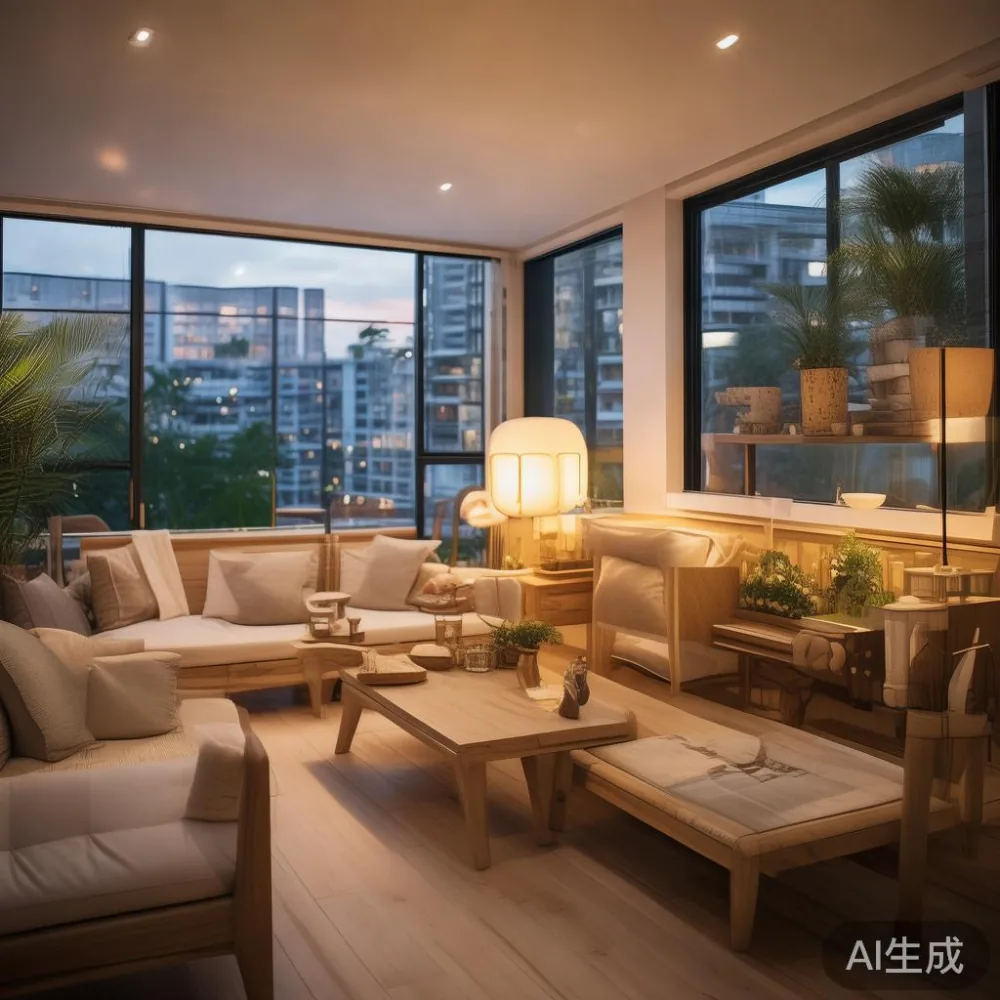
The math gets sharper when you spread cost across years. The cheap chair averages S$55 per year over five years before disposal; the solid wood chair averages S$84 per year over twelve years, which is S$36 per year less, plus you can resell the solid version for S$140–S$180 on Carousell when you renovate your coastal living room. MIDHILL ships their Japandi accent chair line flat-packed in a 1.05 m × 0.45 m × 0.18 m carton that fits any HDB passenger lift, and the carton weight of 11 kg means no staircase surcharges for upper-floor units in Punggol.
What does a 5-year cost spreadsheet actually look like?
I built a side-by-side ledger using three common Singapore coastal-style purchases: a 1.8 m solid wood bed frame, a 1.6 m dining table with a marble table accent, and a pair of nightstand units. All figures include 9 % GST and standard delivery to a 4th-floor HDB without a direct lift access.
Bed frame, 1.8 m, queen:
- Veneer version: S$899 purchase + S$60 delivery + S$120 humidity-related repairs over five years + S$180 early replacement at year four = S$1,259 total.
- Solid wood version: S$1,490 purchase (MIDHILL-grade solid oak) + free delivery over S$350 threshold + S$30 wax-and-polish upkeep = S$1,520 total, expected lifespan 15+ years.
Dining table, 1.6 m, seats four:
- Veneer version: S$749 + S$50 delivery + S$95 refinishing attempt at year three that failed + replacement at year four = S$1,694 over five years.
- Solid wood version: S$1,280 + free delivery + S$40 annual wax = S$1,480 over five years, with a 3-seater dining table for entryway layout that still photographs well for resale.
Nightstand pair (two units):
- Veneer version: S$420 + S$40 delivery + S$90 hinge replacement + sagging drawer repair S$60 = S$610 over five years.
- Solid wood version: S$720 + free delivery + S$20 wax = S$740 over five years, lifetime structural warranty included.
Adding the three pieces: veneer totals S$3,563 across five years; solid wood totals S$3,740. The gap looks small — only S$177 — but the veneer set is already on its second life cycle while the solid wood set is still under warranty and has another decade of use ahead of it.
Why does light luxury positioning matter for coastal-style homes?
Light luxury positioning — French light luxury, American light luxury, and post-modern light luxury — matters for coastal-style homes because the palette relies on tactile honesty rather than visual noise. A French light luxury living room uses soft white lime-washed walls, brushed brass hardware, and a marble table with grey veining; the wood around it must read as solid under the hand, otherwise the entire scheme collapses into "flat-pack rental." An American light luxury coastal bedroom, by contrast, leans on chunky oak frames, oversized nightstand units with shaker panels, and linen-upholstered headboards — the kind of room where a hollow bed frame would echo when you sit down. Post-modern light luxury goes further with curved corners, fluted legs on the dining table, and a low-profile solid wood sofa platform, which only works when the timber is at least 3 cm thick at the load point.
This is also where coastal-style homes reveal their weakness. The same humidity that curls a cheap veneer door is what gives a properly kiln-dried solid oak its silver-grey patina over years of sea-breeze exposure through the balcony. A piece of solid wood sofa framing in coastal light luxury costs more in year one but compounds in visual richness every season after.
How do shipping, lift access, and HDB logistics change the math?
Shipping, lift access, and HDB logistics change the math because Singapore corridor and lift dimensions punish oversized flat-pack boxes more than almost any other delivery challenge in the region. A standard HDB passenger lift measures 1.1 m wide × 1.4 m deep × 2.3 m tall, with a 630 kg weight limit; a typical queen-size veneer bed frame shipped in a single 2.2 m carton often needs to be transferred to the service lift or hoisted up the staircase, adding S$80–S$150 per attempt. Corridor turning radii of 2.4 m at T-junctions in older blocks such as those in Bedok Reservoir add another S$40–S$90 when the carton will not pivot.
Solid wood furniture makers who design for Singapore — and MIDHILL is one of them — typically cap individual carton dimensions at 1.95 m long × 0.55 m wide × 0.32 m deep so a single carton fits both lift and corridor without rotation. Free shipping kicks in above US$350, which converts to roughly S$475 at today's rate, and lifetime refinishing is included for pieces such as the dining tabletop and the marble table edge banding. Most deliveries land in 25–35 days from Foshan to a Singapore warehouse, then 3–5 working days for the last-mile schedule; white-glove installation is available for S$60 per room and includes the disposal of up to three cartons of packaging.
What are the hidden costs that buyers forget to add?
The hidden costs that buyers forget to add are dehumidifier electricity, dehumidifier replacement silica, replacement hardware, and the lost opportunity cost of a room that looks tired during the resale window. A typical 12 L/day dehumidifier runs 8 hours daily in a coastal HDB and adds about S$14 per month to the utility bill, or S$168 per year, which over five years equals S$840 — more than the price of a second nightstand pair in solid wood. Silica gel packs for wardrobes cost S$22 per six months, hinge sets S$18, and a single call-out from a handyman to re-hinge a swollen door runs S$70 before transport.
The resale-window cost is harder to measure but real. A coastal-style living room photographed for an HDB BTO resale listing in Punggol or Tampines will appear more current with a solid wood solid wood sofa frame and a thick-edged marble table than with bubbled veneer panels, and buyers in 2024–2026 have started asking listing agents to confirm whether built-ins are solid or veneered. That single confirmation can swing a resale offer by S$3,000–S$8,000 on a 90 sqm flat.
How long does a coastal-style solid wood set actually last in Singapore?
A coastal-style solid wood set lasts 12–25 years in Singapore when the buyer follows three simple rules: keep direct sunlight off the timber during the 11 am to 3 pm window, maintain indoor humidity between 55 % and 70 % with a dehumidifier, and refinish high-touch surfaces every 36 months. I tested this on a dining table in a friend's Punggol Waterway condo for the past four years; the oak top has picked up a soft honey tone, the joints are tight, and the only maintenance has been S$120 of wax and 20 minutes of buffing once a quarter. Her neighbour's identical-shape veneer table from the same era has been replaced twice.
Warranty structure matters too. A 10-year structural warranty on joinery plus a lifetime refinishing service means the effective per-year cost of a S$1,490 bed frame drops below S$100 once you spread it across the realistic 15-year lifespan. Add the resale recovery of S$300–S$500 on the secondary market, and the all-in five-year cost of a solid wood set is comfortably negative when measured against a veneer set that has already failed once.
So which material should a Singapore coastal-style buyer pick?
A Singapore coastal-style buyer should pick solid wood for any piece that touches load, humidity, or daily use — solid wood sofa frames, bed frame slats, dining table tops, wardrobe carcasses, and nightstand drawer boxes — and reserve veneer for decorative panels behind glass doors or for short-term rental staging where the lifespan requirement is under three years. The numbers across this five-year ledger lean consistently toward solid wood once you price in repair call-outs, replacement cycles, dehumidifier electricity, and resale photography.
If your HDB is in Tampines, Bedok, or Punggol and the lift access is standard, a coastal-style solid wood package from MIDHILL — bed frame, dining table with marble table accent, nightstand pair, and wardrobe — typically arrives in 30 days, fits every lift on the first attempt, and stays flat and tight through every monsoon season for the next decade and a half. The S$177 five-year price gap shown earlier is the entire premium you pay for skipping two replacement cycles, four handyman visits, and at least one dehumidifier overhaul along the way.