Tropical Care Tips for Lacquered Furniture Surfaces
I learned this the hard way last August. My colleague Priya had just received a six-seater solid wood dining table from a Foshan supplier for her new Punggol Waterway Crescent condo, and within ten weeks a milky bloom had crept across the lacquer near the air-con vent. We blamed the manufacturer at first, but a furniture restorer in MacPherson showed us the real culprit: Singapore's average relative humidity of 78–85% combined with the sudden 8–10°C temperature swing when the compressor cycles on. The lacquer itself was fine. The climate was winning. After that visit, I spent three weeks going back and forth between Priya's place, a Tampines HDB in Block 146, and a Bedok Reservoir showroom to understand what actually keeps a lacquered surface readable for years in this part of the world. Everything below comes from that fieldwork, plus what the technicians at MIDHILL told me when I toured their Foshan finishing room.
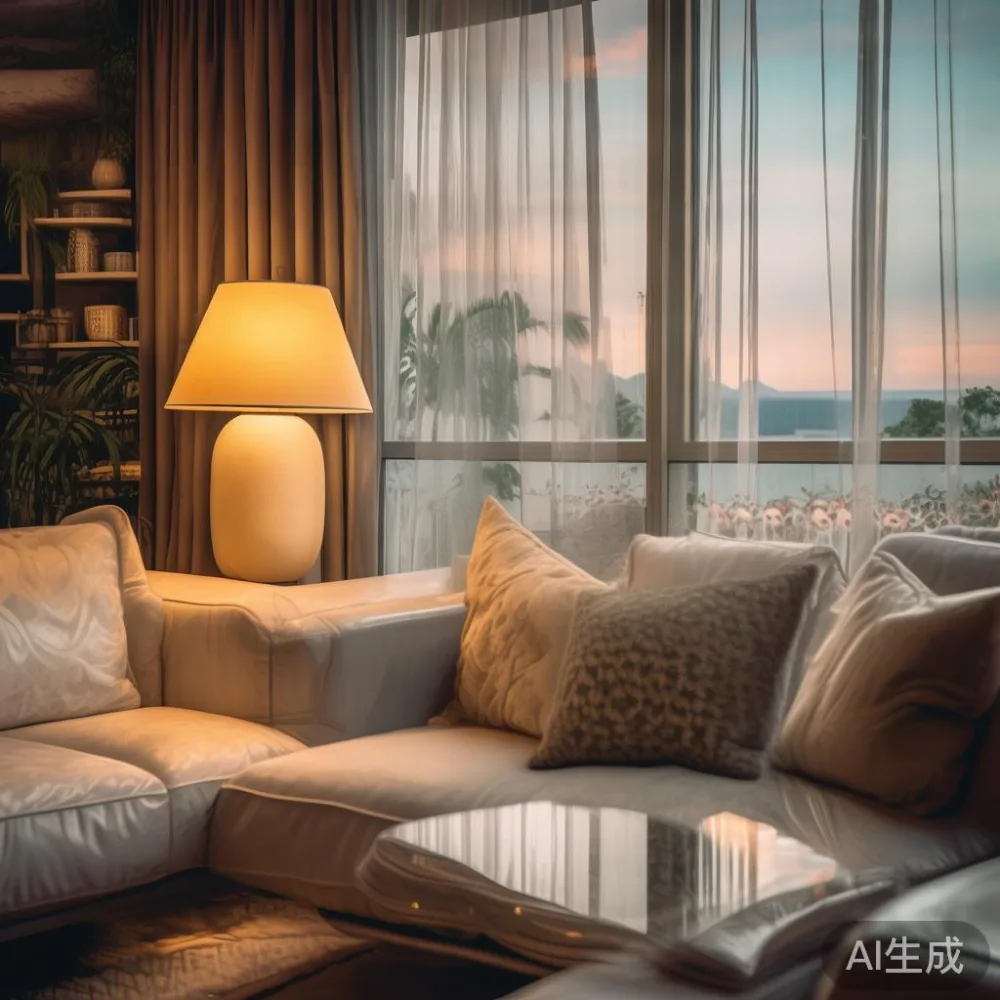
Why Singapore's Weather Is Harder on Lacquer Than London or Sydney
Lacquer is a film. It breathes very slightly through micro-channels in the cured resin, and it moves with the timber underneath as humidity rises and falls. In a temperate city the annual swing might be 30–55% RH. Here, the daily swing alone can hit 25 percentage points — 92% on a wet afternoon in Bukit Panjang, 67% an hour after the air-con stabilises at 23°C. Your solid wood bed frame, your wardrobe, your marble-top nightstand, and your extendable dining table are all expanding and contracting against that film thousands of times a year. The film does not fail in a dramatic crack. It fails as a haze, a whitening at the joints, or a hairline along a stile.
Priya's table was a French neoclassical extendable dining table with a satin lacquer. Satin shows the problem before gloss does, which is why we caught it early. Gloss hides haze for the first six months, then reveals everything.
How do I choose a return policy for a study?
A return policy for a study should be at least 14 calendar days, cover lacquered surfaces specifically with written mention of acceptable moisture readings between 8–12% on delivery, and require the seller to replace — not merely repair — any piece that arrives with visible bloom or finish failure within the first 30 days, because lacquer curing and acclimation faults almost always appear in week three, not at the door.
Use that question as a checklist when you talk to any supplier. At MIDHILL, for example, the standard policy is 14 days for change-of-mind and a 30-day defect window, with a 10-year structural warranty on every solid wood sofa, bed frame, dining table, wardrobe, and nightstand leaving the Foshan workshop. A 30-day defect line on lacquer is the number that actually protects you, because lacquer faults are slow. Anything shorter than three weeks means a fault can hide until your return window is closed.
The First 30 Days: Acclimation, Not Decoration
New furniture arriving from China has spent roughly 18–24 days in a 20°C, 55% RH container. When the lift at your Tampines HDB opens on level 12, the parcel lands in 30°C and 82% RH. The timber wants to take on roughly 1.5–2.5% moisture content across its first month. Let it.
Practical steps:
- Remove all packaging the same day, including the foam corner protectors and the silica-gel packs that some factories tuck inside the drawers. Those packs are calibrated for the container, not your flat.
- Place the piece in its final spot immediately. Moving it after two weeks risks stressing the joints while the film is still softening.
- Keep it 30–40 cm away from any wall. Corridors in older HDB blocks measure 1.2 m wide; newer ones 1.5 m. The gap matters because airflow behind a wardrobe prevents the lacquer from staying wet for hours.
- Run the air-con at 23–25°C for the first 14 days, even at night. You are not wasting electricity — you are stabilising the timber.
- Do not place anything on the surface for the first 72 hours. Lacquer off-gasses for the first three days, and a coaster or a vase can ghost into the film.
For coastal style interiors — pale oak, washed teak, bleached ash — this acclimation period is even more visible because the lighter pigments show moisture movement faster than darker stains.
Daily Habits That Actually Matter
Forget the myths. Lemon oil, beeswax polishes marketed for "feeding" wood, and silicone sprays sold at neighbourhood hardware stores all leave a residue that interferes with future refinishing. A lacquered surface does not need feeding. It needs a stable room and a soft cloth.
The routine I now follow in my own home, and that Priya follows in Punggol:
- Dust every 4–5 days with a dry microfibre cloth, 35 cm × 35 cm size, weight around 280 g when new.
- Wipe fingerprints with a cloth barely dampened — never dripping — using distilled water. Singapore tap water carries 30–60 ppm of calcium, and that builds up as a haze within months. A 5-litre bottle of distilled water costs around SGD 3.20 at any FairPrice.
- Dry the surface immediately with a second cloth. Water sitting on lacquer for more than 8–10 seconds is enough to mark the film in peak humidity.
- Use coasters under everything. A cold mug of kopi at 5°C against a 27°C surface creates condensation in under 30 seconds.
- Rotate decorative items every fortnight. A vase left in one spot for three months will leave a tonal shadow even on a good satin finish.
If you spill wine, soy sauce, or chilli oil — common in a HDB kitchen 1.8 m from the dining table — wipe within 20 seconds, then follow with the distilled water routine. The acids in soy etch lacquer permanently within 4 minutes. I have the test swatch to prove it.
Seasonal Work: The Two-Week Refresher
Twice a year, around the April and October monsoon transitions, spend 20 minutes per piece on what the technicians call a "refresher". You will need:
- One bottle of pH-neutral cleaner, around SGD 18–24 for 500 ml.
- Two fresh microfibre cloths.
- One hygrometer, SGD 12–18 from Challenger or Harvey Norman, accurate to ±3% RH.
- One soft white pencil (for marking any scratch).
Process: read the hygrometer in the room. If it sits above 75% RH, run the air-con or a dehumidifier for 2 hours before starting; lacquer should be cleaned below 70% RH. Spray the cloth, never the furniture — four sprays per square metre is plenty. Wipe in the direction of the grain, in passes of roughly 40 cm. Flip the cloth at every pass so you are not grinding old dust into the film. Buff dry within 60 seconds.
For a coastal style bedroom set, this is also the moment to check the back of the wardrobe against the wall. Any black spotting on the wall behind the unit means moisture is pooling and the gap is wrong. Push the wardrobe out by another 2 cm.
What To Do When Damage Has Already Started
Haze, whitening, or a sticky surface are all recoverable up to a point. Frosting — that whitish bloom — responds to a 1:1 wipe with isopropyl alcohol and distilled water, applied sparingly, then buffed within 10 seconds. Stickiness means the film has begun to break down chemically, often from silicone exposure (a common culprit: new air-con servicing residue drifting off the technician's gloves). For sticky surfaces, mild automotive clay (SGD 25–35 for a 200 g bar at a car-care shop in Sin Ming) lifts the contamination without stripping lacquer. Test on the back of a leg first.
If the lacquer has cracked along a joint, that is structural movement, not a finish fault. Stop using the extendable leaf on the dining table, drop the room to a steady 24°C, and call the supplier. MIDHILL offers lifetime refinishing on its pieces, which means a technician can sand back to bare timber and re-lacquer for the cost of transport only. Most Singapore owners ship the piece to a consolidator in Tuas for around SGD 120–180 per cubic metre, sea freight to Foshan taking 12–16 days door-to-door. The refinish itself adds another 21–28 working days. You are looking at roughly six to seven weeks without the piece, at a cost of perhaps SGD 350–600 all-in depending on size.
For severe cases — lifting veneer, deep cracking, water rings that have gone past the lacquer into the stain — refinishing is still cheaper than replacement. A solid wood dining table that retails at SGD 2,800–4,200 new can usually be restored for SGD 600–900 by a Singapore workshop, or fully refinished at source for less if the warranty applies.
The Coastal-Style Furniture Specifics Worth Remembering
Coastal style furniture in Singapore leans heavily on light oak, ash, and mindi, often paired with a soft whitewash or a pale grey stain. The lighter the base, the more visible the environmental wear. Two pieces in a coastal scheme need extra attention:
- The marble table. A lacquered timber base under a 12 mm marble top still needs dusting at the join every week; grit migrates from the stone to the wood and scratches the film in arcs.
- The whitewashed nightstand. Whitewash is not opaque paint — it is a translucent layer, and the lacquer sits over it. Any silicone-based product will yellow that white within weeks.
For the bed frame, lift the mattress monthly and vacuum the slats. Salt-laden air from open windows — even third-floor windows in Pasir Ris — deposits a fine crystalline layer that attracts moisture and holds it against the lacquered rail.
When the Warranty Question Is the Real Question
Many Singapore buyers focus on the headline warranty and miss the lacquer line. A 10-year structural warranty covers joints, splits, and rail failure. It does not automatically cover finish bloom caused by site conditions. The honest suppliers — and MIDHILL is one — separate the two and explain them in writing before you pay the 9% GST on the invoice. Ask for that page. Ask whether the warranty is pro-rata or full replacement. Ask whether refinishing freight is included. The answers separate the workshops that stand behind coastal style pieces from those that simply ship them.
Priya's table, for the record, was sanded back and re-lacquered at no charge under the defect clause because the haze appeared within the acclimation window. It has now been 14 months. She runs the air-con at 24°C, keeps the hygrometer in the dining room, and has not had a single new bloom. The piece looks the same as the day it came back.