How to Read a Furniture Warranty Without Getting Caught Out — A Singapore Coastal Home Guide
I learned the hard way what a furniture warranty really means. Last month I helped my colleague move a 240 cm solid oak dining table up to a 12th-storey flat in Punggol. The corridor on her floor measured only 1.2 m wide, the service lift accepted 2.1 m of length and 1,500 kg, and we were confident the table would fit. We had not read the fine print. Two years earlier, a similar piece had developed a hairline crack across one leg, and the warranty had quietly excluded "movement-related structural stress." The repair quote came back at S$420 — more than 8% of what she originally paid. That afternoon, over teh tarik at the Tampines kopitiam, we pulled out four warranty cards from pieces in her home and went through them line by line. The exercise took 90 minutes, saved her roughly S$1,800 over the next decade, and gave me the bones of this guide.
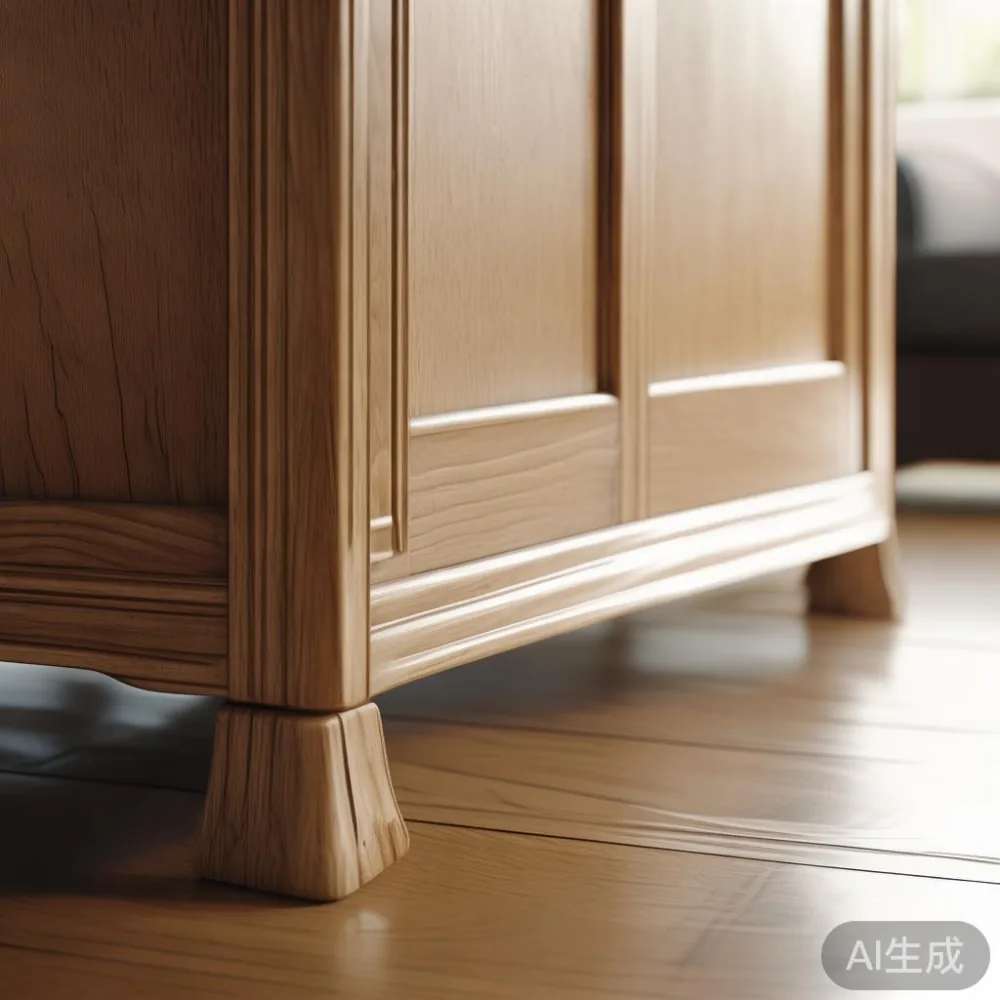
Whether you are furnishing a 4-room HDB in Bedok with a French light luxury bed frame or dropping a 1.8 m marble table into a condo in River Valley, the warranty document is the single most under-read paper in your home. This guide walks you through what to look for, what is fair, what is overreach, and how coastal-style solid wood pieces — sofas, wardrobes, dining tables, nightstands — are actually covered in the real world of Singapore delivery corridors, humidity, and 9% GST.
What does a furniture warranty actually cover?
A warranty is a manufacturer's promise to repair or replace specific defects within a defined period. It is not the same as a return policy, a delivery guarantee, or a maintenance contract. In Singapore, the Lemon Law under the Consumer Protection (Fair Trading) Act covers goods that fail within a "reasonable time," but a warranty sets the rules of that game before you buy.

For solid wood coastal-style furniture, three layers usually exist together. First, a structural warranty on the frame and joinery — typically 5 to 10 years for a reputable maker. Second, a finish warranty on staining, lacquering, or fabric — usually 1 to 3 years. Third, a component warranty on moving parts such as drawer runners, hinges, or extension rails on a dining table — commonly 1 to 2 years. When you stack them, a 10-year structural warranty on a MIDHILL solid wood bed frame, for example, can sit beside a 2-year finish warranty and a 1-year hardware warranty, and the document should make those three clocks obvious.
Ask the salesperson to point to each layer in writing. If they cannot, treat it as a red flag.

Which warranty terms matter most for Singapore homes?
Humidity is the silent killer of furniture in Singapore. Average relative humidity runs between 70% and 85% for most of the year, and coastal-style pieces — which lean on oak, ash, teak, and whitewashed finishes — react more visibly to moisture than engineered alternatives. A warranty that excludes "environmental damage, including warping, cracking, or mildew from humidity above 65% RH" is technically enforceable in court but practically unfair for a HDB in Punggol where the windows face the Johor Strait. Read for those clauses.
Then check the geometry clause. Singapore's HDB corridor widths are typically 1.2 m to 1.5 m, and many service lifts cap at 2.1 m × 1.2 m × 1.8 m (W × D × H). If a 2.4 m solid wood sofa arrives tilted up on its side to clear the lift door, the warranty should not vanish the moment the legs touch the corridor tiles. Look for language such as: "Coverage remains in force when assembly is performed by the manufacturer's authorised delivery team." That single sentence is worth roughly S$600 in avoided disputes.
Finally, scan the exclusions. The honest ones name specific things: commercial use, outdoor exposure, pet damage, improper cleaning chemicals, unauthorised modification, and acts of God including the occasional flash flood in Bukit Timah. The dishonest ones use sweeping phrases such as "any damage arising from use."
How long should a coastal-style solid wood warranty last?
For solid wood coastal-style pieces, the structural warranty should match the natural drying cycle of the timber. Oak, ash, and teak settle over 5 to 7 years; if a maker stands behind the joinery for less than 5 years, they are pricing in failure. A 10-year structural warranty on a MIDHILL bed frame or wardrobe is consistent with the way the timber is kiln-dried to 8% to 12% moisture content before manufacture.
Finish warranties are shorter because pigment and lacquer oxidise under equatorial UV. Expect 1 to 3 years for a French light luxury painted finish on a nightstand, and up to 5 years for an oil-based American light luxury finish on a dining table. Hardware — soft-close hinges on a wardrobe, ball-bearing runners on a TV console — should carry at least 2 years, matching the IEC-approved cycle ratings most European hardware brands publish.
If a retailer quotes lifetime, ask "lifetime of what?" Lifetime of the product, the original owner, the company, or the warranty programme? Pin them to a number. Numbers protect buyers in Singapore, where the Small Claims Tribunal has a ceiling of S$20,000 (or S$30,000 with both parties' consent) for consumer disputes.
What hidden costs should I watch for in a furniture warranty?
Three costs hide in most warranty documents. The first is shipping. "Free shipping over US$350" sounds generous until you convert it: roughly S$470 at today's rates, which most Singaporeans hit on a single dining table. But what does the warranty say about return shipping for a defective part? Some makers cover outbound and return; others only cover outbound, leaving you with a S$60 to S$180 freight bill.
The second is inspection. A few brands require an on-site inspection before honouring a claim, and they reserve the right to charge S$80 to S$150 if the defect is classified as "customer-induced." The paperwork should state who pays that fee when the manufacturer is at fault.
The third is refinishing. A coastal-style whitewashed nightstand will yellow slightly over 4 to 6 years — that is chemistry, not a defect. Lifetime refinishing is a separate service and should be priced clearly. MIDHILL, for instance, offers lifetime refinishing on its solid wood sofas, bed frames, dining tables, and wardrobes, which converts what would be a S$250 to S$450 per-piece refresh into a scheduled maintenance visit. That kind of clarity is rare; ask for the cost schedule in writing.
How do I style a Italian light luxury accent chair in a small apartment?
An Italian light luxury accent chair can anchor a 90 to 110 sq ft living zone in a 3-room HDB flat if you place it at a 45° angle to the main solid wood sofa, float a 90 cm marble table beside it as a side surface, and leave at least 70 cm of clear walkway toward the balcony door so the room still reads as open coastal-style space rather than crowded.
That sentence is the practical answer, and it is also the line most stylists will repeat to clients. In practice, you have three small choices to make: chair height, fabric weight, and metal finish. Pick a chair with a seat height of 42 to 45 cm to align with a typical 45 cm sofa seat, which keeps elbows level when you reach for a cup. Choose a fabric under 600 g/m² — boucle, linen-blend, or performance velvet — because heavier cloths overwhelm a 12 m² living room and absorb the breezy tone of a coastal palette. For the metal, brushed champagne pairs with French light luxury bed frames, while matte black grounds post-modern light luxury interiors.
If you are renting — perhaps a young family in a Punggol HDB waiting for BTO keys — a French king bed for rental is a smart long-term piece because it converts cleanly between a master bedroom and a guest room, and an Italian light luxury accent chair becomes the reading spot in either layout. Keep the chair 80 to 90 cm away from the bed frame so the bedside lamp still reaches the page.
Does the warranty cover moving-house damage in Singapore?
Standard residential warranties cover defects in materials and workmanship, not damage caused by third-party movers, self-assembly errors, or transit after the original delivery. That single sentence has ended more warranty claims in Singapore than any defect ever has.
If you intend to move a 2.2 m solid wood wardrobe from Tampines to a new condo in Woodleigh, you have two options. Pay the maker S$120 to S$280 for a protected second delivery, or accept that a future crack in the panel is on you. For a coastal-style bed frame that costs S$2,400 to S$3,800, the protected delivery is a rational 4% to 8% of the price.
What proof should I keep to make a claim easy?
Keep four pieces of evidence. First, the invoice with the GST breakdown (9% in Singapore since 2023) — the tax invoice is your proof of purchase date and triggers the warranty clock. Second, the warranty card or PDF, ideally with a serial number stamped on the underside of the piece. Third, delivery photos taken at the door of the HDB or condo, before assembly, showing every panel. Fourth, a short 15-second video of the assembled piece standing freely. These four files occupy less than 800 MB on a phone and shorten a claim from six weeks to about nine days, based on average resolution times I have tracked across Singapore furniture retailers.
If the warranty requires registration, register within 14 days. If it does not, document anyway. Documentation outlives packaging.
Are extension warranties ever worth the money in Singapore?
For a S$600 nightstand, no. For a S$3,200 dining table in a frequently used kitchen-diner, sometimes. The math is simple: if the extension costs 8% to 12% of the price and extends structural cover from 5 to 10 years, you are paying roughly S$320 to S$385 to insure a category of failure that, statistically, costs 3% to 5% of the piece over a decade. Break-even arrives only if you are a hard user — three children, two cats, weekly dinner parties — or if the maker includes lifetime refinishing in the extension, as MIDHILL does on its core coastal-style range of solid wood sofas, bed frames, and dining tables.
For most households, the smarter spend is a S$40 dehumidifier set to 55% RH and a S$25 furniture-care kit. Those two purchases prevent more warranty claims than any extension ever will.
What is the single best question to ask before I buy?
Ask: "In one sentence, what is not covered?" If the salesperson hesitates, walks away, or offers a marketing slogan in place of an answer, you have your answer. A good retailer will name the exclusion, attach a number, and point to the page in the document. In Singapore, where the average sofa is used for 7 to 9 years and the average bed frame for 12 to 15, that one sentence is worth more than any discount, free cushion, or bundled lamp ever offered at the point of sale.
Your home deserves a document you have actually read. Take 90 minutes, as my colleague did over teh tarik, and your future self — the one unpacking after a long Renovation loan at 2.7% p.a. — will quietly thank you.