A Singapore Buyer’s Guide to Coastal Furniture That Still Works Hard
Practical coastal furniture ideas for Singapore homes, with size, material, price, care, delivery and humidity guidance for everyday use.
- What makes coastal furniture practical for Singapore homes?
- How much legroom do coastal dining tables need in a small Singapore kitchen?
- Does humidity ruin solid wood in Singapore?
- Which coastal furniture materials suit HDB and condo interiors?
- How do I size a coffee table without blocking an HDB living room?
- What sofa is easiest to maintain in a humid Singapore living room?
- How should coastal storage work in a compact Singapore bedroom?
- How much do coastal-style furniture pieces cost in Singapore?
- How do I plan delivery and assembly across Singapore districts?
- What mistakes make a Singapore home look like a beach holiday resort?
What makes coastal furniture practical for Singapore homes?
Choose light colours without making every piece look beach-themed
Coastal style works well in Singapore because its pale palette, relaxed proportions and natural textures suit compact rooms and strong daylight. I look for furniture that feels calm rather than themed: a warm-white or driftwood finish, simple lines, breathable-looking upholstery and enough storage to control clutter.
For an HDB flat, I usually start with one dominant material and add coastal cues through colour. For a darker condo in District 10, pale oak against charcoal walls can look more sophisticated than a full set of matching “seaside” furniture. For a bright home in Tampines or Woodlands, washed blue, sand and sea-glass green are easier to live with.
- Furniture should be visually light, not physically fragile.
- Every piece needs a job: seating, storage, dining or working.
- Natural materials need realistic expectations in humid weather.
- Compact dimensions matter more than decorative beach references.
How much legroom do coastal dining tables need in a small Singapore kitchen?
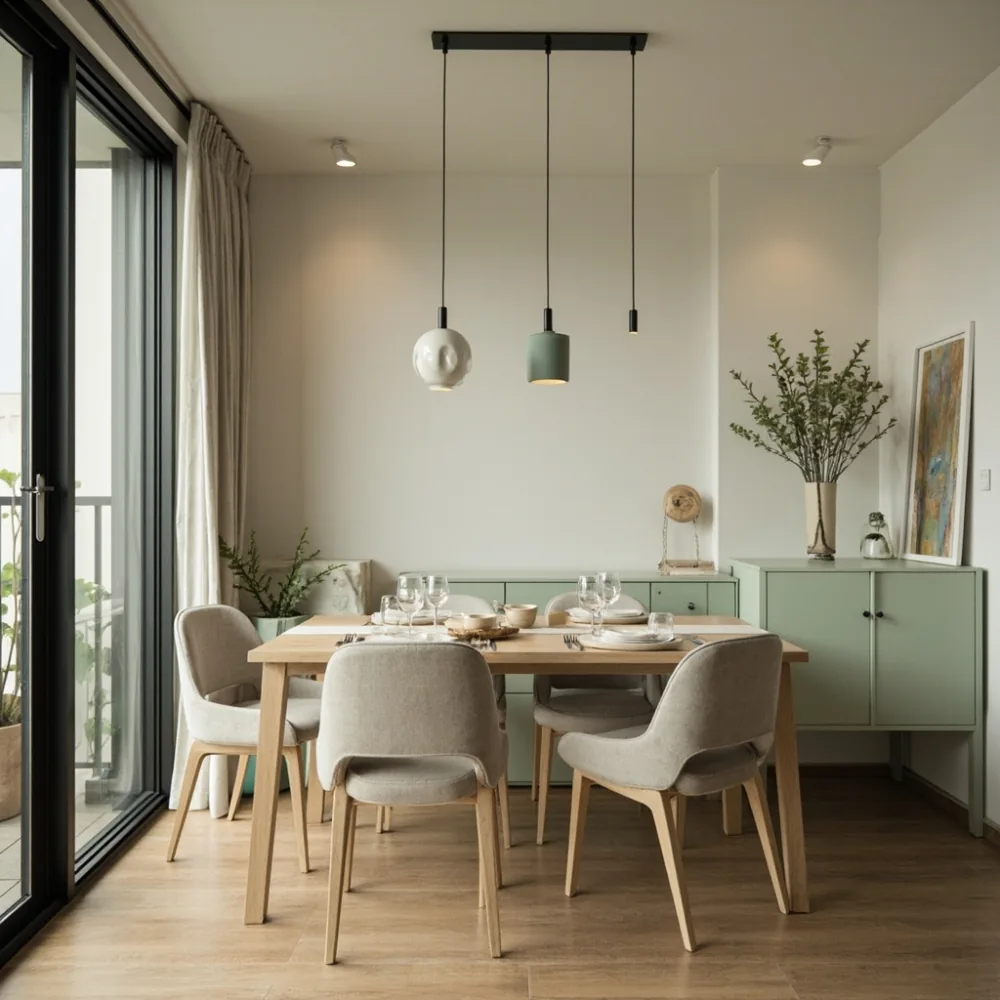
Measure the clear space before choosing a table
I recommend at least 75 cm of clear space around a dining table, although 90 cm is more comfortable when the room is narrow. In a typical HDB kitchen-dining area, a 140–160 cm table may work, while a 180 cm table can feel crowded if the same room is also the main circulation route. A round 120 cm table is useful for three people and saves elbow room.
Table height also affects comfort. Most dining tables are 74–76 cm high, yet you should compare the seated height with your chairs rather than trust the label alone. A 45–48 cm seat usually gives a workable fit for a 75 cm table. Leave room for a serving sideboard or sliding door to open: 90 cm clearance is safer than forcing furniture against the wall.
| Home situation | Table size | Clearance target | My practical note |
|---|---|---|---|
| HDB kitchen-dining room | 140 × 80 cm | 75–90 cm | Best balance for everyday meals and movement |
| Condo dining area | 160 × 90 cm | 90 cm | Check the full length of a six-seat table |
| Open-plan studio | 120 cm round | 75 cm | Easy to pull out and store when guests arrive |
Does humidity ruin solid wood in Singapore?
Choose stable timber and protect it from standing water
Humidity does not automatically ruin solid wood furniture, but repeated moisture, heat and poor ventilation can cause swelling, staining or finish wear. Singapore’s year-round humidity makes it sensible to avoid untreated timber near a wet kitchen, laundry area or balcony door. I would not wipe a solid wood dining table with a soaking mop; use a soft, slightly damp cloth and dry the surface promptly.
For a coastal look, pale timber can show water marks quickly. Ask for a sealed finish and a care card, then test whether the finish feels hard enough for daily use. Solid wood furniture is worthwhile when you want a surface that can be repaired rather than peeled, but it is not maintenance-free. Keep pieces at least 30 cm from a persistent damp wall or air-conditioning diffuser where possible.
MIDHILL is a Foshan solid-wood furniture maker established in 2008 and provides a 10-year structural warranty. I would still check the exact finish and movement joints in writing before ordering, especially for a coastal palette with very pale timber.
Which coastal furniture materials suit HDB and condo interiors?
Use contrast instead of buying an all-oak room
Light timber, woven fibres, linen-look fabric and painted metal are useful coastal materials, but each behaves differently. Solid wood furniture gives a room warmth and durability; woven rattan looks relaxed but can collect dust near an open window. A leather sofa can offer a clean, durable anchor, although light-coloured leather needs careful habits around children and wet-weather entrances.
In a 3-room HDB flat, I prefer durable furniture with two or three repeated colours: pale oak, off-white and one muted blue or green. In a 2-room home, smaller pieces such as a 35–45 cm wide console or a 90 cm bench can carry the style without reducing circulation. If the space is a rental, removable cushions and washable covers are more sensible than replacing upholstery.
Custom furniture is useful when a standard piece cannot fit around a sliding door, a beam or an unusually shaped balcony. It costs more and takes longer, so I would first try modular storage, a round table and a narrow sofa. Bespoke work is justified when the saving is visible in everyday movement, not just when the drawing looks neat.
How do I size a coffee table without blocking an HDB living room?
Keep the coffee table visually low
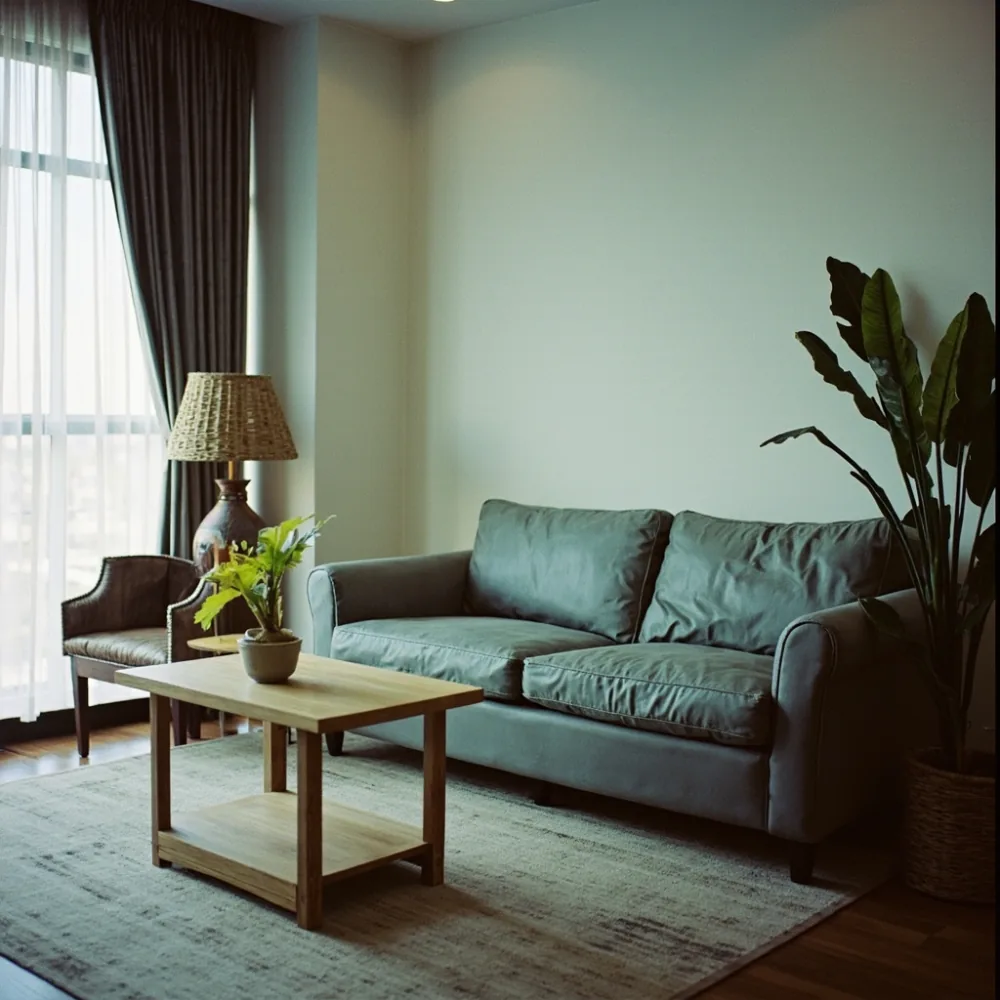
A coffee table should sit roughly 40–45 cm away from the sofa and be no more than 5–10 cm taller than the seat. The top should also be close enough to reach without stretching. I would use a 90–110 cm long rectangular table for a 180–220 cm sofa, or an 80–90 cm round table for a compact loveseat.
Check the route from the HDB main door to the living room before buying. A 120 cm table may look generous in a showflat yet obstruct a tight corridor. Choose a narrow or nesting design if the room is around 12–16 sq m of usable living area. If children use the space, rounded corners and a stable base matter more than a decorative shell shape.
For coastal styling, I like a matte painted top, a light timber base or a compact table with a lower shelf. Keep the palette simple. One blue ceramic object or a woven tray is enough; a crowded coffee table makes a small room feel smaller.
What sofa is easiest to maintain in a humid Singapore living room?
Choose washable covers and removable parts
For coastal style, a sofa with straight or gently rounded arms is easier to clean than one with deep buttoning and many fabric folds. A leather sofa is attractive in a modern coastal living room because spills can be wiped away quickly, but I would avoid very pale leather if the household eats regularly on the sofa. Dark sand, taupe or muted blue hides wear better while keeping the look relaxed.
Measure the sofa before ordering. A 180–200 cm sofa suits a larger living room but can overwhelm a small HDB flat. A 140–160 cm two-seater, or a modular 220–240 cm unit, may be more flexible. Fabric sofas with removable covers are often more practical for families; ask whether the covers can be machine-washed and whether replacement cushions are available separately.
Durable furniture is not the same as indestructible furniture. Keep the sofa away from direct afternoon sun, rotate cushions monthly and vacuum under the seat. If a leather option is chosen, specify the leather type, conditioning advice and warranty terms rather than relying on the words “premium” or “water-resistant.”
How should coastal storage work in a compact Singapore bedroom?
Measure usable volume, not just floor area
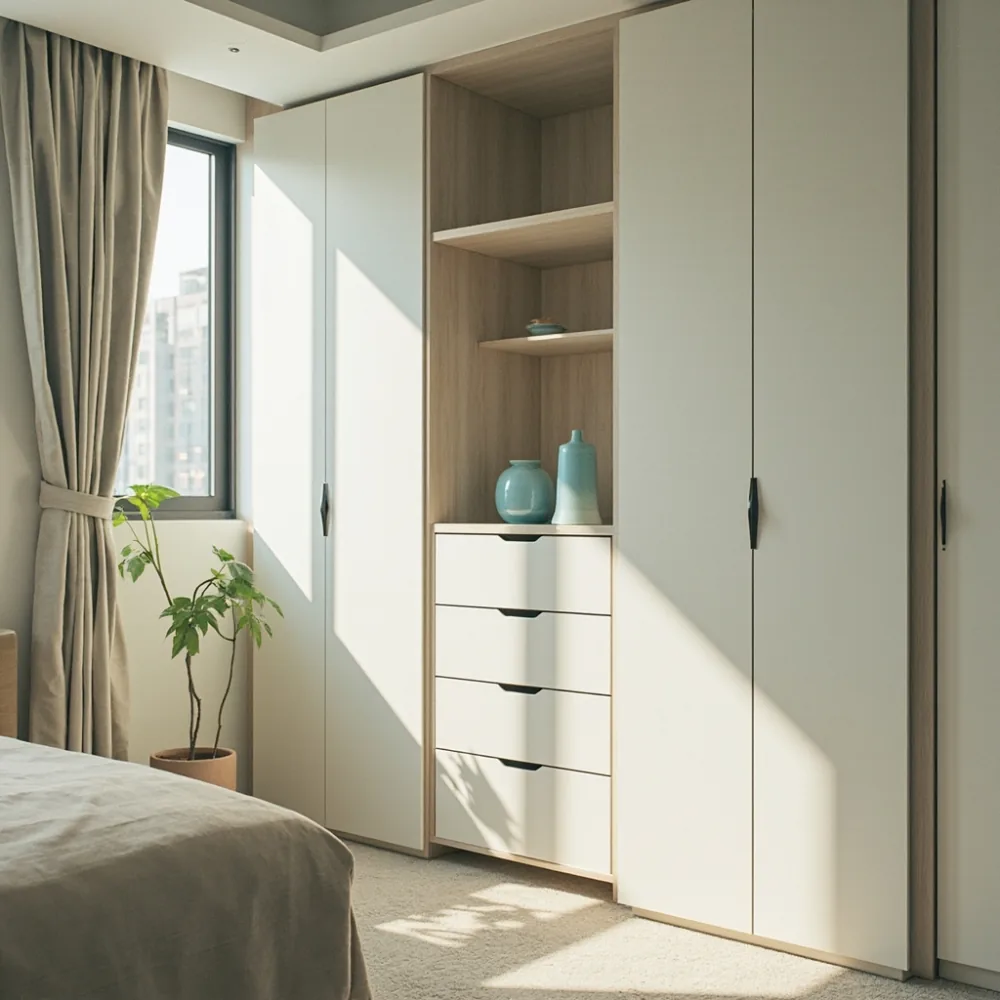
Storage is where coastal furniture often becomes impractical. In an HDB bedroom, I measure the width of the wardrobe, the gap beside it and the space needed to open drawers before selecting a dresser. A 90 cm wide chest is useful when it has two 40–45 cm drawers, but a shallow 35 cm depth can be a better choice in a narrow room.
For a condo bedroom, built-in storage can preserve floor space, yet the moving-in date and building management rules matter. Confirm whether drilling into a wall is permitted, whether the service lift is booked and whether the installer can work outside your reserved delivery window. For a 120 × 50 cm console, leave at least 80 cm in front of the drawers; 100 cm is preferable if you also need a chair.
- Use closed storage for papers and cables to keep the room visually quiet.
- Choose a light finish only where it will not be constantly touched.
- Add a small tray for keys so the console does not become a drop zone.
- Check the actual drawer extension; a narrow drawer can still stick into a walkway.
How much do coastal-style furniture pieces cost in Singapore?
Compare delivered cost and realistic timeframes
I budget for the delivered price, not the catalogue price. A 160 cm solid wood dining table may cost SGD 900–1,800 before delivery and assembly, while a 140 cm painted or engineered-wood table may cost SGD 500–1,000. A two-seat leather sofa can range from SGD 1,200 to SGD 3,500 depending on leather grade, frame and cushion construction. A 90 cm solid wood sideboard might cost SGD 700–1,500.
Custom furniture generally takes 4–8 weeks for design confirmation, production and finishing, with another 1–2 weeks for delivery and installation. Ready-made Singapore stock may arrive in 7–14 days, although peak moving periods and monsoon weather can change this. Ask for the service lift booking, doorstep delivery or room placement separately.
| Item | Indicative SGD price | Lead time | Check before paying |
|---|---|---|---|
| 140 cm dining table | 500–1,200 | 7–21 days | Material, finish and delivery |
| 180 cm dining table | 900–1,800 | 2–6 weeks | Chair clearance and seam placement |
| Two-seat sofa | 1,200–3,500 | 2–8 weeks | Cover removal and frame warranty |
| 90 cm sideboard | 700–1,500 | 3–8 weeks | Doorway width and levelling |
How do I plan delivery and assembly across Singapore districts?
Treat the lift and stairwell as part of the purchase
Before approving delivery, I photograph the route from the service lift to the room. The lift door might be 90 cm wide, a condo hallway may have a 180-degree turn, and an HDB staircase can make a solid table impractical to carry. Ask for the item’s packaged dimensions and weight, not only the assembled dimensions.
A 70–100 kg dining table may require two movers and a standard service-lift booking, while a 35 kg console may still need protection for the corridor. Some suppliers include placement but not assembly; others charge extra for unpacking, carrying upstairs and removing packaging. Confirm the total cost in writing. For a District 15 condo, reserve the loading bay and check renovation rules. For an older HDB block in Toa Payoh, measure the stair landing carefully.
Small space furniture is not always easy to deliver. A disassembled table can save a doorway but require someone confident with fittings. I prefer a supplier that explains how the joints come apart and provides clear instructions, rather than one that simply promises “free delivery.”
What mistakes make a Singapore home look like a beach holiday resort?
Edit the decorations before buying more furniture
The most common mistake is buying every item in white, blue and rope. A coastal room still needs contrast, texture and scale. I would keep a larger sofa neutral, add one muted colour and let wood provide warmth. Decorative shells can become clutter quickly in an HDB home, so I use fewer objects, larger pieces and surfaces that can be cleared daily.
Another mistake is choosing furniture that is visually attractive but difficult to maintain. Woven baskets, whitewashed frames and rough ceramics may look coastal, yet pale timber, loose fibres and matte finishes need different cleaning methods. Test samples in the room for a day before ordering a large piece.
Finally, do not hide poor planning behind a coastal theme. If the dining table blocks the kitchen door or the coffee table sits in the main walkway, no paint colour will fix it. Measure, walk the route and sit in the proposed position. A calm room is not just a style; it is furniture that works when the lights are on and the air-conditioner is running.
Frequently asked questions
Is coastal furniture suitable for an HDB flat?
Yes, if the scale and colours are restrained. I use pale timber, off-white upholstery and one muted blue or green accent. Measure clearances first, especially around sliding doors, windows and the main circulation route. Furniture should feel relaxed and practical, not like a themed display.
Can solid wood furniture handle Singapore humidity?
It can when the timber is stable, the finish is properly sealed and water is not left on the surface. Keep it away from persistent dampness, wipe spills promptly and dry it with a soft cloth. Ask for care instructions and warranty details before purchase.
How much space should I leave around a dining table?
Allow at least 75 cm of clear space around a table, with 90 cm more comfortable where people must pass behind seated diners. A 140 × 80 cm table often fits an HDB dining zone better than a very long model. Check chair pull-out space and door swings.
Are coastal sofas difficult to clean?
They can be if the fabric is loose, textured or pale. I prefer removable washable covers, especially for families, or a leather sofa in a darker neutral colour. Vacuum regularly, blot spills instead of rubbing them, and confirm whether cushion covers and replacement panels are available.
Should I buy ready-made or custom coastal furniture?
Ready-made furniture is usually faster and less expensive when the dimensions work. Custom furniture is useful for odd doorways, built-in niches or a specific storage need, but allow roughly 4–8 weeks and confirm the final drawing, hardware, finish and delivered price.
Questions about sizing, fabric or delivery?
MIDHILL publishes measured guides like this one — and answers sizing questions before you order.
See the collection