What to Check Before Buying a Sofa You Cannot Sit On: A Singapore Coastal-Style Buyer’s Checklist
I learned this the awkward way. Last month I visited a friend’s new 4-room HDB flat in Punggol, and she had just taken delivery of a beautifully photographed sofa she’d chosen purely from a 1080p product gallery. The arms were 12 cm wider than the listing said, the chaise couldn’t fit up the service staircase, and the foam sat roughly two fingers firmer than the showroom sample in Tampines she’d tried three weeks earlier. She was paying GST on a piece she could not return cheaply. That afternoon, scrambling cushions in a half-furnished living room, I realised how many checks I had been skipping in my own coastal style purchases, and how every one of those checks can be done before you click checkout. This guide is the exact list, tuned for Singapore homes, HDB corridor turn-radii, and lift openings that often run 80 cm to 90 cm wide.
Why “sit on it later” beats “sit on it now” — and how coastal style changes the math
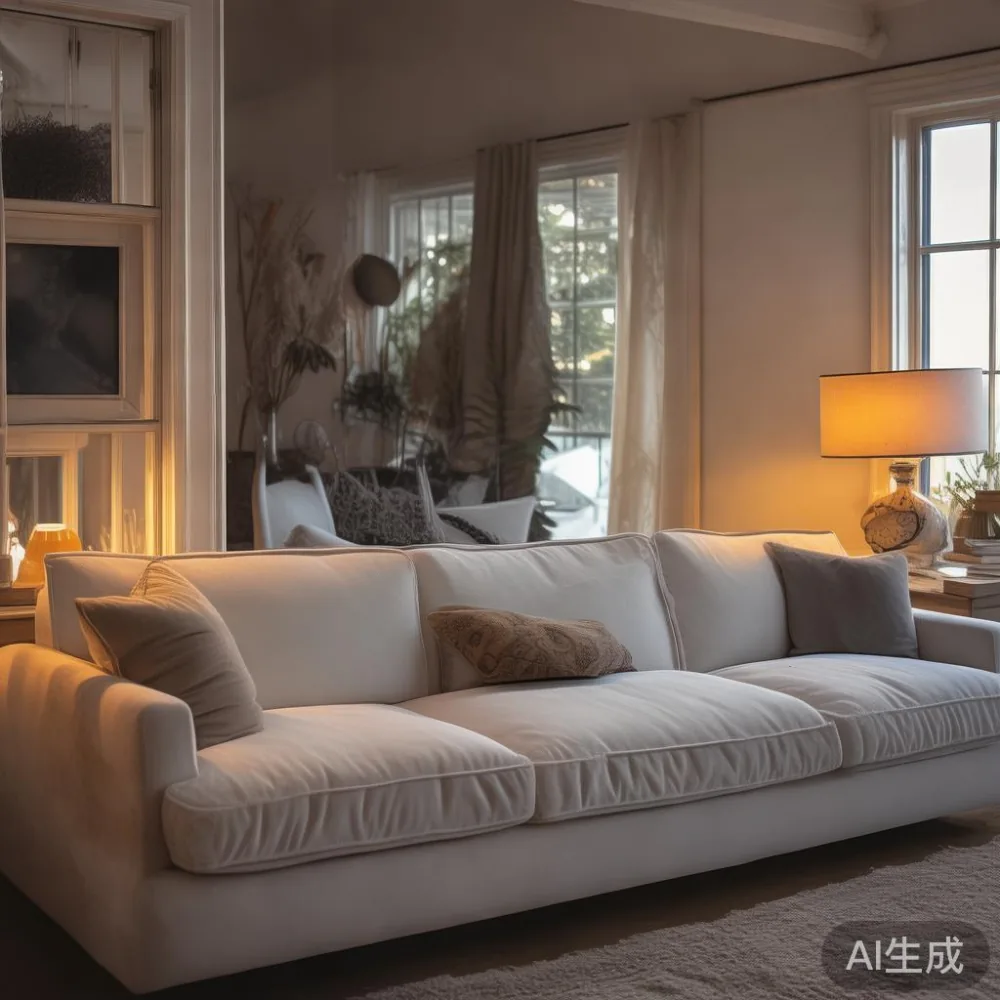
Most Singapore buyers will sit on their shortlisted sofa exactly once, in a Tampines or Bedok showroom, on a Saturday afternoon. After that, the piece travels unboxed, hoisted by two delivery crews, and tilted through one or two 90-degree corridor turns before reaching a 1.2 m–wide door. A coastal style living room amplifies the stakes: low-back silhouettes, washed oak finishes, and slipcovered linen-washable fabrics look gorgeous, but they also hide dimensional quirks behind a relaxed silhouette. A 5 cm depth error on a tightly tailored modern piece might as well be 15 cm on a coastal slipcover. So the “try it later” is not really later — it is the moment your corridor decides whether the sofa ever sits at all.
The coastal mood board I keep coming back to pairs driftwood white oak frames with linen-blend slipcovers, rope-trimmed nightstands, and a single refined piece — often a French light luxury accent chair or an Italian light luxury TV console — to anchor the room. In this register, proportions matter because there is no ornate carving to absorb mistakes. A solid frame hidden under a light linen cover only helps if the frame actually fits the room.
Will it fit my HDB lift, corridor, and door?
Measure before you fall in love. Most HDB door widths sit between 0.81 m and 0.92 m, with the tallest HDB doors around 2.03 m and lift openings roughly 0.8 m to 0.9 m wide by 2.1 m tall. Older blocks in Bedok and Tampines can have shorter lift ceilings around 2.0 m, which is the deal-breaker for upright sofa frames. Take these three measurements and write them on the order form:
1. Lift door width and depth: Open both doors fully, then measure the clear opening. Two metres deep in a lift is normal; below 1.5 m means a 2.4 m sofa almost never goes in upright.
2. Corridor turn radius: A standard L-shaped HDB corridor turn is roughly 1.4 m across the diagonal. Anything deeper than 1.0 m on the chaise side will jam.
3. Your unit’s front door: Subtract 1 cm to 2 cm for hinges and weather strips. The usable width is your absolute max.

A practical rule my colleague uses: anything taller than 195 cm or deeper than 105 cm on a single module warrants a paid site survey, which costs around S$60 to S$120 in Singapore. Skipping that survey on a S$2,200 sofa to save S$80 is a poor trade. MIDHILL includes a measurement guide with every coastal style sofa order and offers on-site surveys in Tampines, Bedok, and Punggol, which is one of the quieter perks that separates a measured spec sheet from a glossy brochure.
Is the frame a solid wood sofa, or just dressed-up plywood?
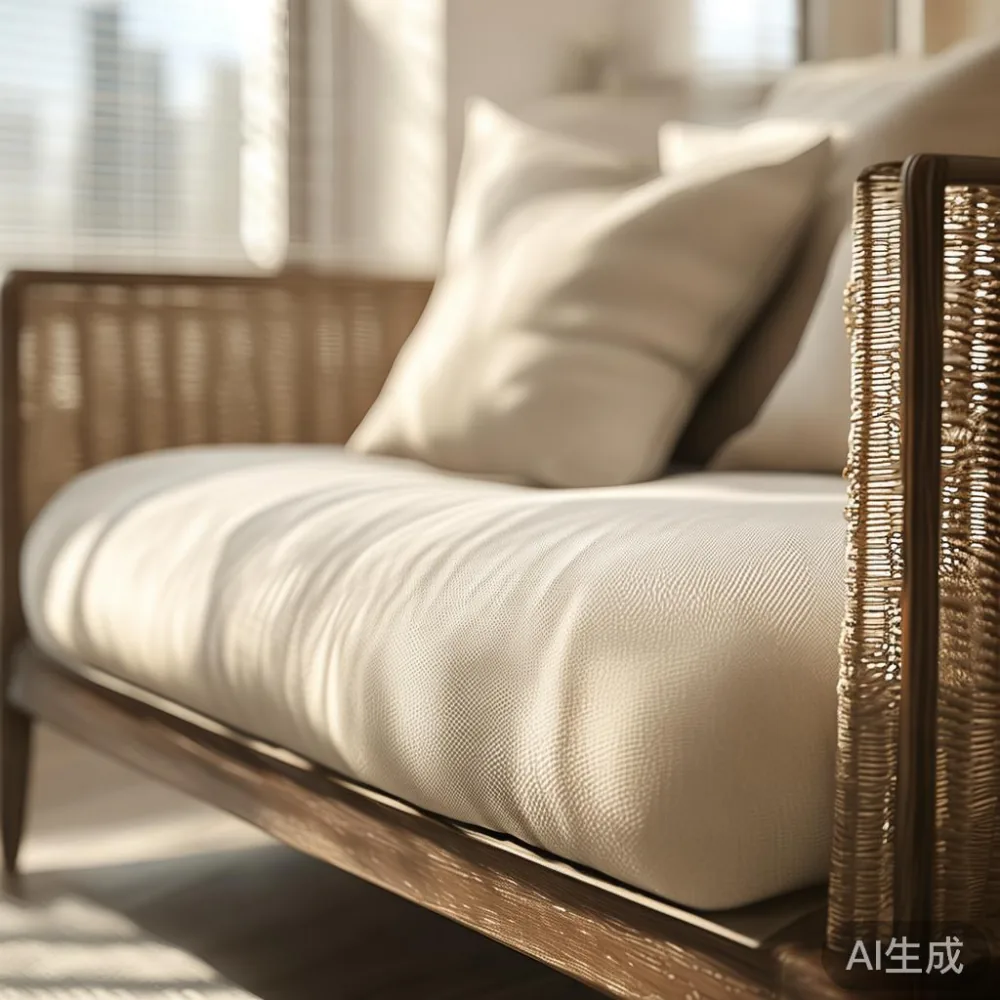
Coastal style encourages washed oak visuals, and that look is sometimes faked with a 0.6 mm laminate over a softwood core. The piece still photographs beautifully, but feels hollow when knocked lightly with a knuckle, and the warranty tells the truth. Ask the seller — or read the spec — for the frame species: ash, oak, rubberwood, or beech will outlast MDF or particleboard at every price tier. A solid wood sofa should weigh between 55 kg and 95 kg for a standard three-seater; below 40 kg and you are almost certainly holding a hollow-box frame. Hardwood kiln-dried to 8% to 12% moisture content handles Singapore’s 80%+ humidity for at least 10 years without joint creep.
This is also where the seller’s guarantee means something. A 10-year structural warranty backed by a Foshan factory exporting to 15+ countries is a different risk profile than a 6-month local warranty from a marketplace reseller. MIDHILL publishes both terms openly, which is how I first realised the difference between “frame” coverage and “upholstery” coverage — the first is 10 years, the second is usually 1 year on coastal linen slipcovers.
How do I tell if the cushion foam will last past year two?
Sitting on a showroom cushion reveals the initial density, which is roughly 28 kg/m³ to 32 kg/m³ for a sensible mid-soft feel and 35 kg/m³ to 40 kg/m³ for firmer support. What it does not reveal is the resilience rating. Foam with a resilience of 35% or higher rebounds after long sits; foam under 25% will sag noticeably by month 18 in a non-aircon room. Down-wrapped cushions feel loftier but compress about 2 cm per year and need monthly plumping. If the seller cannot quote density and resilience numbers, that is the answer you needed.
I keep a small note on my phone: density in kg/m³, resilience as a percentage, and whether the cushion is reversible. Reversible cushions can be flipped and rotated every six months, which roughly doubles the visible life of the cover. Most coastal style sofas hide their foam cores under zippered slipcovers, and zippers matter more than people think — replaceable covers are how a sofa outlives its foam.
What about slipcovers, stains, and the haze season?
Coastal linen and cotton-linen blends look their worst on the day they arrive and their best after three washes. Confirm three things before you commit: that the slipcover is machine-washable at 30°C, that it has zippered cushion casings (not glued or stapled), and that spares are available at under S$120 a set. Singapore haze season can leave a fine film on pale fabrics, especially on units facing west in Punggol; washable slipcovers turn a Sunday disaster into a Tuesday recovery. For households with one or two cats, a tight weave above 280 g/m² resists claws better than the gauzy 180 g/m² linen that coastal mood boards often show.
Floor care matters too. A coastal style sofa sits low, often with an under-clearance of 7 cm to 9 cm. Robot vacuums need 8.5 cm clear, so measure twice if you rely on one. I learned this from a neighbour in Bedok whose Roomba kept wedging itself under a beautiful driftwood frame — she ended up adding small rubber feet of 2.5 cm to lift the sofa just enough for the vacuum to pass. The sofa still looked coastal, just with slightly more breathing room.
Does it really last 10 years, and what happens when something goes wrong?
Warranty language is where coastal furniture brands earn their keep. A genuine 10-year structural warranty on the frame, kiln-dried solid wood joinery, and marine-grade corner blocks is a serious commitment; a lifetime refinishing offer on a S$1,800 sofa is rarer still. Ask the seller four questions in writing:
1. What is covered for 10 years? Frame, joinery, springs, and hardware — confirm in the line items, not just the brochure.
2. What is the response time? A Foshan-direct factory usually replaces a defective part within 14 working days plus 7 to 10 days shipping from China. Local resellers can be slower.
3. Who pays return shipping? On defects, the seller should. On change-of-mind, you almost always do.
4. What is the after-care? Refinishing or re-upholstery is a real service if the seller runs their own workshop. MIDHILL offers lifetime refinishing on solid wood sofa, bed frame, and dining table frames — useful if your toddler draws on the oak armrest in year six.
How do shipping, GST, and Singapore delivery actually work?
Singapore imports most coastal style sofas by sea-freight from Guangdong, with lead times of 25 to 45 days from order date. Air-freight slashes that to 10 to 14 days and adds roughly S$180 to S$320 to the landed price. GST of 9% applies to the landed cost including shipping and insurance, and most direct-from-factory brands either show GST-inclusive prices or collect GST at checkout for orders above the S$400 import relief threshold.
Free shipping is meaningful when it means free. Anything above US$350 (about S$475) clears most factories’ free-shipping threshold and removes a S$120 to S$220 freight line item. Inside Singapore, delivery is usually S$60 to S$120 per trip, free above a stated order size, and many factories waive it above S$2,000. Ask for an itemised quote: product, shipping, GST, lift-and-carry surcharge (S$20 to S$60 per floor above ground), and any disposal fees. The last item catches people out — disposing an old sofa in Singapore costs S$80 to S$180 if the delivery crew handles it, less if you take it to a HDB bulky-item collection.
For the light-luxury segment, the rule is the same. A French light luxury bed, an Italian light luxury TV console, or a European light luxury coffee table all move through the same corridor and the same lift, so the same measurements apply. The MIDHILL light luxury bed range, for example, ships in flat-pack modules no longer than 198 cm so it clears a 2.03 m HDB door with the hinges on. That detail never appears on a mood board, but it decides whether the bed frame reaches your master bedroom or gets returned to the warehouse at your cost.
What about returns, exchanges, and 14-day cooling-off in Singapore?
Singapore’s Consumer Protection (Fair Trading) Act covers misrepresentation and unfair practices but not simple change-of-mind on custom or imported goods. A 14-day return policy is therefore a seller commitment, not a legal minimum. Read it carefully: many exclude coastal linen slipcovers (cut to order), made-to-order configurations (chaise on the left or right), and clearance stock. The cleaner the return policy, the more confidence the factory has in what it ships.
A practical tactic: order one cushion cover sample in your chosen fabric, hold it against your walls in daylight and under your warm-white LEDs at 9 pm, and decide. Most mid-range and above sellers provide swatches for under S$15 or free above a minimum order. If you’re trying to match a marble table in the entryway or a wardrobe in the bedroom, swatches also help you see whether the linen weave flatters or fights with a cooler European light luxury coffee table or a richer Mid-century modern coffee table.
What if I cannot see the sofa in a showroom at all?
Not every coastal style sofa is on display in Tampines or Bedok. Cross-border direct orders rely on spec sheets, swatches, and reviews. Before you commit to a sofa you cannot sit on, pressure-test the seller: ask for the exact foam density, the frame wood species and moisture content, the sewn dimensions of the slipcover, the lift-and-carry fee in writing, and the warranty terms per item. If any of those answers feel vague, the seller is guessing about the product.
I do this myself for any piece above S$1,500. The questions sound fussy, but they take 10 minutes by WhatsApp and save weeks of regret. If the brand also sells a dining table, a wardrobe, a nightstand, or even something adjacent like the best Industrial sofa for 2026 (which I keep on a watchlist for a project loft), the same checks apply across the catalogue. A consistent spec list across categories is one of the most reliable signs that the factory, not a reseller, is on the other end of the chat.
A final word on styling around the sofa you cannot sit on
Coastal style is forgiving, but not infinite. A sofa that arrives 8 cm wider than expected will dominate a 4-room HDB living room and push your media console sideways. A sofa 6 cm taller than the plan will block your window’s lower sash and kill the cross-breeze that makes coastal homes feel coastal in the first place. Measure the room, the lift, and the door in centimetres before you measure the sofa in dollars.
Where you can give yourself slack is the styling that surrounds the sofa. A French light luxury accent chair in the corner, a low-profile Italian light luxury TV console, a rope-trimmed nightstand that echoes the linen slipcover — these pieces finish the room, and they are usually easier to swap than the anchor sofa. Some buyers also keep a shortlist for a future refresh: an industrial-style coffee table for contrast, a Mid-century modern coffee table for a warmer note, or a European light luxury coffee table for a quieter line. If you’re wondering how to style French provincial wardrobe in room with a coastal sofa, the trick is colour-temperature matching more than anything else: keep the oak at the same warm tone and let the wardrobe’s moulding do the quiet work.
Buy the sofa with a tape measure, not a wishlist. Buy the surrounds with a little heart. That balance is what makes a coastal home in Singapore feel both calm and considered — and it is exactly the balance a brand like MIDHILL, working out of Foshan since 2008, ships every week to Tampines, Bedok, and Punggol.