What Actually Drives the Price of Solid Wood Furniture in Singapore
I spent ten days inside a Foshan workshop last month, walking past stacks of oak, ash, and walnut planks under a roof that runs 38,000 square metres across four production lines. By the third day, my notebook looked like a price-tag deconstructed: scribbled dimensions in millimetres, scribbled drying times in days, scribbled courier routes from Shenzhen to Changi. If you've ever stared at two near-identical solid wood sofas in a Tampines showroom and wondered why one costs $1,480 and the other $2,260, this article is the long answer. I'm writing it from the maker's side, the side that ships to 15-plus countries, offers a 10-year structural warranty, and refinishes pieces for life.
1. Wood Species: The Biggest Variable, Centimetre for Centimetre
Every solid wood dining table on the floor at a Bedok furniture shop starts with a tree, and trees are not interchangeable. Rubberwood (a plantation hardwood common in Asian supply chains) lands at roughly S$480 to S$620 per cubic metre landed in Singapore. North American white oak sits closer to S$1,850 per cubic metre, and European walnut can climb past S$3,200. That's a four-to-six-times spread on the raw board, before any joinery has been cut.
In my visit to the milling room, the foreman showed me a stack of 5 cm-thick ash planks headed for a 220 cm coastal-style dining table. He rolled the same dimensions in rubberwood onto the next trolley. "Same sanding, same oil, same person," he said. "The ash costs us almost four times the material, and your customer sees it." That single line explained roughly S$700 of price difference on a comparable table in the MIDHILL showroom sample I photographed.
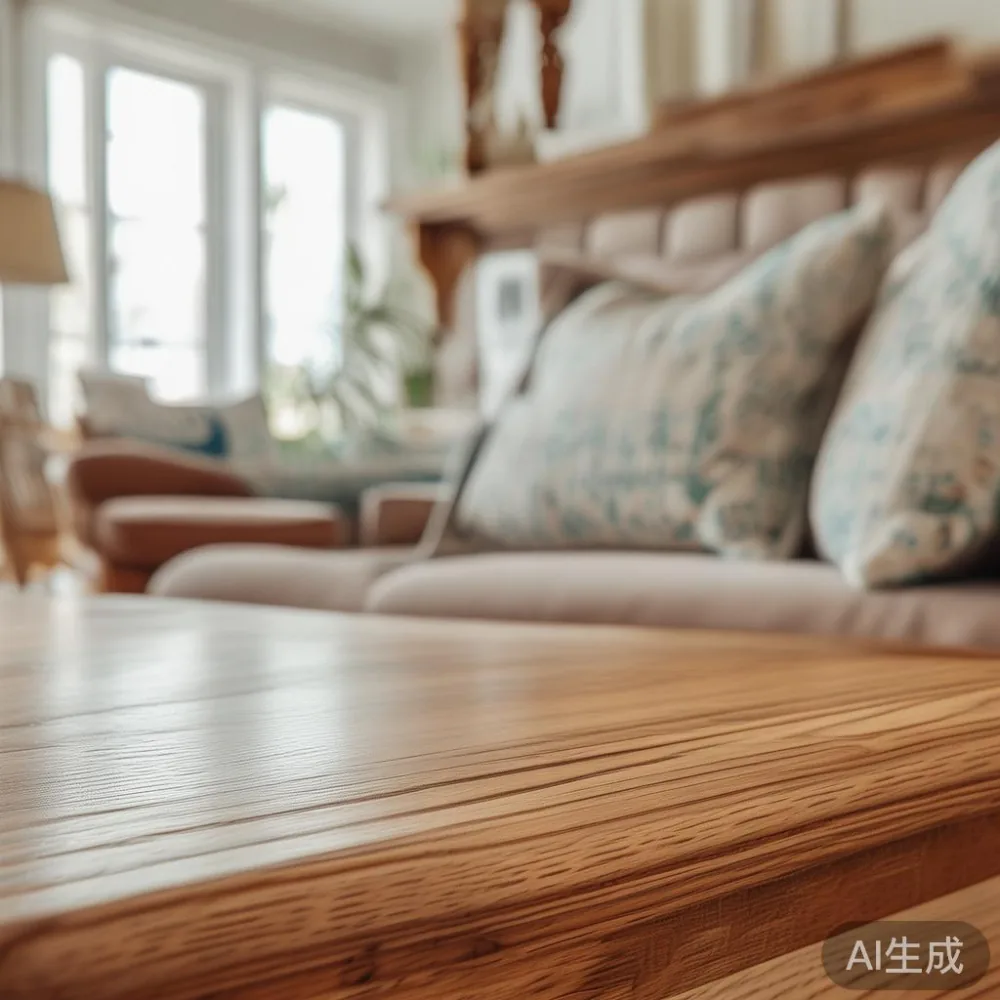
For a tropical climate like Singapore's, where indoor humidity drifts between 65% and 85% across the year, the choice of species is also a durability choice. Teak, white oak, and ash hold their shape under those swings. Lower-cost softwoods cup and twist within two wet seasons if the kiln-dry schedule is rushed.
2. Kiln-Drying: The Hidden Month That Saves Your Bed Frame
Fresh-cut lumber carries 60% to 80% internal moisture. Solid wood furniture makers either air-dry it for 3 to 6 months or run it through a dehumidification kiln for 25 to 45 days, bringing the core down to 8% to 12% moisture. Skip or shorten this step and the moisture escapes in your HDB bedroom, warping your bed frame within a quarter.

The kiln alone consumes electricity around the clock and ties up warehouse space. A large workshop I toured keeps eight kilns running at 60°C, each holding about 28 cubic metres of boards. The energy bill on those kilns lands at roughly S$18,000 to S$24,000 a month, which gets amortised across the month's output. That's why an oak bed frame from a brand that runs its own kiln can comfortably retail at S$1,380 to S$2,100 rather than the S$700 flyer price you see at random online listings: the wood was actually dried properly.
Buyers often confuse kiln-drying with "the wood is dry so it must be good." The truth is the longer and more controlled the schedule, the more stable the board. Run a moisture meter across a finished slab and you want readings between 7% and 11% for Singapore's climate.
3. Joinery: Why a Cheap Wardrobe Falls Apart at Joints, Not Panels
Panels get all the attention, but joins fail first. A coastal-style wardrobe assembled with butt screws and corner braces will rack out of square within a year of door-slamming in a Punggol BTO. Mortise-and-tenon, dovetail, and finger joints with wood glue and dowels are the three workhorses in serious production. On a 200 cm-wide wardrobe with six drawers, the labour cost of dovetailing every drawer box versus stapling and gluing thin MDF underneath is roughly S$280 to S$420 per unit.
Last month, my colleague in the QC department held up two identical-looking nightstands. One had English dovetails at the drawer corners, the other had half-blind dowels and staples. "Same wood, same finish," he said. "One is a S$520 nightstand. The other is a S$340 nightstand. The S$520 one will outlive the warranty ten times over." He's not wrong: a well-built drawer with dovetails on solid wood can handle 100,000 open-close cycles; a stapled drawer starts to wobble around 12,000.
4. Hardware, Finish, and the Small Upcharges You Don't See on the Tag
Soft-close drawer slides from a recognised brand land at S$22 to S$48 per pair in factory pricing. Generic slide-and-roller hardware lands at S$4 to S$7. On a six-drawer dresser, that gap is S$180 to S$250 per unit. Hinges follow the same pattern: clip-on soft-close concealed hinges versus basic side-mount. The hinge choice rarely appears on the spec sheet you read online, but it always appears in the lifetime of the piece.
Finishes matter too. A hardwax oil rubbed into the grain, two coats, costs roughly S$60 to S$90 in materials per dining table and adds 2 to 3 hours of labour. A sprayed lacquer sealer is faster but creates a film that cracks along coastal humidity cycles within five years. Inside the Foshan finishing room I watched three workers hand-rub oil into a 240 cm oak tabletop, working in 40 cm sections, wiping back with cotton cloth. That kind of labour lands in the final ticket.
5. Design Language: Why a "Coastal Style" Sofa Costs More Than a Generic One
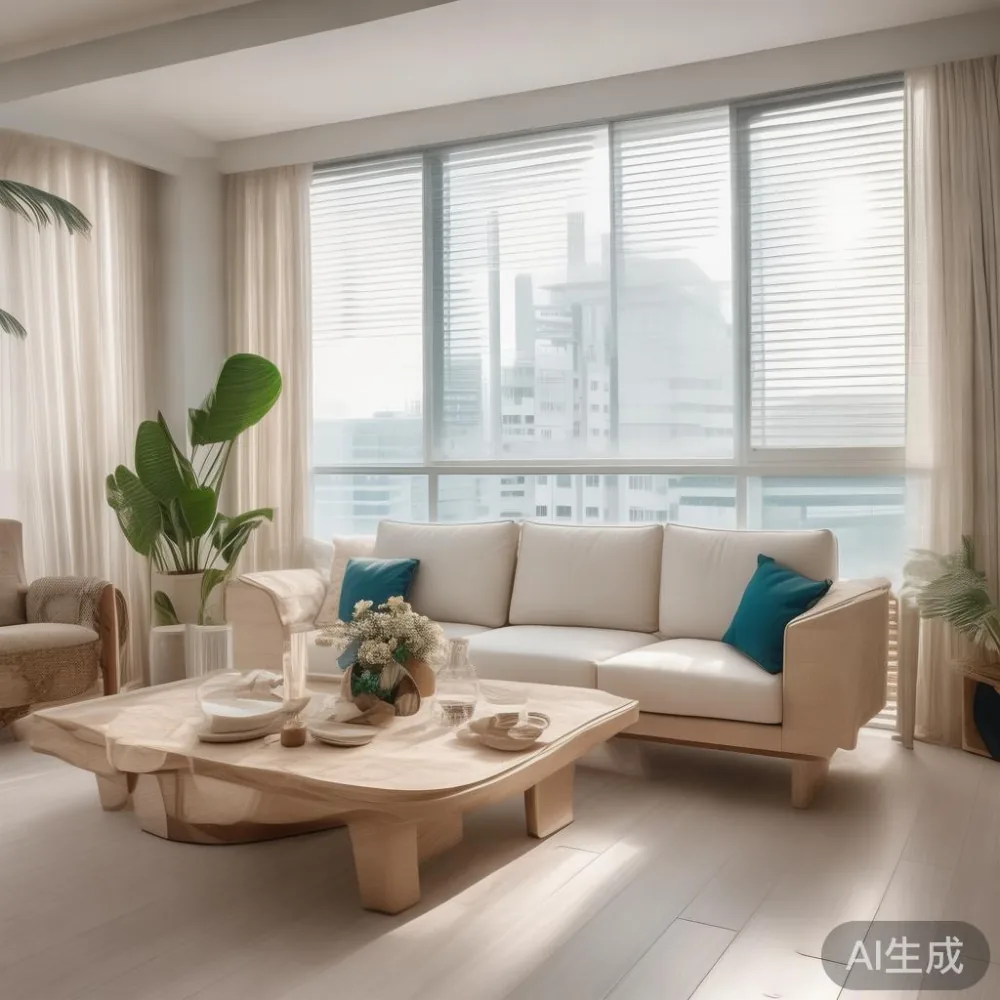
Coastal style furniture leans on lighter woods (oak, ash, white-pigmented acacia), softer curves, slim arms, and breathable woven panels. Woven panels bring us to the next cost layer: a French light luxury coastal sofa with a hand-woven rattan back uses natural cane that costs roughly S$85 to S$130 per square metre at source, plus several hours of weaving per chair. Modern rattan wicker korea accents have become a small but steady request from Singapore buyers asking for warm, breathable textures in their HDB living rooms.
A solid wood sofa frame in oak, kiln-dried and doweled, with a hand-woven rattan back and removable linen-blend cushions, typically prices between S$1,880 and S$3,400 in the Singapore market depending on width. A generic polyester-blend three-seater with a chipboard frame lands at S$799 during warehouse sales. The performance gap over ten years is enormous: the wooden frame can be re-oiled and re-cushioned indefinitely; the chipboard frame swells at the first spill.
6. Logistics, Lift Access, and the Singapore-Specific Layer
A 240 cm dining table does not fit in a Punggol HDB lift with the doors closed. Serious furniture makers route oversized pieces like that for doorstep delivery with two-man crews, and the surcharge for that in Singapore typically runs S$80 to S$160 per trip. Add on corridor turns at the unit door (corridors in older Bedok blocks narrow to 1.05 m, and 90° turns force the table to come up on edge), and you have a real logistics line item baked into the price.
Free shipping thresholds also explain price floors. When MIDHILL positions free delivery above US$350, the threshold translates to roughly S$480 SGD, which catches every wardrobe, most bed frames, and almost any dining table of six seats or more. Below that threshold, freight gets calculated against courier rates, and for an 80 kg shipment those rates land between S$90 and S$140. Pieces over 100 kg may require a dedicated van, pushing freight to S$180 and up. All of this rolls into the final ticket.
7. Warranty, Returns, and Refinishing: The Quiet Cost Behind a "Cheap" Price
A 10-year structural warranty is a real liability on the seller's books. If a bed frame fails because of a joinery defect in year six, the maker eats shipping, labour, and material to replace it. Companies price that risk in, usually by adding 3% to 6% to the ticket. The same logic applies to lifetime refinishing: sanding, re-oiling, and patching an oak dining table every 7 to 10 years costs roughly S$280 to S$460 per service, including courier pickup. The maker who offers that service for free is amortising it across every past sale.
Returns add another layer. A 14-day return window means inventory that has been opened, sometimes assembled, and possibly lightly used. Warehousing, repacking, and QC re-inspection on a returned solid wood bed frame can run S$70 to S$120 per piece. The maker offering this as standard builds that cost into the headline price rather than charging it back at the customer.
What is the difference between Mid-century modern bed and modern furniture?
A Mid-century modern bed is a specific design movement from roughly 1945 to 1969, characterised by tapered legs, low profiles, exposed solid wood frames, and functional minimalism; modern furniture is a broader, ongoing category that includes any contemporary style, including post-modern light luxury, coastal, Scandinavian, and industrial, and it may use solid wood, plywood, metal, or engineered boards interchangeably.
Put plainly, every Mid-century piece is modern furniture, but not every modern piece is Mid-century. A coastal-style solid wood bed frame from MIDHILL's current line borrows the splayed-tapered leg silhouette from Mid-century design but softens the headboard with a woven rattan panel, which places it in a post-modern light luxury category rather than a strict Mid-century one. If you're shopping a Tampines store and a salesperson calls a bed "modern," ask them to clarify which sub-style; the joinery and wood choice will shift accordingly.
8. Marble, Glass, and Other Materials That Move a Ticket Quickly
A solid wood dining table in oak at 180 cm lands in a familiar bracket. Add a marble table top in Carrara or Guangxi white, and the price climbs by S$900 to S$2,200 depending on the slab thickness (1.8 cm versus 3 cm) and whether the marble is book-matched. Marble also requires steel subframe reinforcement to support its own weight of 70 kg per square metre, which adds material and labour cost.
Tempered glass tops are lighter but carry their own line items: edge-polishing,UV-bonded supports, and packaging that uses crated foam rather than standard cardboard. A glass-topped coffee table at 120 cm by 60 cm typically prices S$180 to S$320 higher than the same frame in solid wood without glass.
9. How Singapore Buyers Can Read Past the Headline Number
Three checks before you commit:
Check the wood, not the brand. Ask for the species in writing, plus a moisture-content reading between 7% and 11%. If the salesperson cannot tell you the kiln schedule, the price probably reflects shortcuts.
Check the joinery in person. Open every drawer, lift every door, and press on the corners of the frame. Dovetails and mortise-and-tenon are visible. Staples and butt screws are visible. The price reflects whichever you see.
Check the hidden line items. GST (9% in Singapore, soon to revert to 8% under current policy discussions) applies to all furniture sold locally, including imported pieces. Delivery surcharges for lifts under 1.2 m openings, returns within 14 days, and refinishing services are all worth confirming before you sign off on the final invoice.
Frequently Asked Question: Does heavier furniture always mean better quality?
Not always, but a useful rule of thumb holds: a solid wood bed frame in oak or ash at queen size should weigh 55 kg to 80 kg. Anything under 35 kg suggests engineered panels, hollow cores, or thinner stock. Genuine solid wood on the structural members should register that weight, give or take 10% for leg and slat geometry. Ask the seller for the packed weight in the spec sheet before you buy.
Putting It All Together: Reading a Price Tag Like a Maker
Start with species, then kiln schedule, then joinery, then hardware, then finish, then design language, then logistics, then warranty. A solid wood dining table in oak at 200 cm, kiln-dried, dovetailed, soft-closed, hand-oiled, coastal-style, with doorstep delivery to a Punggol HDB and a 10-year warranty, lands in a reasonable range of S$1,780 to S$2,950 in Singapore today. A comparable piece in rubberwood with stapled joinery, generic hardware, sprayed lacquer, and basic doorstep delivery lands in a reasonable range of S$620 to S$980. The two pieces look similar in a showroom photo; they perform very differently over a decade.
Once you've internalised that ladder, prices stop looking random. You can read them from top to bottom, layer by layer, the same way I watched the workshop team price a marble-topped coastal-style nightstand during my visit last month. They started with the oak frame, added the marble invoice, added the woven rattan panel, added the soft-close hardware, added the hand-rubbed oil, added the freight quote, added the warranty reserve, and landed at the final ticket on the order form. That is the math behind what you see on the showroom floor, and now it is on your side of the counter.