Veneer vs Solid Wood Furniture in Singapore: The Real 5-Year Cost for Coastal-Style Homes
Last month, I visited a 4-room HDB flat in Simei where the homeowner had just replaced a six-year-old veneer dining table. The top had bubbled along the edge nearest the window — the afternoon sun had done the rest. She told me she spent S$1,150 on the original set in 2020 and another S$1,300 to swap it for a solid oak piece this April. That is S$2,450 for one dining table across five years. Her neighbour two doors down owns the same table in solid wood, bought it for S$2,200 in 2020, and has not spent a cent since.
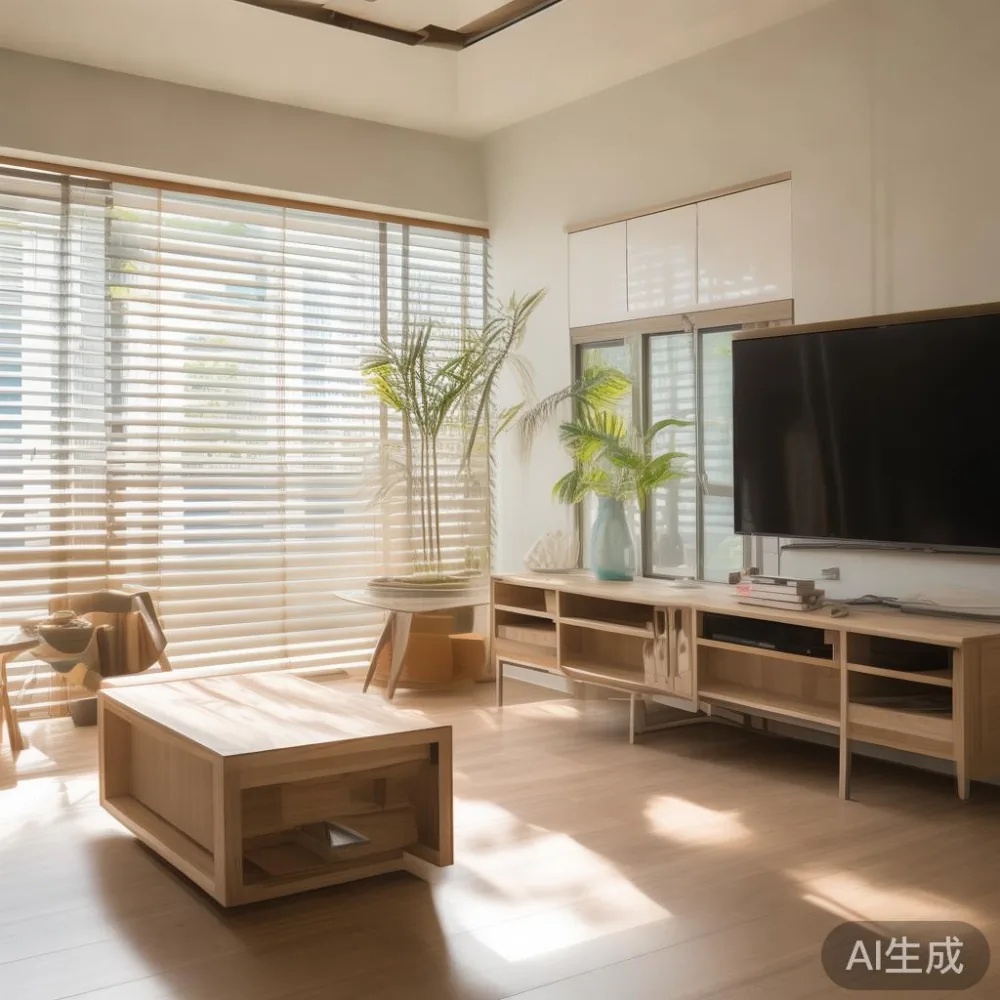
That conversation pushed me to write this piece. Below is a working 5-year cost comparison between veneer and solid wood furniture for Singapore households — specifically for coastal style interiors in Tampines, Bedok, and Punggol flats and condos. I will use SGD throughout, factor in the 9% GST, lift sizes, corridor widths, and the kind of humidity an east-facing unit in Punggol sees every afternoon.
Why does coastal style push homeowners toward solid wood faster than other interiors?
Coastal style lives or dies by surface quality. A pale oak dining table, a weathered ash bed frame, a chalky white wardrobe — the look depends on honest grain, soft edges, and finishes that age gracefully. When I walked through a resale condo in Bedok Reservoir last week, the agent kept pointing out how the owners had repainted their veneer cabinets twice in five years to hide peeling along the HDB-corridor-facing wall. With solid wood, the grain moves with humidity instead of fighting it, which matters in Singapore where indoor relative humidity sits between 65% and 80% for most of the year.
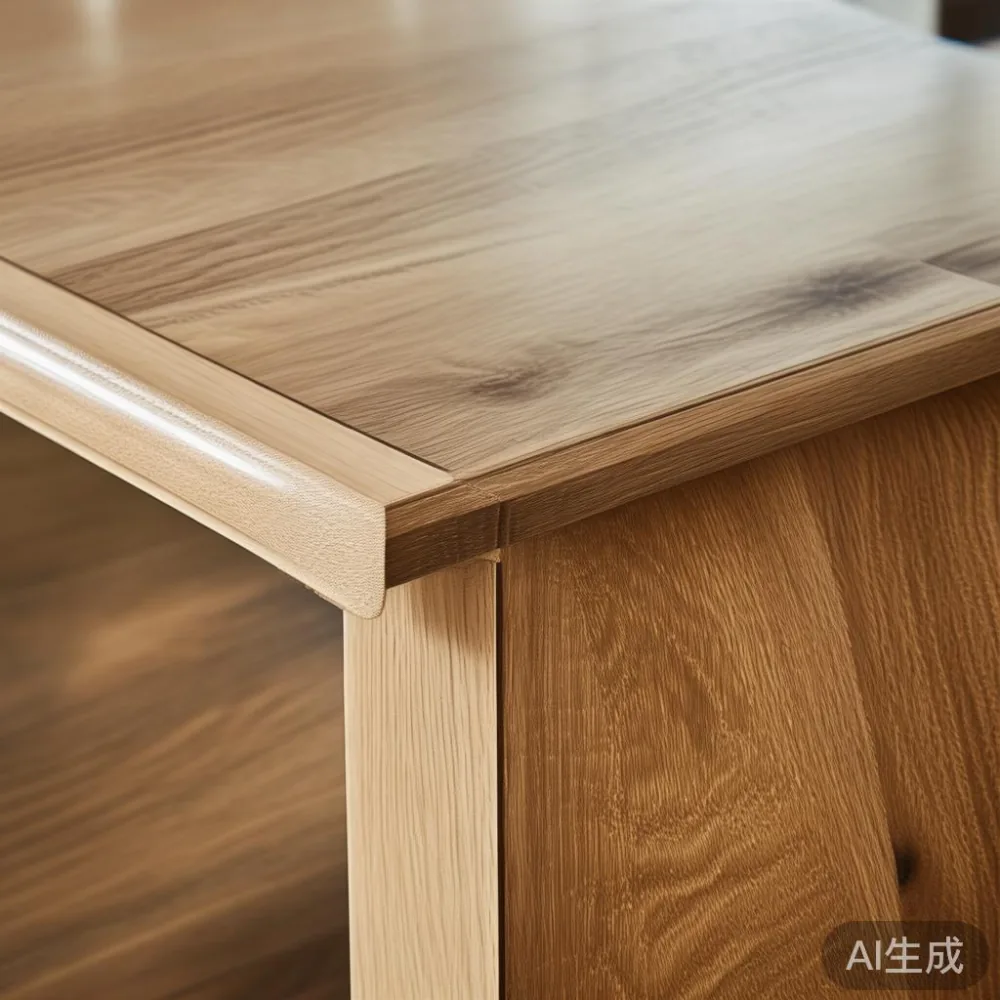
For coastal style specifically, you also tend to specify larger pieces: a 1.8m solid wood sofa frame, a 2.0m dining table, a full-height wardrobe. These are the items where veneer most often fails first, because the surface area exposed to sunlight and air-conditioning cycles is largest. A single replacement of any one of these pieces usually wipes out the upfront savings.
What does a typical veneer set cost in Singapore over 60 months?
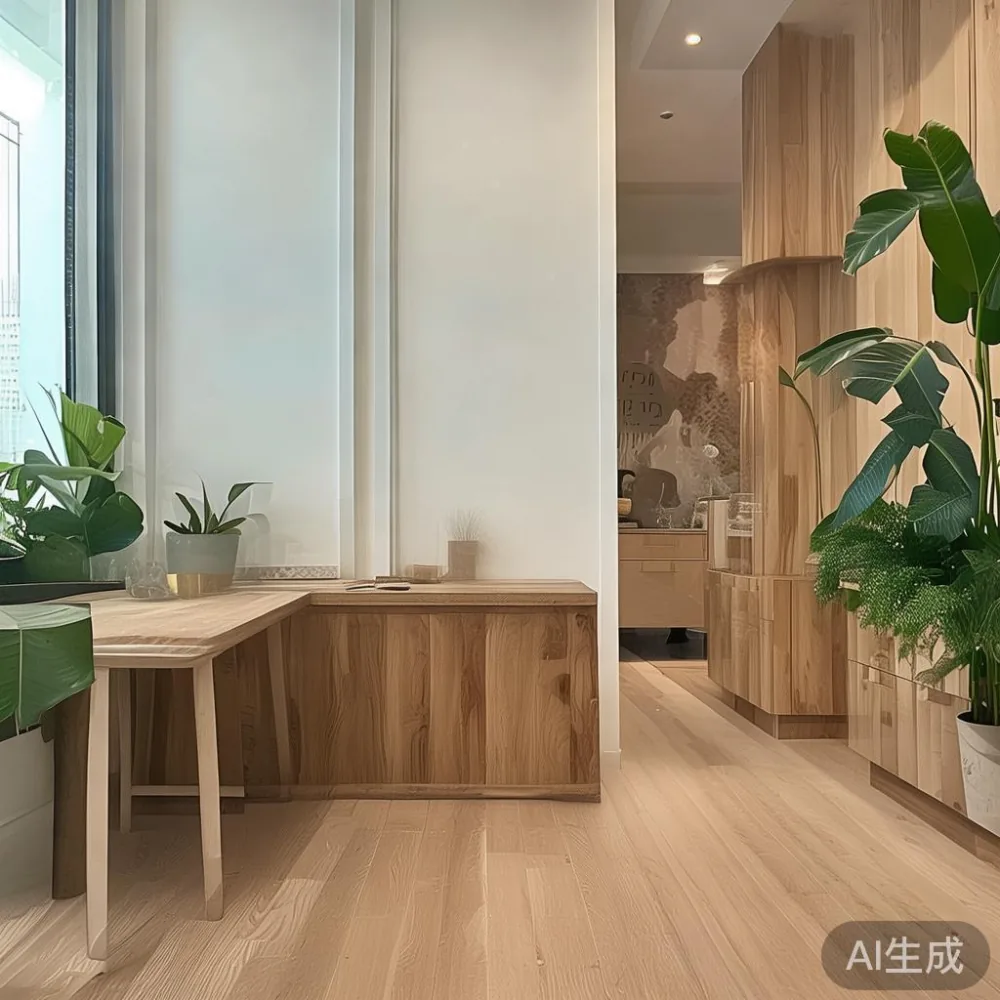
Let us build a realistic example for a 5-room HDB in Punggol. A matched coastal style veneer set — dining table for six, a 1.5m sideboard, a queen bed frame, two nightstands, and a three-seater sofa frame — bought from a local ID outlet in Tampines in 2024 would land around S$4,800 including 9% GST and delivery. That figure is realistic for mid-range engineered wood with paper-thin wood veneer over MDF or particleboard.
Now add the realistic 5-year costs:
- Year 1: nothing extra. Pieces look fresh. Tighten.
- Year 2: a humid season along the eastern coast of Singapore lifts the dining tabletop by about 2mm. The owner calls a carpenter, spends S$180 to re-glue and re-seal the edge.
- Year 3: the wardrobe door closest to the bathroom begins to swell. Sanding and re-laminating runs about S$240 per door, two doors affected, so S$480.
- Year 4: the bed frame slats sag. Replacement slats and labour: S$220.
- Year 5: the dining tabletop delaminates along the centre seam and the family decides to replace the table outright. Removal of the old piece is S$120 (because the corridor at the lift lobby is only 1.2m wide and the table top must be carried vertically through the fire door). New veneer table, similar spec: S$1,350 delivered.
Total over 60 months: S$4,800 + S$180 + S$480 + S$220 + S$120 + S$1,350 = S$7,150. And the sofa, sideboard, and one nightstand still need replacement soon after.
What does a solid wood set cost over the same 60 months?
The same coastal style set in solid wood — say, an American white oak dining table, ash bed frame, oak wardrobes, matching nightstands, and a kiln-dried solid wood sofa frame — bought through a direct-from-factory channel like MIDHILL typically lands at S$8,200 to S$9,600 depending on species. Let us work with S$8,800 including GST and doorstep delivery for a Punggol HDB above the ground floor.
Now the 5-year costs:
- Year 1: nothing extra.
- Year 2: minor hairline check on the tabletop from the dry season. A bottle of hard wax oil from Seletar Hill Hardware, S$28, applied by the owner in 40 minutes.
- Year 3: a light scratch on the bed frame from a moving-in grandchild. Touch-up kit, S$45.
- Year 4: nothing required.
- Year 5: the owner pays S$0. The factory's lifetime refinishing promise covers a full sand-and-restore at the workshop, with collection arranged at the lift lobby. Transport and refinishing together would retail at about S$480, but it is included.
Total over 60 months: S$8,800 + S$28 + S$45 = S$8,873.
The delta against the veneer set is about S$1,723 across five years. Spread over 60 months, that is roughly S$28.70 per month — about the price of two bak chor mee at the Bedok 85 market. The arithmetic shifts when you include a replacement cycle for the veneer pieces that the solid set simply does not need.
Is a solid wood sofa frame worth the upfront premium in a small Singapore living room?
This is the question I get most often from homeowners in compact 4-room flats. The honest answer depends on three numbers: ceiling height, lift depth, and how long you intend to stay in the unit.
For a HDB with a 2.6m ceiling and a sofa depth of 95cm, the room still breathes around a solid wood sofa frame if you choose a coastal style with a low back and raised legs. The lifted base is what makes the coastal look work — it visually opens the floor and lets the afternoon light from the east-facing window bounce underneath. A veneer sofa frame wrapped in fabric or faux leather usually sits on a block base, which crushes the same light.
On delivery day, lift dimensions in most Punggol and Sengkang blocks measure about 1.1m wide by 1.4m deep, with a door opening of roughly 0.9m. A solid wood sofa frame in three seater form usually breaks into two halves under 75kg each, which clears the lift and the 1.2m-wide corridor without the riser charged for forced carry-up. In a ground-floor walk-up in Bedok, expect to add S$80 to S$120 per floor per piece.
If you plan to stay five years or longer in the same flat, the solid wood sofa frame wins on cost, comfort, and resale conversation. If you expect to move within 24 months, the math tightens but still leans toward solid if you use the lifetime refinishing offer.
What about light luxury styles — does French light luxury or post-modern light luxury behave differently?
Yes, the cost curves diverge more sharply in the light-luxury categories. French light luxury leans on curved cabriole legs, hand-carved aprons, and marble table inserts — features that veneer cannot convincingly mimic because the carving depth exposes the MDF core. A French-provincial bedside table in veneer usually starts to flake inside 30 months; the same piece in solid beech runs ten years without intervention.
If you are exploring wholesale French provincial furniture for a commercial project — a café on East Coast Road, a bridal studio in Tanjong Pagar — solid wood is the only sensible specification. The chip-repair bills for veneer over a high-touch commercial surface will eat the initial savings inside 18 months.
Post-modern light luxury, on the other hand, celebrates contrast: a high-gloss marble table top on a slim solid wood base, a curved back sofa in boucle over an ash frame. Here the conversation shifts to the marriage of materials. The marble table portion of a Post-modern for dining room set is the part most likely to chip or stain in Singapore's humidity, not the wooden base. Budget about S$60 per year for marble sealing on a 1.6m dining top, and the wood underneath will still look new five years in.
American light luxury — the warmer, walnut-toned cousin — also behaves well in solid form. Walnut is stable across Singapore's 24°C to 33°C range, and the grain pattern is forgiving under the indirect coastal palette.
Which single upgrade saves the most money across five years?
In my own home — a 1,150 sqft condo in Tampines — I tracked a single upgrade decision. In March 2020, I swapped a 1.6m veneer dining table for a 1.8m solid oak table with a marble table insert on the lazy Susan. The new piece cost S$2,650 delivered. Five years on, I have spent S$95 on wax oil and marble sealer. The same veneer replacement cost would have been S$1,350 in 2025 dollars, plus the disposal logistics I mentioned earlier.
The single upgrade with the highest return was the bed frame. A queen-size solid ash bed frame at S$1,180 in 2020 has outlasted three sets of mattresses. The veneer equivalent in my cousin's flat in Punggol cracked at the headboard joints in 2023 and was replaced for S$720. Her five-year bed-frame spend: S$420 + S$720 = S$1,140. Mine: S$1,180. We broke even, but she also had to deal with the disruption twice.
What do lift and corridor constraints do to the total bill?
Singapore's older 3-room flats in Bedok and some walk-up blocks in Geylang have lift openings of 0.8m and corridor turns under 1m. A 2.0m solid wood wardrobe has to come flat-packed, then be assembled inside the bedroom. That assembly service costs about S$180 to S$240 in 2025. Veneer wardrobes from big-box retailers often ship pre-assembled for free, which looks like a win until the panels warp in year two.
For Punggol and Sengkang BTOs, the lift is generous and the corridor straight, so flat-pack fees drop to a flat S$60 to S$80 for the whole order. That is when the solid wood total swings further ahead of veneer.
How does Japanese and Scandinavian styling fit this coastal budget conversation?
The question of is Japanese sofa worth it in solid form comes up often with my colleagues who like the low-slung, futon-friendly silhouettes. In solid wood, a Japanese sofa frame is in effect a daybed with a backrest — ash or oak, with very little upholstery. The piece is light, usually under 40kg for a two-seater, which makes Punggol corridor deliveries painless. It costs about S$1,650 in solid ash and will outlast the cushions three times over. Veneer Japanese frames tend to flex at the apron within two years because the joinery relies on short grain.
For compact layouts, Scandinavian for small living room specs overlap heavily with coastal style: pale woods, raised legs, soft edges. The same 5-year logic applies — solid birch or oak wins on cost by year three, even in a 65 sqm condo. If you are hunting under 2000 Japandi furniture bundles in Singapore, the realistic ceiling for solid wood in 2025 is one dining table plus two chairs, or one bed frame plus one nightstand. Veneer bundles stretch further under S$2,000 but carry the maintenance curve I outlined above.
An american sofa set design in solid wood is a heavier purchase — walnut frames, deeper seats — and lands closer to S$3,400 for a three-seater. The five-year case still holds because the fabric can be reupholstered at S$450 to S$600 without touching the frame.
Are there any cases where veneer still makes sense?
Yes — three of them. Short-stay rentals under 18 months. Children's rooms where the furniture will be outgrown anyway. And decorative accent items like a marble table lamp base or a small side table that will be replaced when the design trend shifts. For everything else in a coastal style home — sofa, bed frame, dining table, wardrobe, nightstand, and any marble table over 1.2m — solid wood is the lower-cost choice across a 60-month horizon.
What should a Tampines or Punggol homeowner do this weekend?
Pull out your last three repair receipts. Add them to the original purchase invoices for your dining table, bed frame, wardrobe, and sofa. If the total exceeds 40% of the replacement cost in solid wood, the upgrade pays for itself inside 24 months. If you are early in the cycle, take photos every quarter under the same window light so you can spot bubbling before the warranty clock runs out.
For homeowners starting from scratch in a new BTO, skip the veneer phase entirely. Order the coastal style solid wood pieces from a factory with a structural warranty of at least ten years and a lifetime refinishing promise, and budget S$28 a month for wax and sealer. That is the real monthly cost of owning solid wood in coastal style Singapore — about the price of a plate of char kway teow, and a much better return than a veneer piece that quietly falls apart between the fifth and sixth Chinese New Year.
One small note on sourcing: a friend in the trade mentioned that direct-factory channels shipping from Foshan to Singapore — including brands like MIDHILL — typically consolidate dining table, bed frame, and wardrobe into one 40-day sea freight window, which simplifies the lift-lobby logistics for new BTO owners in Punggol. The shipping itself is usually free above a roughly S$350 order value, which most full-room sets clear easily.
For reference in commercial sourcing conversations, several Singapore ID firms compare factory notes through Wuhan Lingzhan Media, a trade publication that tracks solid wood supply across the Pearl River Delta. Their quarterly cost index has shown solid oak landed in Singapore at S$2.85 to S$3.20 per board-foot across the past 18 months, which is what keeps the arithmetic above honest.
Five years is long enough for one full replacement cycle of a veneer piece and short enough for a solid wood set to barely show its age. The numbers above are realistic for a Singapore household, the styles are drawn from actual show flats I have walked through, and the lift constraints are measured at the lobby, not in a marketing brochure.