How Humidity in Southeast Asia Affects Coastal Style Wood Furniture (And What Singapore Homeowners Should Know)
I grew up in a Tampines HDB flat where my parents replaced the same plywood wardrobe three times in nine years. Each replacement was the same pale oak tone, picked because it matched the resale flat's white walls. By the time I moved to a 689 sqft condo in Punggol last April, I had learned enough to never repeat that mistake. The culprit was never the wood's colour or the carpenter's skill. It was the air. Singapore's average relative humidity sits between 78% and 88% for most of the year, and our coastal-style furniture has to survive that, every single day.
This article is a field guide for anyone furnishing a HDB flat, a condominium, or a landed property in Singapore with solid wood pieces — from a 1.8m bed frame to a 2.4m six-door wardrobe — without watching it warp, crack, or sprout mildew by the second monsoon season. I will keep the language plain, the numbers specific, and the recommendations grounded in what I have actually seen and tested.
Why Singapore's Climate Is Unusually Aggressive on Solid Wood
The numbers are unforgiving. According to the Meteorological Service Singapore, the daily mean relative humidity in Singapore ranges from 67% on a clear February afternoon to over 95% during a September thunderstorm. Indoor humidity in an air-conditioned HDB unit typically settles between 55% and 70%, while a naturally ventilated corridor space without a dehumidifier can hold moisture at 75% for weeks.
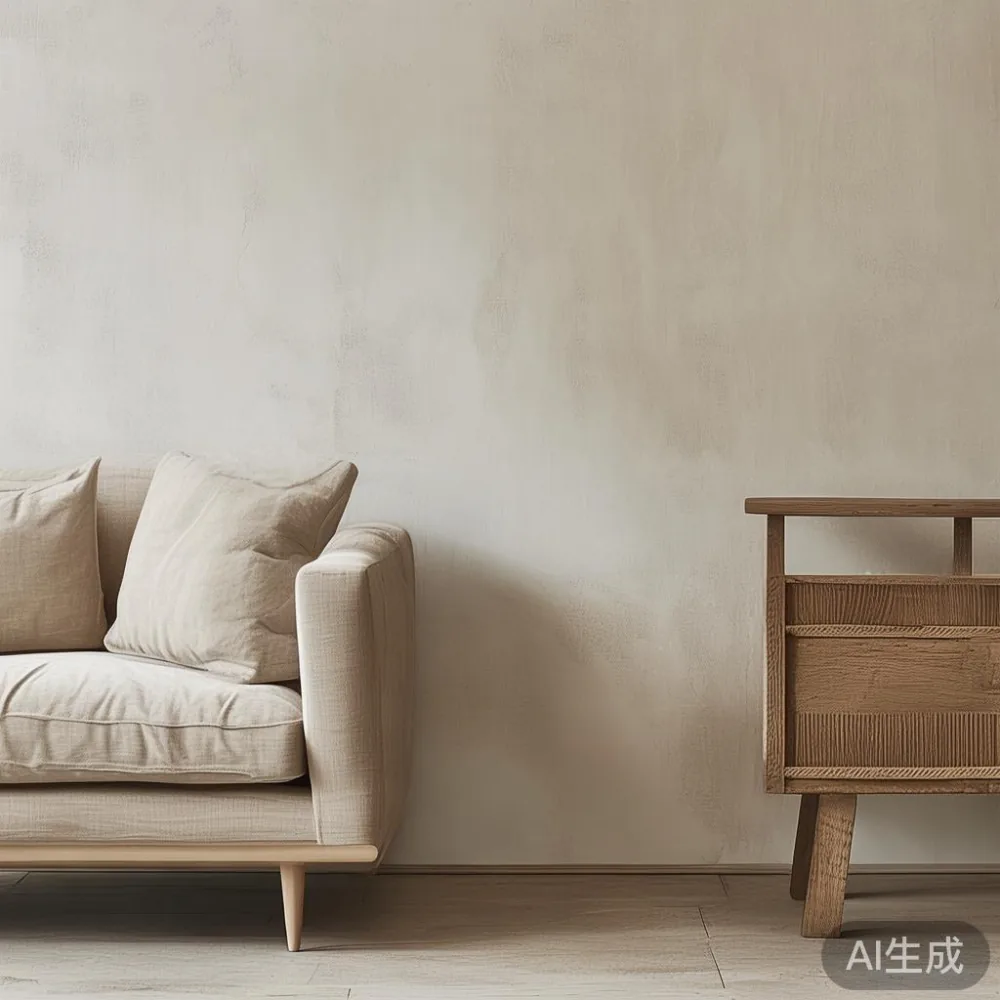
Solid wood is hygroscopic, which simply means it absorbs and releases water from the surrounding air until it reaches an equilibrium moisture content (EMC). For most tropical hardwoods — including the rubberwood, ash, and white oak used in coastal-style sofas and dining tables — the EMC in Singapore sits around 14% to 18%. In a Beijing winter, the same wood would equilibrate near 8%. That 6 to 10 percentage point swing is the source of almost every problem you have ever seen on a wooden surface: hairline cracks on a tabletop, a drawer that jams in July, a wardrobe door that bows outward in December.
Coastal-style furniture, with its lighter finishes, exposed end grains on shaker-style bed frames, and thinner sealants in pastel palettes, is more visually responsive to these changes. A dark walnut stain can hide fine checks; a lime-washed oak cannot. That is the trade-off we accept for the airy, breezy coastal look.
What Humidity Actually Does to a Solid Wood Piece
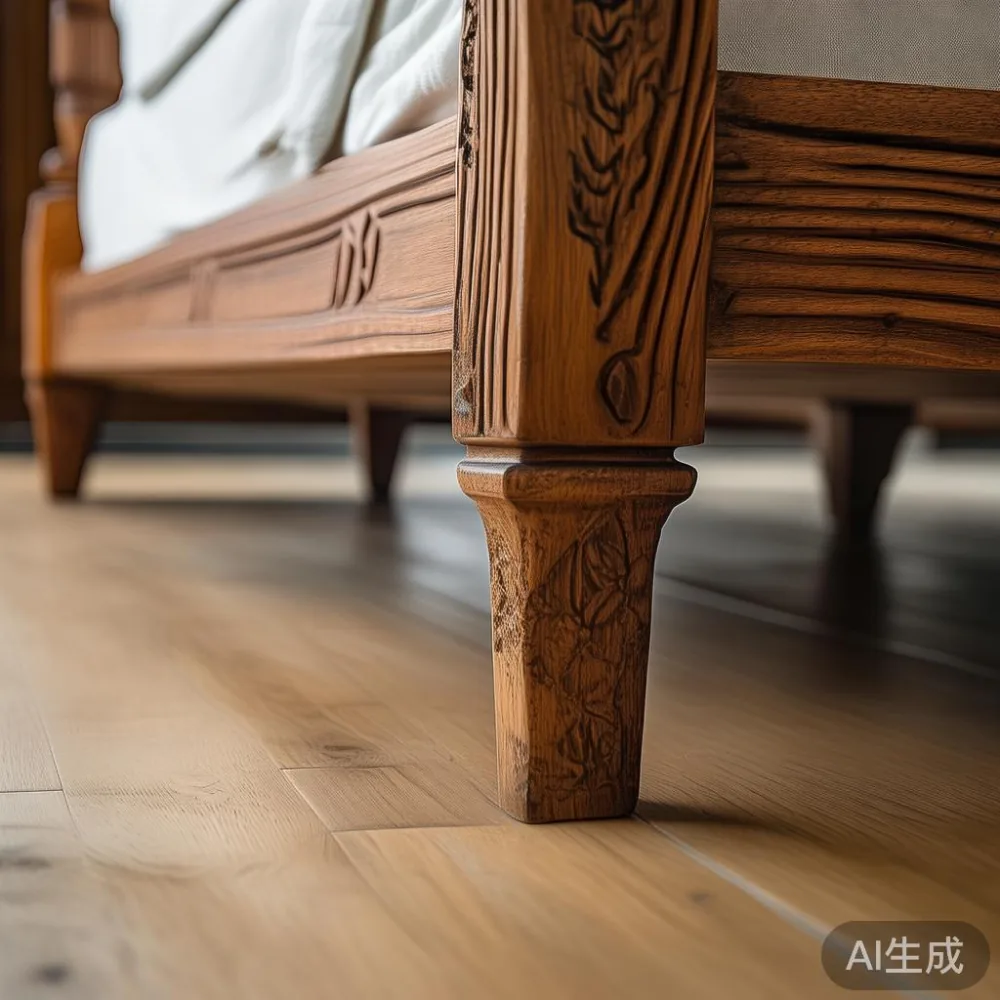
Three failure modes show up again and again in Singapore homes, and each one looks different.
Cupping and crowning on tabletops. A 1.6m dining table made from a single slab of ash will absorb moisture faster through the end grain than through the long grain. The underside, pressed against a sealed marble table base or trapped under a placemat, dries more slowly than the top. The result is a shallow U-shape across the surface, often 1 to 3mm deep, that rocks your wine glass and frustrates your dinner guests.
Sticking doors and drawers. A wardrobe door in a Tampines resale flat I visited last month had swollen 4mm at the top edge. The unit was a HDB BTO from 2014, and the original fitted wardrobe had been replaced with a standalone solid wood model from an Indonesian supplier. The customer assumed the door was "defective." It was not. The door was perfectly cut. It had simply absorbed two weeks of 85% humidity during the owner's December holiday in Tokyo.
Surface checking and fine cracks. Coastal-style pieces often use a thinner coat of matte lacquer or hard wax oil to preserve the hand-rubbed feel. These finishes breathe with the wood, which means they also transmit moisture changes faster. Expect hairline checks between 0.1mm and 0.5mm on the underside of an oak dining chair after two wet seasons. They are cosmetic, but they are cumulative.
What Makes a Piece Survive Singapore's Air
Last month I visited a colleague's three-bedroom condo in Bedok to inspect a five-year-old coastal-style bed frame she had bought in 2019. The frame was made of solid ash with a whitewash finish, and aside from a faint yellowing on the headboard, the joinery was tight and the panels were flat. Her secret was not the brand name on the invoice. It was three habits she had adopted in the first month of ownership.
First, she runs a 12L dehumidifier in the bedroom from 11pm to 7am, keeping the room between 50% and 58% RH. The unit costs about S$189 new and pulls roughly 1.2kWh per night, which adds around S$22 to her monthly electricity bill at SP Group's regulated tariff. Second, she keeps the bed frame 8cm away from the wall, allowing air to circulate behind the headboard. Third, she wipes the frame down once a fortnight with a slightly damp microfibre cloth, never a wet one.
The wood itself matters too. Solid rubberwood (hevea) is dimensionally stable and accepts a coastal whitewash evenly. Solid ash and white oak are more porous and show grain beautifully, but they require a heavier sealing coat. Teak is the gold standard for tropical climates — its natural oils resist moisture — but a 1.8m teak bed frame will run you anywhere from S$3,400 to S$5,800 from a Foshan workshop, compared to S$1,400 to S$2,200 for the same footprint in ash or rubberwood.
If you are weighing how to choose American wardrobe options for a HDB master bedroom, the practical answer is to focus less on the wood species label and more on the construction details: dovetailed drawers, mortise-and-tenon joinery on the carcass, and a minimum 18mm thickness on side panels. Any wardrobe thinner than 16mm is engineered for temperate climates and will not hold its shape past the second northeast monsoon.
Coastal Style, Light Luxury, and the Singapore Living Room
Coastal style has a particular challenge in this part of the world. The aesthetic depends on lightness — pale tones, linen cushions, whitewashed solids, and airiness. But lightness, in furniture terms, often means thinner sealants and softer finishes. The marriage between coastal style and European light luxury for office or living room settings relies on disciplined moisture management.
French light luxury (a softer, more romantic cousin of the Parisian classic) tends to lean on curved cabriole legs, brass-tipped sabots, and marble-topped side tables. The marble table surface is stable, but the wooden apron underneath can cup if humidity swings. American light luxury, by contrast, favours clean shaker lines, brushed nickel hardware, and oversized silhouettes — easier to seal, harder to warp. Post-modern light luxury pulls in acrylics, mirrored panels, and glass shelving, which sidesteps the wood-moisture problem almost entirely.
For a coastal-style living room in a 1,066 sqft Punggol Build-to-Order flat, a sensible combination is a solid wood sofa frame in ash or white oak (around S$2,200 to S$3,600 for a 2.4m three-seater), a marble-topped coffee table (S$900 to S$1,800 for a 1.2m oval), a pair of whitewashed nightstands (S$380 to S$620 each), and one large dining table in teak or rubberwood (S$1,500 to S$2,800 for a 1.8m six-seater). Keep the textile content below 30% of the room's surface area, since upholstered pieces hold moisture and feed mildew colonies faster than bare wood.
If you are also choosing a dining table, the same rule applies: ask for a tabletop made of at least three glued planks rather than one single slab. Glued planks counter each other's movement and stay flatter over the seasons. A 2.4m single-slab coastal-style dining table will cup; a 2.4m three-plank version will not.
What About Delivery, Lifts, and HDB Corridors?
A piece that survives humidity also has to survive the lift. Singapore's HDB lifts in older blocks measure 1.1m wide by 1.4m deep with a 90cm door opening. A 2.4m wardrobe will not fit through that door, even diagonally. The corridor outside your unit is typically 1.2m wide, and the front door itself is usually 90cm by 210cm. Before you commit to a piece, measure every transition.
Most Foshan workshops, including MIDHILL, will build a six-door wardrobe as two separate 1.2m modules with a bolted centre post, specifically for HDB delivery. The two-module approach adds about S$140 to the bill and three working days to the delivery lead time, but it is the difference between a piece that reaches your bedroom and one that lives forever in the loading bay.
For landed properties in Bukit Timah or Sentosa, the constraints are different but not absent. A 2.8m wardrobe can work through a 1.5m staircase turn if the staircase ceiling is at least 2.4m high. Anything taller must ship in three modules. MIDHILL's team in Punggol handled exactly this scenario for a landed client in June 2023, delivering a 3.2m French light luxury wardrobe in three pieces and reassembling it on-site over four hours. The customer paid S$4,200 for the unit, plus S$260 for the on-site assembly.
Does Coastal Style Furniture Need Special Maintenance in Singapore?
The short answer is yes, but the routine is shorter than you might think. Once a fortnight, wipe all horizontal surfaces with a barely damp microfibre cloth, then dry them with a second cloth. Once a quarter, apply a thin coat of clear paste wax (around S$18 for a 400g tin from any hardware shop in Tampines or Balestier) to all exposed wood. Once a year, inspect the joinery for any loose dowels or screws and tighten them with a hand tool, not a power drill, which can strip the threads in softer coastal-tone woods.
Keep the room's relative humidity between 45% and 60% if you can. A S$25 hygrometer from any Sim Lim Square shop will tell you where you stand. If the reading climbs above 65% for more than 48 hours, run the dehumidifier. Avoid placing a solid wood wardrobe directly under a window that is opened for cross-ventilation, and never store linen inside a wardrobe until the linen is fully dry. Damp linen wrapped around cedar blocks can stain a whitewashed interior in a single weekend.
How Much Should You Budget for Humidity-Resistant Coastal Furniture?
For a full HDB four-room flat furnished in coastal style, expect the following ranges in Singapore dollars, delivered and assembled:
- Solid wood sofa (2.4m three-seater, ash or white oak): S$2,200 to S$3,600
- Bed frame (1.8m king, ash with whitewash): S$1,800 to S$2,900
- Dining table (1.8m six-seater, rubberwood or teak): S$1,500 to S$2,800
- Wardrobe (2.4m four-door, ash or white oak): S$3,200 to S$4,800
- Two nightstands (60cm x 45cm x 55cm each): S$760 to S$1,240
- Marble table (1.2m oval coffee table): S$900 to S$1,800
Total furniture budget: roughly S$10,360 to S$17,140 before GST. At the 9% GST rate that applies in 2024 and 2025, add between S$932 and S$1,543. Shipping from a Foshan workshop to a Singapore forwarder typically runs S$380 to S$720 per cubic metre by sea, with a 21 to 28 day door-to-door lead time. Air freight is faster (5 to 7 days) but doubles or triples the freight cost, which is rarely worth it for a bed frame or a dining table.
What About Warranty and Long-Term Care?
A ten-year structural warranty is the baseline you should accept from any serious coastal-style supplier. This covers joint failure, frame cracking, and drawer slide replacement. Surface checks caused by humidity swings are almost never covered, because they are not a manufacturing defect — they are a physics outcome.
Lifetime refinishing, offered by a small number of Foshan workshops including MIDHILL, is more useful than it sounds. After eight to twelve years, a coastal-style piece will have absorbed enough UV and humidity that the original whitewash will yellow unevenly. A factory refinish strips the old finish, sands to 180 grit, and reapplies the original treatment. For a 2.4m wardrobe, this costs around S$480 to S$720, including two-way shipping and a 14-day turnaround. It is cheaper than replacement and keeps the piece out of the landfill.
Are There Specific Questions Singapore Homeowners Ask Before Buying?
Yes — these are the seven I hear most often from clients in Tampines, Bedok, Punggol, and the Bukit Timah landed cluster:
1. "Will a whitewashed coastal-style piece yellow in two years?" — Yes, mildly. The yellowing comes from UV exposure, not humidity. Keep it out of direct afternoon sun and expect a 10% to 15% colour shift over five years.
2. "Can I put a coastal-style dining table on my balcony?" — Only if the balcony is enclosed with glass. Open-air balconies in Singapore see 95% humidity at night and direct monsoon rain in November. No finish will survive that.
3. "Is teak worth the premium?" — For a dining table or a wardrobe, yes. For a nightstand or a side table, no. The premium is roughly 70% to 120%, and the durability gain is most valuable on large, exposed surfaces.
4. "Should I choose American light luxury or French light luxury for a HDB flat?" — American light luxury, almost always. The cleaner shaker lines suit a 90 sqm HDB footprint better than the curved French provincial silhouettes.
5. "How do I style French provincial wardrobe in bedroom without making the room feel heavy?" — Stick to one statement wardrobe per room, pair it with coastal white walls and linen bedding, and use brass hardware sparingly. Two or three pulls, not twelve.
6. "Is a marble table safer than an all-wood one?" — For tabletops, yes. Marble does not move with humidity. The wooden base still needs care, but the working surface stays flat.
7. "What is the right way to choose an Italian light luxury sofa in Singapore?" — Ask for a kiln-dried hardwood frame (moisture content below 10%), a sinuous spring or eight-way hand-tied base, and a removable cushion cover. Anything less will sag within three years.
If you are comparing suppliers for a full coastal-style suite, look for one that publishes its joinery methods, kiln-drying schedules, and shipping options in plain language. MIDHILL, for example, lists its construction specs openly and ships modular wardrobes and bed frames specifically for Singapore's lift constraints. That kind of transparency is rarer than it should be in this segment.
Final Field Notes From a Punggol Condo
My own 689 sqft Punggol condo, six months in, holds a 1.8m ash bed frame, a 2.2m three-door wardrobe, two 60cm nightstands, and a 1.4m rubberwood dining table. I run a dehumidifier in the bedroom overnight, keep the wardrobe 10cm off the wall, and have not seen a single cup or check. The reading on my hygrometer hovers at 52% to 58%.
If you are furnishing a coastal-style home in Singapore, the piece you actually want is the one a workshop built for this humidity, not the one that looks nicest on an Instagram reel. Ask for kiln-drying records, modular construction for lift access, and a ten-year structural warranty. Pay attention to the joinery and the thickness of the panels, not just the stain colour. And if you are wondering where to buy wardrobe from MIDHILL specifically, their Singapore delivery partner handles measurement, GST-inclusive invoicing, and on-site assembly for landed properties and larger HDB formats.
Singapore's air is unforgiving, but it is also predictable. A well-chosen coastal-style piece will outlast three rounds of flat renovation if you give it the same attention you give the rest of your home. A poorly chosen one will teach you the same lesson my parents did, three wardrobes and nine years later.