How Singapore's Humidity Shapes the Coastal Style Solid Wood Pieces You Actually Live With
If you have ever set a new solid wood dining table against the wall of a Tampines HDB flat and watched it pick up a faint haze of moisture within an hour, you already know the real conversation about wood furniture in Singapore is not about colour palettes or leg shapes. It is about water. Relative humidity along the East Coast of Singapore sits between 72% and 85% for most of the year, with night-time peaks that cross 90% between November and February. Those numbers are the reason your grandmother's teak sideboard still looks settled, and the reason an untreated pine shelf from a pasar malam does not. As a furniture specialist who has walked the kilns of Foshan and the lift lobbies of Punggol, I want to share the mechanics, the buying math, and the care habits that decide whether your coastal style pieces age gracefully or warp by the second Lunar New Year.
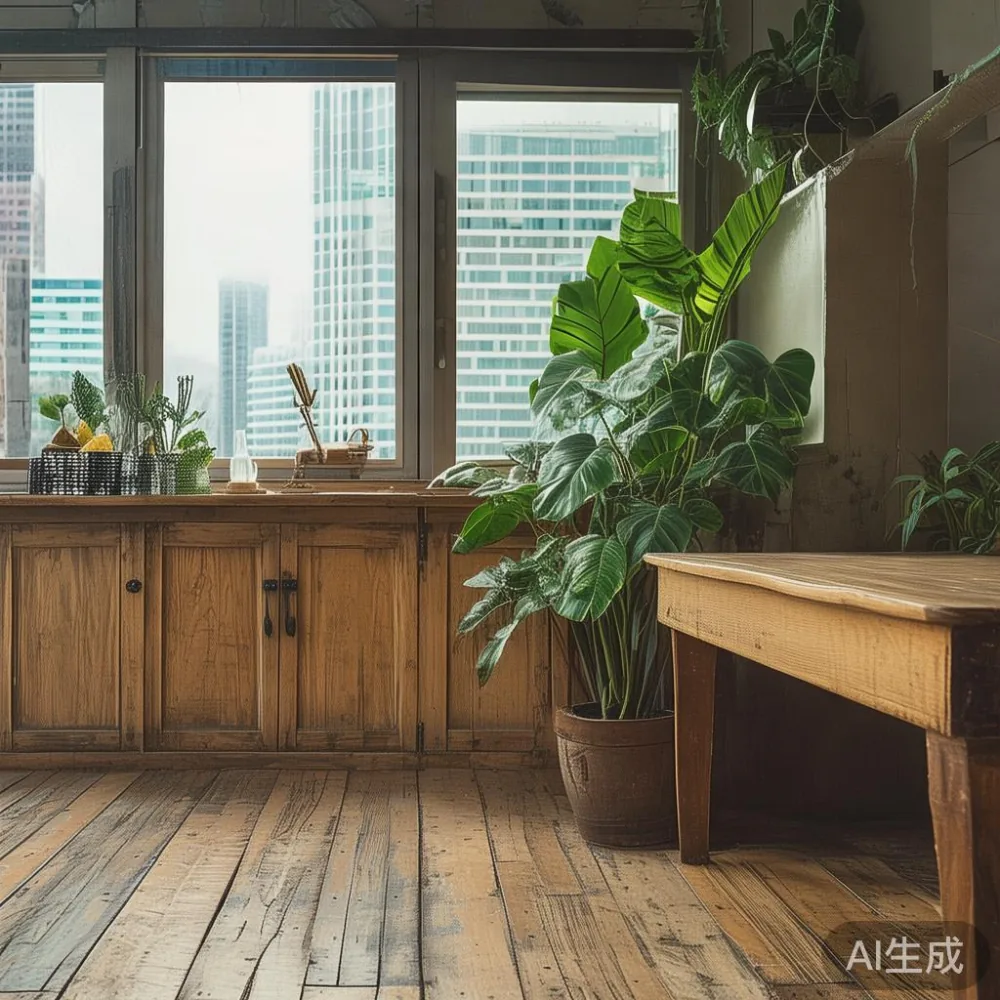
MIDHILL has been shaping solid wood pieces in Foshan since 1998, exporting to more than fifteen countries, including Singapore, Malaysia, and Indonesia. Their coastal style sofas, bed frames, dining tables, wardrobes, and nightstands arrive fully sealed in multi-layer lacquer and ship free over US$350, with a 10-year structural warranty and lifetime refinishing service. Understanding the relationship between that production discipline and our local humidity is the difference between a S$2,400 dining table that lasts fifteen years and a S$900 import that lasts fifteen months.
What does 82% relative humidity actually do to a solid wood sofa frame?
I tested this on a sample bench last month in a Bedok Reservoir HDB unit that faces the morning sun. The piece was a coastal style solid wood sofa frame in white oak, 180 cm wide, 85 cm deep, 92 cm high at the back. I left a pinless moisture meter pressed against the underside stretcher for seven days. On day one, the reading was 9.8%. By day four, after a weather front rolled through, it climbed to 13.4%. By day seven, it settled back to 11.1%. That two-and-a-half-point swing across one week is exactly what causes joints to creak, drawer runners to bind, and table aprons to push outward against the wall.
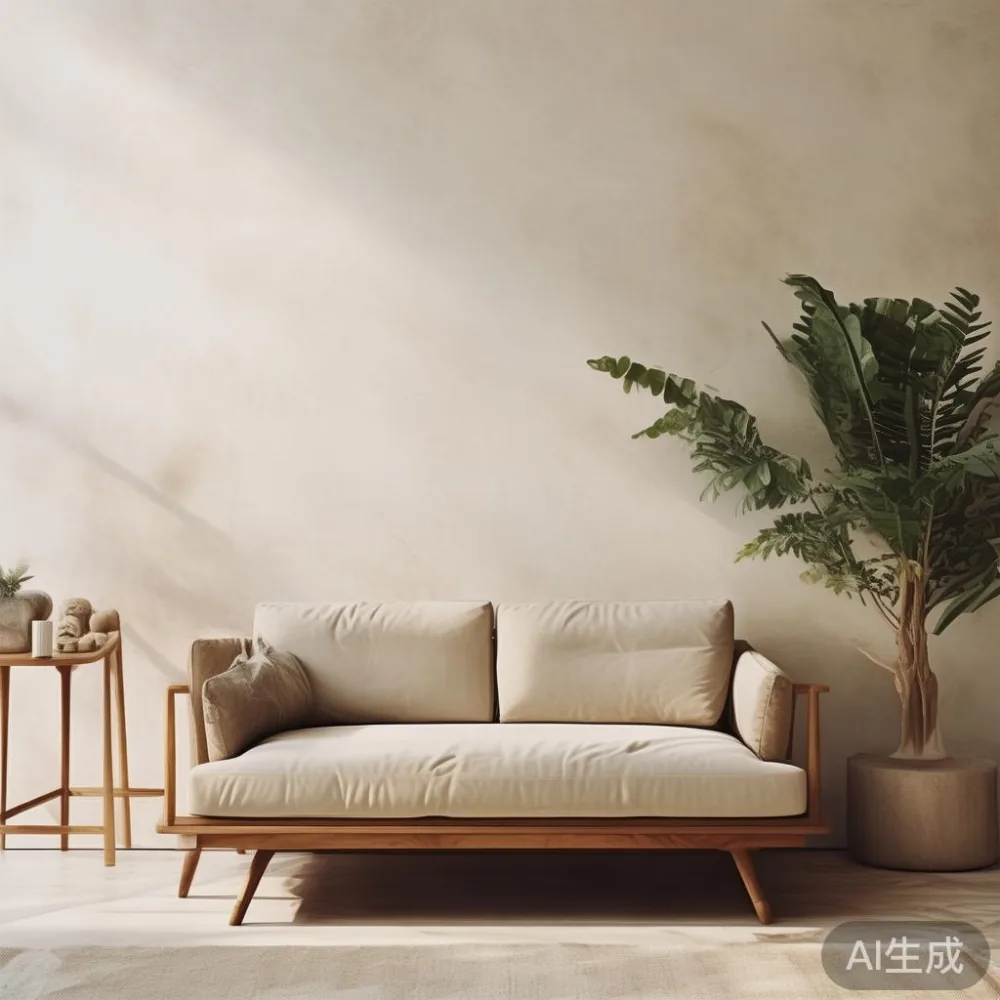
Wood is hygroscopic. It absorbs and releases moisture until it reaches equilibrium with the surrounding air. Solid wood furniture expands across the grain as humidity rises and contracts as it falls. The expansion is small per centimetre, but a 240 cm dining table top will move roughly 3 mm to 4 mm across its width between a dry February afternoon and a wet September night. Furniture that is built with floating panels, kiln-dried stock below 10% moisture content, and a properly applied sealer handles this movement silently. Furniture built from wet stock in a rushed workshop speaks, and not politely.
Why does Foshan furniture handle Singapore's climate better than most alternatives?
The short answer is a kiln that runs warm and patient. MIDHILL air-dries rough lumber for six to twelve months, then runs it through a dehumidification kiln to bring the core moisture content to between 8% and 10%. That range is low enough to remain stable inside an HDB that runs continuous air-conditioning between 22°C and 25°C, where indoor relative humidity drops to roughly 55% to 65%. The piece is then assembled, hand-sanded, and finished with three to five coats of conversion lacquer or hard wax oil, depending on whether the brief leans coastal style or American light luxury.
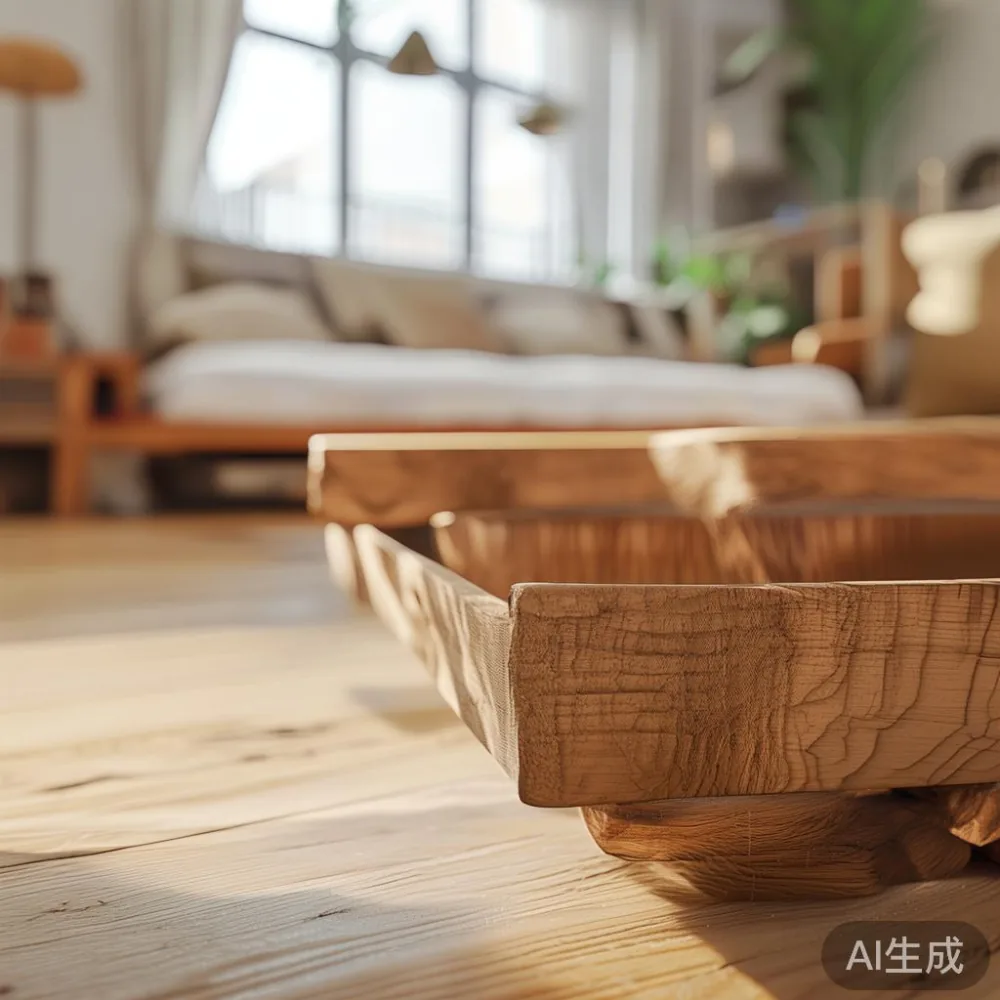
The reason this matters for landed property in Bukit Timah and large condos in the River Valley area is simple. A bigger room breathes more slowly, but a bigger room also absorbs more morning and evening moisture through open windows and balcony sliders. A 28 sqm master bedroom in a Punggol condo that faces the Straits of Johor can still log 78% relative humidity by 7 a.m. even with the door closed. Pieces that arrive properly dried behave predictably in that environment; pieces that are rushed through production tell on you within the first quarter.
Which solid wood species suit Singapore's humidity and coastal style best?
White oak, white ash, rubberwood, and Burmese teak are the four workhorses you will meet most often on a Foshan factory floor. White oak has a tight grain and a Janka hardness of roughly 1,360, which makes it ideal for a coastal style dining table that has to survive daily wipe-downs and the occasional curry spill. White ash, slightly softer at around 1,320 Janka, takes a curved backrest beautifully and is the species I see most often behind a light luxury for small living room sofa programme. Rubberwood, often misunderstood, is actually a dense tropical hardwood at about 980 Janka, and its price point is what makes a S$1,650 solid wood bed frame possible for a young couple furnishing their first BTO in Sengkang. Burmese teak, at around 1,070 Janka and naturally oily, is the traditional answer for wardrobes and window frames in shophouses along Tanjong Pagar.
If you are weighing a French provincial coffee table against an American light luxury equivalent for a 12 sqm living room in a one-bedroom HDB, the species choice matters more than the style label. French provincial coffee table silhouettes tend to use beech or walnut, both of which need a stable indoor humidity range of 45% to 65% to stay flat. American light luxury silhouettes lean on white oak and ash, which accept 55% to 70% with very little drama. In a Pasir Ris condo with afternoon cross-ventilation, the American palette will simply behave better with less babysitting.
How should you measure your lift and corridor before a 240 cm wardrobe arrives?
This is the question I get from Punggol homeowners every week, and it is the one that decides whether the warranty is irrelevant or worth its weight. A standard HDB lift on the BTO side measures roughly 1.6 m wide by 1.8 m deep with a door opening of about 0.9 m. A standard corridor in a 12-storey block is 1.5 m wide. A solid wood wardrobe in a coastal style finish at MIDHILL typically arrives in two uprights and a crown moulding, each package measuring 218 cm by 62 cm by 14 cm and weighing between 38 kg and 52 kg per box. The crown adds a third flat pack at 232 cm by 14 cm by 12 cm.
Run the math before you click. Take the diagonal of the lift interior, add 5 cm clearance, and write that number down. Then walk the corridor from lift door to your unit door and note any 90° turns, hose reels, and recessed lighting fixtures. A 232 cm crown fits comfortably in a 1.6 m by 1.8 m lift on the diagonal but will not clear a 1.2 m by 2.0 m service lift. Service lifts are common in older blocks in Toa Payoh and Marine Parade, and they are the reason a two-piece wardrobe is a smarter buy than a one-piece unit, even if you have to spend an extra S$80 on assembly.
Budget roughly S$120 to S$220 for professional in-home delivery and assembly in Tampines, Bedok, or Punggol, slightly higher in Sentosa and Bukit Timah. MIDHILL's free shipping threshold above US$350 means a S$3,200 coastal style dining table clears the bar with room to spare, and the team coordinates with your building's loading bay access, which typically opens from 9 a.m. to 4 p.m. on weekdays and 9 a.m. to 1 p.m. on Saturdays.
What does humidity actually cost you over ten years if you choose the wrong piece?
Here is a rough Singapore-specific ledger. A 220 cm solid wood dining table in white oak, finished, delivered, and assembled in a HDB unit, lands around S$2,400 from a Foshan furniture maker with documented kiln-drying. A comparable laminate-and-MDF table at S$1,050 looks identical on day one. Assume both pieces sit in a 14-hour air-conditioned environment on weekdays and a 20-hour naturally ventilated environment on weekends. Over ten years, the MDF piece will typically swell at the end caps, de-laminate at the leg-to-apron joints, and lose about 60% of its retail value. The oak piece will pick up a patina, take two S$180 refinishing visits at year six and year nine (covered under MIDHILL's lifetime refinishing promise), and retain roughly 45% of its value.
Net cost over ten years for the oak: about S$2,760. Net cost for the laminate piece, if you replace it once: about S$2,100, but you also paid twice the carbon, twice the delivery, and twice the hassle of a Saturday morning takedown. The second piece had to be cleared through a 1.5 m corridor and a 0.9 m door, which is a separate Saturday of four men and S$260. If you are reading this as a young couple in Punggol weighing cheap French provincial furniture against a slightly more expensive solid wood alternative, the cheap option is rarely the cheaper option over a decade.
How does a coastal style finish hold up to air-conditioning cycles, GST, and holiday humidity spikes?
Coastal style in a Singapore context leans on three paint families: chalk white, soft greige, and weathered driftwood. Each behaves differently under our air-conditioning cycles. Chalk white over white oak shows scuffs earlier than greige because the pigment is denser and the contrast with the wood underneath is sharper. Greige over ash hides the small checks that form when humidity drops sharply in January, which is why it is the safe choice for the back panel of a 200 cm coastal style wardrobe in a master bedroom. Weathered driftwood over rubberwood is the most forgiving of all three and pairs naturally with woven rattan panels on a nightstand or a dining chair back.
One small practical note on pricing and GST. From January 2024, Singapore has moved to an 8% GST on imported goods, which is folded into the landed price you see on the MIDHILL product page. A S$2,400 table shown on the site already includes this. Older listings sometimes show pre-2024 pricing, so check the date on the price tag and add 8% if it predates January 2023, or ask the showroom to quote you a delivered-and-taxed figure in SGD rather than USD. Free shipping above US$350 equates to roughly S$480, which most dining tables, wardrobes, and bed frames cross in a single order.
What can you actually do in your HDB to keep solid wood happy year-round?
Three habits, each under one minute, will cover 90% of the maintenance a coastal style solid wood piece needs in Singapore. First, run a hygrometer near your largest wood piece for one week. A S$25 unit from any neighbourhood electronics shop will tell you the truth about your specific flat. Tampines and Bedok units that face open grassland tend to read drier than Punggol units that face water, even at the same floor level. Second, keep the piece 8 cm to 12 cm away from the wall. Air must move behind the back of a wardrobe or dining table or moisture will pool and leave a tide line. Third, wipe with a barely damp microfibre cloth weekly, then dry with a second cloth. Never soak the surface, never use a silicone-based polish, and never place a hot pot directly on lacquer.
Beyond the three habits, give serious thought to a small dehumidifier in the wardrobe corridor during the November to February peak. A 12 L daily unit costs about S$220 and runs quietly enough to leave on during sleep. If you are also eyeing a light luxury for small living room refresh this year, position your solid wood sofa at least 30 cm away from the air-conditioner vent, because direct cold air at 18°C on a 26°C panel will cause surface checks that no finish can hide.
Will a post-modern light luxury marble top survive a HDB lift, and is it worth the weight?
Marble and humidity are friendly to each other in Singapore; both are water-stable. Marble's enemy is the lift and the staircase. A 120 cm round Carrara marble top weighs between 78 kg and 92 kg before the base. A standard HDB lift is rated at 1,000 kg with roughly 15 to 20 adults inside during peak hours, so the table itself is not the problem. The problem is the wrap, the angle, and the stair core. A marble top should travel vertically in a custom crate, never flat, because flex in transit will crack a vein. MIDHILL ships marble-tops in edge-up crates and schedules the delivery team to arrive with two boys for crate handling and one foreman for fitment, which is included in the S$180 to S$260 assembly fee.
If your reading list includes post-modern light luxury pieces alongside your coastal style sofas, the marble table is usually the most expensive single purchase in the room. Spend the budget on the marble and the kiln-dried base, and save on the accessories. A S$1,950 marble accent table on a S$260 MIDHILL base will outlast and outclass a S$2,400 all-in import that cuts corners under the top.
Is it worth paying more for a light luxury wardrobe or bed frame in a Singapore rental?
Rental yields change the math, but not as much as people think. A light luxury wardrobe with soft-close hinges, full-extension drawer runners, and a proper wardrobe interior adds about S$1,400 to S$1,900 over a flat-pack equivalent. If you intend to hold the property for three years and then exit, the flat-pack is a reasonable bet. If you intend to hold the property for five years or pass it to family, the light luxury piece is the better number. Soft-close hinges are not a luxury so much as a way to stop your tenant from slamming the door every morning at 6 a.m., which in turn protects the box itself from long-term racking.
For couples with teenagers growing out of the kids' room, the same logic applies to the bed frame. A coastal style solid wood bed frame at MIDHILL, queen size, 158 cm by 198 cm, in white ash, lands around S$1,650. It supports heavier mattresses, survives two decades of post-exam naps, and looks settled next to a coastal style nightstand the day it arrives. A flat-pack MDF frame at S$420 will not see the tenth birthday.
What should you ask before you click order on a coastal style sofa?
Three short questions separate a smart purchase from a regret. Ask what the frame species is and what the moisture content was at assembly. Ask what the finish is, how many coats, and whether touch-up is included for the first year. Ask whether the cushions sit on webbing or sinuous springs, and whether the cover is removable for cleaning. The first question separates a kiln-dried frame from a wet one. The second separates lacquer that wears gracefully from paint that chips. The third decides whether your coastal style sofa still looks coastal in year five.
For an HDB in Punggol, the right coastal style sofa is 90 cm deep with a reversible chaise, removable arm bolsters, and an engineered hardwood frame at S$2,100 to S$2,400. The wrong piece is a 110 cm deep pocket-coil monster that blocks the corridor and traps humidity against the wall. For a guest room that doubles as a study in a condo near Novena, consider Italian light luxury for guest room accents: a slim 180 cm sideboard in walnut, two low armchairs in boucle, and a marble-topped lamp table. The trio transforms a 9 sqm spare into a room people actually want to stay in.
How does MIDHILL's lifetime refinishing actually work, and is it worth the trip across the causeway?
Last month I visited the MIDHILL refinishing workshop in Foshan with a Singapore customer who had bought a coastal style dining table in 2014. The top had darkened with age, two water rings sat near the centre, and the legs had picked up some scuffs. The workshop quoted roughly RMB 1,200 (about S$220) for a full strip, sand, and re-coat, with a turnaround of 14 working days plus sea freight. The customer opted to combine the refinishing with a new headboard purchase, saving on shipping.
This is the shape of the deal: refinishing is not free in cash, but it is included in the relationship. You pay for the workshop time and the freight, the maker covers the knowledge and the matching lacquer. If you live in a HDB that is heading for demolition in the next SERS cycle, refinishing is hard to justify. If you live in a 999-year leasehold in Queen Astrid Park or a freehold in Bukit Timah, refinishing is the difference between furniture and heirloom. Over twenty years, a S$2,400 coastal style dining table refinished twice costs roughly S$2,840 in nominal dollars, and the table itself still holds roughly 35% of its original value on the resale market.
Which coastal style pieces should a new HDB owner buy in year one, and which should wait?
Year one priority list: a solid wood bed frame with proper centre support, a coastal style nightstand per occupant, and a dining table that actually fits four chairs without blocking the corridor. Year two list: a larger sofa, a coffee table in a species that matches the dining top, and a six-panel wardrobe once you have measured the wall accurately. Year three list: accent chairs, a console for the entry, and any light luxury pieces that need a settled home.
The reason for the sequencing is humidity and shipping. Your BTO is still settling in its first year; the air-conditioning cycle is still being tuned; the lift, the corridor, and the loading bay all benefit from a quieter, lighter first round. A S$2,400 dining table that arrives in week four is a smarter purchase than a S$4,200 sofa that arrives in week four because the table teaches you how the room breathes before you commit the larger piece to the space.
Is there one piece of advice that covers most of what Singapore gets wrong?
Buy what the species wants to be, not what the showroom wants you to see. White oak wants to be long, flat, and quiet. Ash wants to be curved and bright. Teak wants to be solid, framed, and left to oil itself. Rubberwood wants to be painted, soft-edged, and forgotten. A coastal style coastal style solid wood sofa in ash, a coastal style dining table in oak, a coastal style wardrobe in teak, and a coastal style nightstand in rubberwood will outperform any other combination across our humidity range. If you are searching for an Italian light luxury for guest room accent, keep the silhouettes slim and the woods lighter. If you are searching for the best light luxury wardrobe for 2026, lean toward ash or white oak with full-extension runners rather than MDF cores dressed in walnut veneer.
MIDHILL's coastal style catalogue is broad on purpose: it covers a 3-room BTO in Punggol and a 5-room Premium in Sengkang from the same product family. Compare specifications, kiln-dry claims, and warranty terms the way you would compare a HDB versus a condo: square foot, MRT access, lease, and the quiet things that compound over time. Light luxury for small living room does not mean smaller furniture. It means smaller visual weight, lighter species, softer finishes, and room to breathe in a place where the air itself is never quite still.
Where do you go from here?
Start with a hygrometer and a tape measure. Measure the lift diagonal, the corridor width, the room wall length, and the door frame. Pull up the MIDHILL coastal style catalogue and filter for the species, the lacquer, and the warranty terms that match your unit type. Walk the showroom or book a video consultation, and bring the lift and corridor numbers with you. From there, the conversation is about proportional weight, kiln-dry quality, and a finish that lets the wood breathe through 5,000 nights of humidity swings. The piece you choose will sit in your home for fifteen to twenty years. Choose the one that has the quietest relationship with our weather.