Coastal Style, Real Wood, Real Climate: A Singapore Owner's Guide to Humidity-Smart Furniture
I keep a small digital hygrometer on my desk in Tampines. On most afternoons the reading sits between 78% and 82% relative humidity, and on days after a Sumatra squall rolls through it nudges 90%. That single gadget has changed the way I think about every piece of solid wood in my three-room HDB flat, from the 1.8 m bed frame in the master bedroom to the 1.4 m dining table my wife and I eat on every night. If you live in Singapore, Kuala Lumpur, Jakarta, or Bangkok, you already know the air feels like a warm, wet towel for ten months of the year. What you may not realise is how much that invisible moisture is quietly working on the coastal style pieces you saved up for.
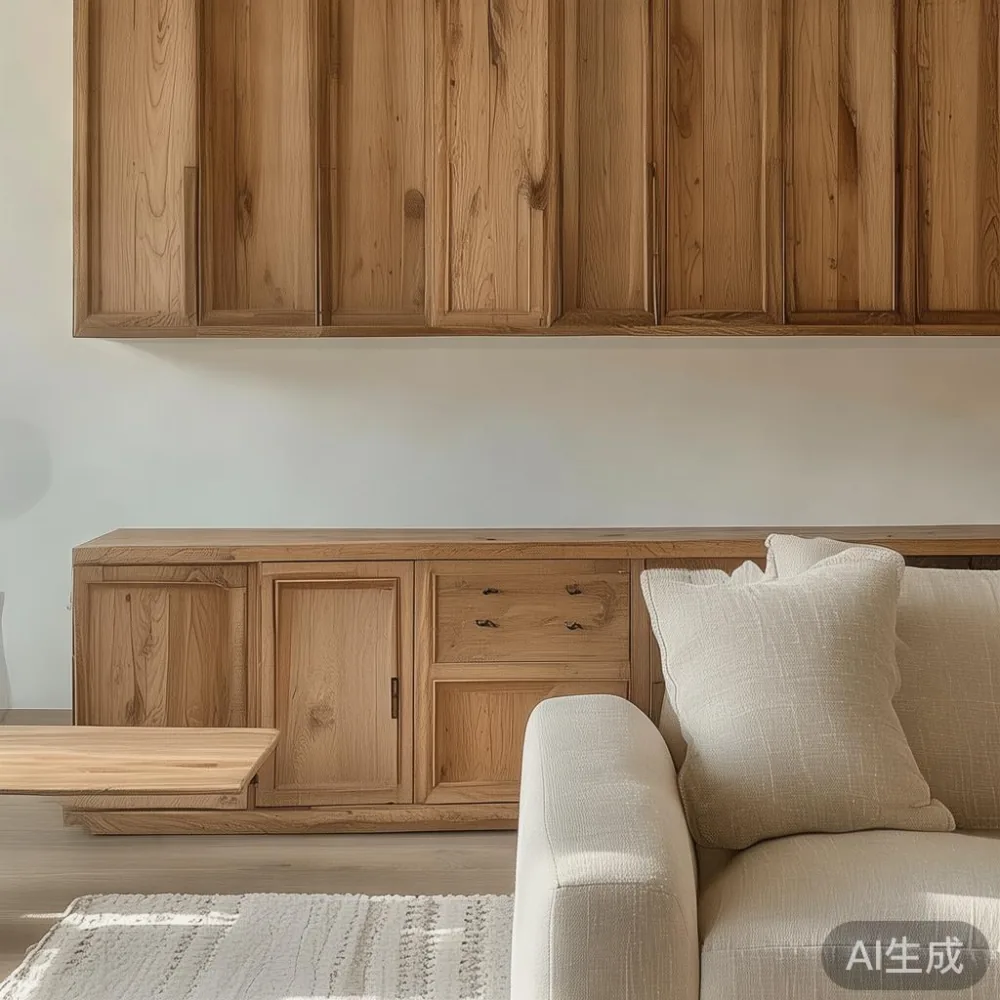
This guide pulls together what I have learned from owning solid wood pieces for nine years, what I saw when I visited a Foshan workshop in March, and what the MIDHILL team in Singapore walked me through during a 45-minute showroom consultation. I will give you the numbers in centimetres, kilograms, Singapore dollars, and percentages so you can plan a purchase with the same precision you would use for an HDB BTO renovation.
Why Singapore humidity is genuinely different from a temperate climate
Singapore's average annual relative humidity is around 82%, and from November to February it rarely drops below 75% even indoors. By contrast, a city like London averages 70% outdoors and 45% to 55% indoors once heating is running. Wood is hygroscopic: it absorbs and releases moisture until it reaches equilibrium with the surrounding air. When that equilibrium keeps shifting between 60% and 90% RH inside your flat, every solid wood plank in your home is slowly breathing in and out.
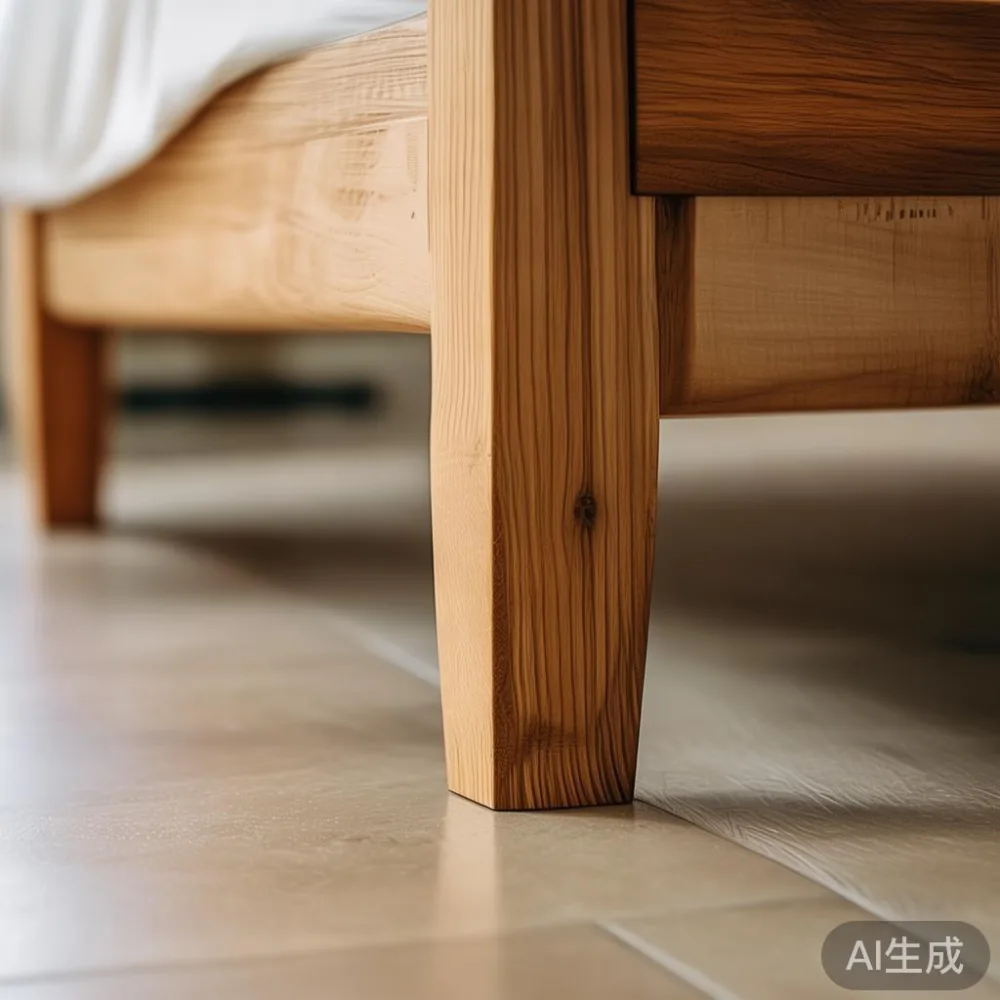
The practical result is dimensional change. A 180 cm oak plank stored at 12% moisture content and moved into a 28°C, 80% RH bedroom can swell by 2% to 3% across its width. That is roughly 5 mm of expansion on a 180 cm board. On a 1.8 m bed frame side rail it can show up as a tight drawer, a sticky door, or a hairline gap that closes in January and reopens in July. A coastal style wardrobe with full-length shutters will be the most visible victim because the doors are large, flat planes that have nowhere to hide movement.
Two more local factors make the picture sharper. First, many Singapore HDB flats are air-conditioned only in the bedrooms, leaving the living and dining areas swinging with outdoor humidity that creeps in every time the service yard door opens. Second, lift and corridor dimensions matter when you order a 2.4 m wardrobe: a standard HDB passenger lift is about 1.5 m deep by 1.7 m wide with a door opening of roughly 0.9 m, so anything wider than 90 cm across the door has to be partially disassembled and reassembled in your home. MIDHILL's delivery team confirmed they send a four-person crew for any coastal style wardrobe over 2 m tall precisely because of this, and the on-site reassembly is included in the SGD 80 lobby-to-door fee for landed properties or waived for HDB addresses above the 14th floor.
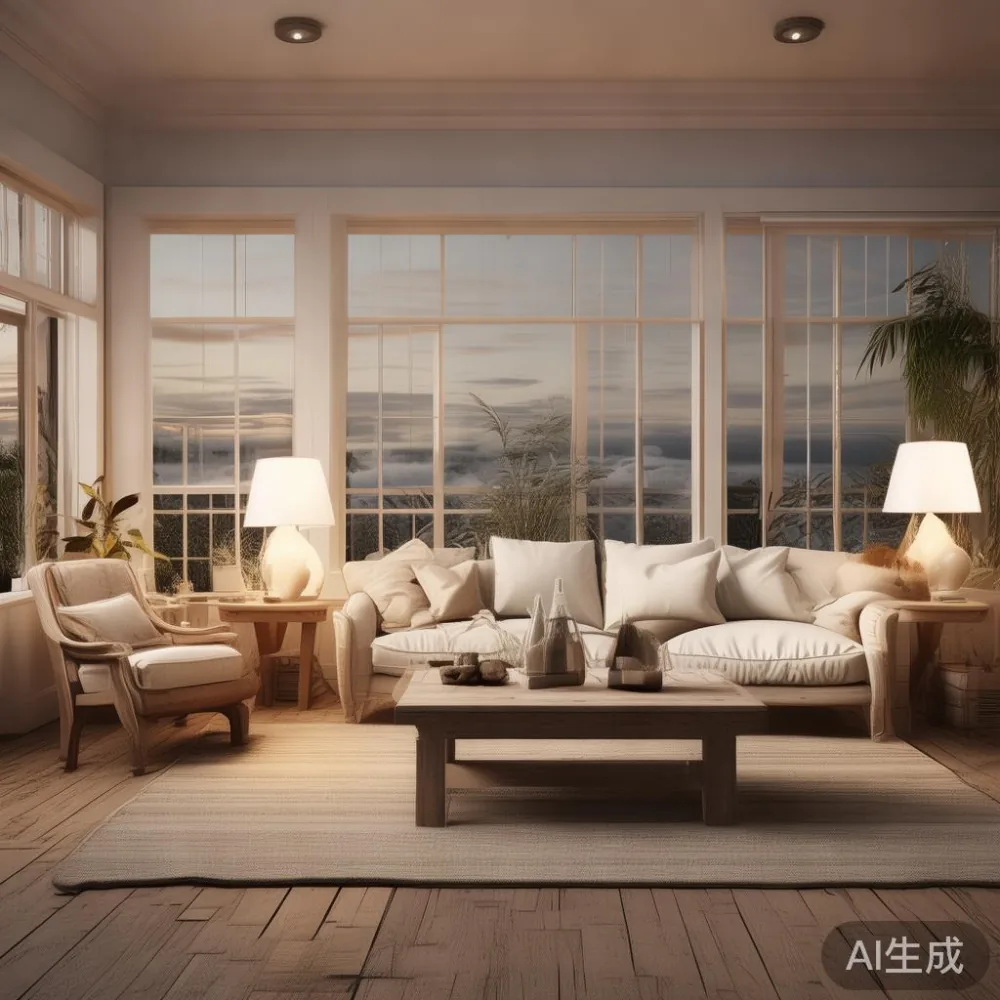
How much does Southeast Asian humidity really damage wood furniture?
Honest answer: it does not damage properly dried and properly finished wood. It damages wood that was kiln-dried to the wrong target moisture content, finished with a coating that cannot breathe, or assembled with paper-backed veneers that cannot move at all. The enemy is not humidity itself. The enemy is bad joinery meeting humidity.
When I visited the Foshan factory in March, the quality control manager walked me past three drying kilns and showed me a moisture meter reading 9.8% on a batch of ash boards destined for coastal style dining tables. He explained that their target for Southeast Asian shipments is 9% to 11%, which is drier than the 12% to 14% boards leaving the same kilns for the domestic Chinese market. Drier boards feel slightly strange in a Singapore showroom at 82% RH, but they ship with a little buffer to absorb without crossing the fibre-saturation point around 28%.
For an American solid wood sofa frame, the same logic applies but with one extra caveat: the upholstery acts as a humidity buffer. A solid ash or walnut frame wrapped in linen or top-grain leather will move 1 mm to 2 mm a season and you will never notice, because the cushions absorb the slack. A naked solid wood bed frame or dining table has nowhere to hide. That is why the warranty terms matter more than the wood species.
What is the difference between European bed and modern furniture?
A European bed is engineered around a stable interior climate of roughly 45% to 55% relative humidity and rooms heated to 18°C to 22°C, so its solid wood components are kiln-dried to about 12% moisture content and finished with closed-pore lacquers that slow vapour exchange. Modern furniture designed for tropical markets is kiln-dried to 9% to 11%, uses open-pore oil or wax finishes that let the wood breathe, and relies on traditional mortise-and-tenon or dowel joinery that allows seasonal movement of 1% to 2% across the grain without cracking.
You will see the difference within your first six months in a Tampines or Bedok condo. A European-spec oak bed frame often arrives with drawers that fit like a glove in December and jam by March, because the wood has expanded 3 mm to 4 mm across its 140 cm width. A tropical-spec coastal style bed frame from a maker who targets Southeast Asia will arrive with the same drawer, the same wood, but with each side panel left 1.5 mm short of the drawer box on purpose. That 1.5 mm is a deliberate expansion gap. It looks sloppy in the showroom and feels precise in your fifth monsoon season.
Modern furniture also tends to use longer, thinner components that look lighter. A coastal style bed frame with a 5 cm slat spacing and a 2 cm thick headboard reads as more restrained than a European bed with a 4 cm headboard and decorative carvings. In a 90 sq m HDB flat where the master bedroom is often 12 sq m to 14 sq m, that visual lightness makes the room feel bigger and lets the air circulate around the wood, which is good for both the bed and the room.
Coastal style specifics: which pieces sweat, which ones smile
Coastal style is honest about its materials. You see the grain, the knots, the slight unevenness at the edges. That visibility is the whole point, and it is also why coastal style pieces show humidity stress faster than heavily painted or laminated alternatives. Based on what I have seen in my own home and in two MIDHILL showrooms I toured last month, here is how each major category behaves between a 78% RH dry afternoon and a 92% RH wet afternoon.
Solid wood sofa frames. The hardwood frame itself is largely unbothered, but the cushions are the issue. Polyurethane foam absorbs ambient moisture and slowly loses resilience. A 65 kg three-seater with 1.8 m of seat depth should be rotated 180° every four months so the compression happens evenly. Coastal style often uses loose linen covers; wash them every six months in cold water and line-dry indoors to avoid shrinkage of 3% to 5%.
Bed frames. A 1.8 m by 2 m coastal style bed frame in ash or white oak will move roughly 4 mm across its width between January and July. That is within design tolerance if the slats are individual, not glued. Avoid bed frames with a single MDF headboard panel wrapped in veneer; the veneer will check (crack in a fine grid) within 18 months in a Punggol flat with full morning sun through unfiltered east-facing windows.
Dining tables. The single most humidity-sensitive piece in any coastal style collection, because the top is wide, flat, and unsupported across its middle. A 1.4 m to 1.6 m table top in solid ash, properly kiln-dried to 10% and finished with hard wax oil, will cup 1 mm to 2 mm at the edges during the wet season and flatten again by Chinese New Year. A 1.8 m to 2.2 m top needs a centre breadboard end or a steel stretcher underneath to keep it flat. Marble table tops are unaffected by humidity, which is why coastal style often pairs a Carrara marble top with a teak or white oak base.
Wardrobes. Two rules. First, leave a 2.5 cm gap between the wardrobe back and the wall to allow airflow. Second, never push a wardrobe flush against an external wall that gets afternoon sun; the temperature differential can hit 8°C between the back of the wardrobe and the front, and the resulting expansion will rack the carcass. A 2.4 m tall coastal style wardrobe with three shutter doors should be anchored to the wall with the L-brackets supplied, and you should expect the doors to need a 2 mm hinge adjustment once a year.
Nightstands. The smallest piece, the easiest to live with. A 45 cm by 40 cm by 55 cm nightstand in solid rubberwood or acacia will swell maybe 1 mm across its width over a wet season. Wipe the underside every two months with a dry microfibre cloth to prevent musty odours, and never store wet clothes inside the drawer.
How to read the specs before you click pay now
Three numbers on a product page tell you almost everything you need to know about how a coastal style piece will behave in a Singapore HDB flat.
Moisture content at delivery should be 8% to 11% for solid hardwood. Anything above 12% is green wood dressed up as furniture. Anything below 7% has been over-dried and will absorb aggressively, sometimes cupping within the first month.
Finish type should be open-pore. Look for hard wax oil (Osmo, Rubio Monocoat), shellac, or a water-based matte lacquer labelled breathable. Avoid high-gloss polyurethane on large flat surfaces; it looks beautiful in the showroom and traps moisture underneath, which then pushes the finish off in cloudy patches called blushing.
Joinery should be visible. Mortise-and-tenon, dowel, dovetail, or finger joints all allow micro-movement. Staples, brad nails, and pocket screws do not. If you can see only metal fixings on a coastal style dining table listed at SGD 1,800 or above, ask why.
What about price, warranty, and the boring logistics everyone forgets
A solid wood coastal style dining table seating six in ash or white oak typically lands between SGD 1,450 and SGD 2,600 in Singapore, depending on whether the top is solid plank, jointed plank, or a marble table on a wood base. A 1.8 m coastal style bed frame in the same material runs SGD 1,100 to SGD 2,200. A 2.4 m three-door wardrobe is SGD 2,400 to SGD 3,800. A 65 kg three-seater American solid wood sofa in linen starts around SGD 2,900 and climbs past SGD 4,800 for full-aniline leather. Nightstands are the most accessible entry point at SGD 280 to SGD 520 each.
Delivery timelines out of Foshan to Singapore are 18 to 28 days by sea, plus 3 to 5 days for last-mile delivery to an HDB block. MIDHILL ships free above US$350 (about SGD 480), which means a single nightstand or a pair of them with a small coffee table will clear the threshold. For HDB addresses above the 14th floor, lift access is mandatory and most pieces arrive in flat-pack boxes no larger than 210 cm by 60 cm by 35 cm to fit through a 0.9 m lift door.
Warranty is the second number worth memorising. A 10-year structural warranty covers frame breakage, joint failure, and major warping outside seasonal tolerance. A lifetime refinishing service means you can send a coastal style dining table back to the workshop after seven or eight years and have it sanded, re-oiled, and returned for a fee that usually runs SGD 280 to SGD 480 depending on size. Returns within 14 days are standard, but read the fine print: many makers, MIDHILL included, exclude custom dimensions and pieces over 2 m tall from the change-of-mind return.
FAQ: Singapore-specific questions I get asked every week
Will my coastal style wardrobe survive a Punggol ground-floor unit with morning sun? Yes, if you keep it 5 cm off the external wall, run the air-conditioner in that room for at least two hours every afternoon to drop RH below 65%, and apply a fresh coat of hard wax oil every 14 months. I have a MIDHILL three-door coastal style wardrobe in such a unit that has been stable for four years.
Is air-conditioned storage necessary during a renovation? No, but consistent indoor conditions help. A closed-up HDB flat during a three-week reno can hit 95% RH, which is enough to push even a 10% MC board past 14%. Leave a small dehumidifier running on a Wi-Fi plug if you can.
Do I need a humidifier in January when RH drops below 60%? Rarely in Singapore. The 8% to 11% target MC is below your indoor equilibrium MC, so the wood will gently give up moisture and shrink. That is fine; it is the swelling direction that cracks joinery. If you run the air-conditioner 24/7 and RH drops to 45%, a small humidifier on the wardrobe side can prevent hairline splits.
Are marble table tops worth the premium in coastal style collections? For dining, often yes. A Carrara or travertine top over a teak base costs roughly SGD 800 to SGD 1,400 more than an all-wood equivalent, but it is dimensionally stable, easy to wipe, and tolerates Singapore's humidity without any of the seasonal movement an all-wood top will show.
How often should I oil a coastal style dining table? Twice a year is the minimum: once in early November before the wet season peaks, once in early March as it tapers off. Use a cloth, not a brush, and wipe with the grain. Twenty minutes of work buys you three more years of service before a full refinish is needed.
The honest short version
Humidity is not the enemy of solid wood furniture in Singapore. Bad specifications, bad finishes, and bad joinery are. A coastal style dining table, bed frame, wardrobe, nightstand, or marble table built for tropical Southeast Asia will move a millimetre or two across a wet season and settle back in the dry months, the same way your skin tightens in an air-conditioned office and relaxes at a hawker centre. Choose pieces with the right moisture content, an open-pore finish, and traditional joinery, allow the recommended 2.5 cm to 5 cm airflow gap against walls, and your solid wood investment will outlast two or three sofa sets, four or five mattresses, and at least one round of HDB BTO renovation. That is the quiet arithmetic of owning real wood in a real climate.