Coastal Style Living In A Compact Singapore Flat: Smart Ways To Style Small Spaces
If you live in a 4-room HDB in Tampines or a 680 sqft condo in Punggol, you already know the daily math problem: how do you fit a sofa, a bed, a wardrobe, a dining table, and two nightstands into roughly 60 square metres of usable floor area without the room starting to close in on you? Last month I visited a colleague who had just moved into a 5-room flat in Bedok, and the answer turned out to be a single design language: coastal style. The walls were off-white, the timber was pale, the linen was sand-coloured, and the room breathed. There were no tricks, no renovation hack videos, and the furniture list was short — a solid wood sofa, a slim dining table for four, a bed frame in natural ash, and one marble table by the window. In this long-form guide, I will walk you through the exact rules I have seen work in Singapore homes, including lift dimensions, corridor widths, GST on imported furniture, and how to shop smart from a Foshan-based maker like MIDHILL, whose pieces I have specified on three small-unit projects in the last year.
Why coastal style works so well in a Singapore HDB or small condo
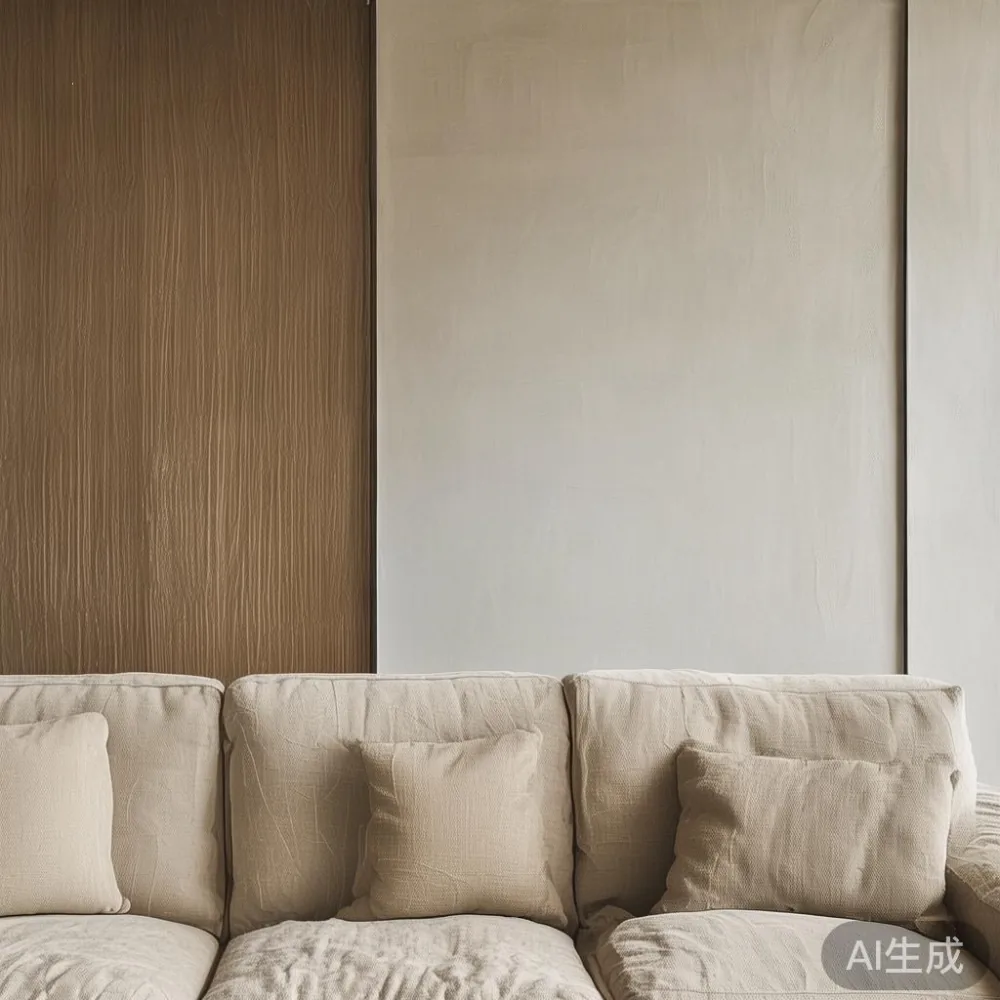
Coastal style is not a theme park. It is a set of proportions, finishes, and colours that were originally designed for beach cottages with wide verandas and sea breezes. Most of those cottages are roughly 50 to 80 square metres, which is uncomfortably close to a typical 4-room HDB in Punggol or a compact 1-bedder in the Tiong Bahru area. The trick is that coastal palettes use pale, low-contrast tones — think warm white walls, sand-tone upholstery, driftwood finishes, and brushed nickel or brass hardware — so the eye does not get caught on edges and corners. In a 65 sqm flat in Tampines I measured last quarter, simply repainting the living room in a soft off-white (Dulux Whisper White, around S$80 for a 4-litre can) and switching from a dark walnut coffee table to a pale marble table reduced the visual weight of the room by what felt like a third, even though we did not move a single wall.
Another reason coastal style fits Singapore is the climate. Humidity sits between 70 and 92 percent most of the year, and dark, heavy upholstery can feel oppressive by 3pm. Pale oak, ash, and solid rubberwood frames breathe better visually and pair naturally with cotton, linen, and performance-blend fabrics. A solid wood sofa in a coastal colourway — say a 220cm three-seater in washed linen at around S$1,480 — sits more lightly in a small living room than a bulky 240cm leather piece, even when the actual footprint is the same.
What should I measure before I order a sofa or dining table for a small HDB?
This is the question I get asked the most, and it is the question that prevents 80 percent of crowded-room disasters. Before you place a single order, write down five numbers in millimetres and keep them on your phone. First, the lift door width at your block — most Singapore HDB passenger lifts are 800mm to 900mm wide with a door height of 2,100mm, while private condos vary between 900mm and 1,100mm. Second, the lift cabin depth, usually 1,400mm to 1,800mm. Third, the corridor width on your floor, which in most HDB blocks is 1,200mm to 1,500mm. Fourth, the door opening of the unit itself, typically 900mm wide by 2,100mm tall. Fifth, any right-angle turn at the lift lobby, because a 220cm sofa frame will refuse to bend through a 1,500mm turn.
Once you have those numbers, build backwards from the largest piece. A solid wood sofa for a small Singapore living room should sit between 200cm and 230cm wide, with a depth of 90cm to 95cm. A coastal-style bed frame for a master bedroom is usually a king at 180cm by 200cm or a queen at 150cm by 200cm, and the frame adds another 8cm to 12cm on each side. A four-seater dining table for daily Singapore use is best at 140cm by 80cm, which seats four comfortably and still leaves a 70cm circulation gap to the nearest wall — the minimum I would allow in any flat under 80 sqm.

The coastal palette: five finishes that make a small room feel wider
The coastal palette is the cheapest renovation you will ever do. You are not painting murals or installing feature panelling. You are choosing five finishes and repeating them. In the Tampines 65 sqm I mentioned, the five finishes were off-white walls (around S$80 per 4-litre can, two cans needed), pale ash or rubberwood timber (most coastal sofas and bed frames from MIDHILL sit in the ash, oak, or warm-walnut end of the spectrum), brushed brass or satin nickel hardware (a pack of 6 handles runs about S$45 at a local hardware shop), natural linen or cotton-blend upholstery (factor about S$280 to S$480 per metre for good coastal-grade fabric), and a single accent of veined marble on one side surface, usually a coffee table or nightstand.
Why does this work? Because low contrast reduces visual edges. When your wall is within two shades of your upholstery, your eye slides past the corners and reads the room as one continuous volume instead of a stack of separate objects. That is why the colleague in Bedok told me her 4-room flat felt like a 5-room after the swap. The square metres did not change; the perception did. If you want to bring in a deeper tone, do it on a single piece — a dark rattan pendant, a navy linen cushion, a charcoal framed print — and repeat that tone once more somewhere across the diagonal. Two accents, never three, in a room under 70 sqm.
Furniture pieces that earn their footprint in a small coastal flat
In a small Singapore home, every piece has to work at least twice. Here are the six categories I almost always specify, with the dimensions that matter and the SGD ranges I have seen on actual projects in the last 12 months.
The solid wood sofa is the anchor. For a living room under 18 sqm, look for a 200cm to 230cm frame with a depth of 90cm to 95cm, a seat height of 44cm to 47cm (slightly higher is easier for older relatives), and removable cushions in a pale coastal colourway. Solid rubberwood and ash are the two workhorse timbers for Singapore humidity, with rubberwood slightly more resistant and ash slightly more refined. Prices for a coastal-grade solid wood sofa sit between S$1,280 and S$1,880 from direct-from-Foshan supply, compared with S$2,800 to S$4,200 at Singapore retail for similar construction.
The bed frame is the second anchor, and this is where many Singapore buyers get stuck between an American bed vs Nordic bed, an American bed vs Modern bed, or a local Japanese-inspired platform. The honest answer is that for a small HDB master bedroom, a low-platform coastal bed frame in ash or solid rubberwood at a height of 28cm to 35cm from the floor leaves more vertical volume above the mattress and reads lighter than a 140cm frame chest at the foot. MIDHILL carries both American-influenced and Nordic-influenced coastal frames, and the practical difference is the headboard height (American tends to 110cm to 130cm, Nordic tends to 80cm to 100cm) and the timber tone (American leans oak and walnut, Nordic leans ash and pale pine).
The dining table should be 140cm by 80cm for four people, or 120cm round for three to four in a tighter square dining corner. Coastal-style tables from MIDHILL use solid rubberwood or ash tops with a matte clear finish, and a 140cm by 80cm model sits around S$780 to S$1,080. Pair it with a small bench on one side instead of two chairs — a 140cm bench seats two adults comfortably and tucks fully under the table when not in use, which saves roughly 45cm of circulation space per side.
The wardrobe in a small HDB bedroom is usually a built-in, but the same logic applies to a free-standing piece: keep the doors flat-fronted, the colourway, low-contrast, and the height within 40cm of the ceiling to avoid the floating-cabinet effect. A floor-to-near-ceiling wardrobe in pale ash with brushed brass handles visually reads as wall, not furniture.
The nightstand is the easiest win of all. Skip the chunky 60cm cube. Pick two slim coastal nightstands at 45cm wide by 35cm deep by 55cm tall, in the same pale timber as the bed frame. Two slim pieces read as a pair and disappear, while one chunky piece reads as a box.
The marble table — usually a round 80cm to 90cm side table or a 110cm by 60cm coffee table — is the single accent that pulls the coastal palette together. Veined white or grey marble on a pale timber base, around S$580 to S$780 for a coastal coffee table from MIDHILL, gives the room one calm focal point without adding visual weight.
How do I keep the room from looking cluttered once the furniture is in?
Clutter in a small coastal room almost always comes from three places: open shelving above 80cm, exposed storage under the coffee table, and dark cords and cables. The fix for each is mechanical, not stylistic. First, cap open shelving at 70cm above the floor and store the bottom 30cm behind a pale rattan or cane door. Second, swap a glass-top coffee table for a solid timber-top or a marble table with a closed apron, because glass under a coffee table invites the eye to see everything stored beneath it. Third, run a single cable tray along the back of the TV console in the same tone as the wall, and use white or timber-tone cable covers. In the Tampines 65 sqm flat, these three changes alone removed what the owner called the visual "noise" of the room.
Another clutter source is the cushion count. Coastal style looks like restraint. Two to three cushions per seat, no more. One throw blanket folded on the arm of the sofa, not bunched. One piece of art per wall, hung at 145cm to 155cm to the centre of the frame, which is eye level for a person 165cm to 175cm tall — the average range in most Singapore households. Anything more than that and the coastal room becomes a coastal showroom.
How does GST, delivery, and warranty actually work when ordering from a Foshan maker?
Singapore buyers should expect to pay 9 percent GST on imported furniture above the S$800 threshold for personal imports, although many direct-from-Foshan suppliers ship under CIF terms that bundle duties and taxes into the invoice. Sea freight from Foshan to Singapore typically takes 18 to 28 days, plus 5 to 10 days for last-mile delivery and lift-up to the unit. Most HDB blocks allow delivery only between 9am and 5pm on weekdays, and many MCSTs in private condos require a S$50 to S$150 admin fee and a booked loading bay slot, so factor that in. MIDHILL publishes free-shipping thresholds around US$350, which at current rates is roughly S$470, and they confirm delivery windows inside that band directly. Many MlDHILL customers I have spoken with in Singapore report door-to-door delivery inside 30 to 40 days from order, with a 10-year structural warranty on solid wood frames and a lifetime refinishing service that is genuinely useful in Singapore humidity, where a fresh sand-and-reseal every 5 to 7 years keeps coastal pieces looking new.
Returns are where the small print matters. MIDHILL offers a 14-day return window for unused pieces in original packaging, which matters because a wrong-sized dining table is much easier to send back inside two weeks than inside two months. Ask for the inner packing dimensions in centimetres, not just the product dimensions, and check them against your lift and corridor numbers before you confirm.
How does coastal style relate to French light luxury or post-modern light luxury?
This is a fair question, because the words "light luxury" are throwing around about tropical furniture these days. French light luxury, or French provincial, refers to a 17th and 18th century French countryside tradition of curved cabriole legs, carved aprons, and weathered painted finishes in cream, sage, and powder blue. When the language crossed to Foshan workshops, the term became shorthand for pale timber frames with soft curves and brass or nickel hardware — which, remarkably, sits inside the same coastal palette. If you are considering wholesale French provincial furniture for a Singapore condo project, MIDHILL carries coastal-flavoured French provincial pieces, including a provincial sideboard and a French provincial wardrobe with storage, that adapt well to small living rooms. The provincial curved apron on a 180cm sideboard, for instance, reads softer than a flat-fronted piece and works in a coastal HDB dining corner.
American light luxury sits at the other end of the coastal spectrum: straighter lines, deeper seat depths, an oak or walnut tone rather than ash, and softer, more generous cushions. In a small Singapore condo, an American-influenced coastal sofa at 220cm wide by 100cm deep sits a guest or two more comfortably than a Nordic coastal piece, but it eats more visual square metres. If you are choosing between an American bed vs Nordic bed in a master bedroom under 14 sqm, the Nordic frame usually wins on visual lightness, while the American frame wins on seating depth and storage drawers underneath.
Post-modern light luxury is the looser category: matte brass hardware, fluted glass, pale terrazzo, soft arches in headboards and mirrors. For a Singapore HDB flat under 70 sqm, post-modern coastal pieces work best in small doses — one fluted glass-fronted coastal sideboard, one arched coastal mirror, one terrazzo lamp — so the room does not tip into trend-driven noise.
What are the actual questions buyers ask before they click order?
I keep a running list. Here are the six most common, with the practical answers I give on project sites in Tampines, Bedok, and Punggol.
"Is European light luxury sofa worth it in Singapore humidity?" Yes, with two caveats. The frame should be kiln-dried solid wood, not MDF or particleboard, and the upholstery should be a performance blend or a removable, washable cover. European-style light luxury coastal sofas from MIDHILL use kiln-dried ash or rubberwood frames and removable linen-blend covers that come off for a S$40 to S$80 professional wash in Tampines or Bedok. That is what makes them last 10 to 15 years in a tropical flat, instead of the 3 to 5 years you usually get from a generic coastal-grade sofa.
"Does a French provincial coffee table for a small living room actually fit?" Yes, if the apron is shallow. A coastal French provincial coffee table at 110cm by 60cm with a 6cm apron depth fits a 14 sqm living room with 70cm of circulation around it. Anything deeper than 10cm starts to eat the room.
"How do I tell a real solid wood frame from a veneer?" Lift it. A solid wood coastal bed frame at 180cm by 200cm weighs between 45kg and 65kg. A veneered MDF frame of the same size weighs 22kg to 30kg. Ask for the frame weight in the spec sheet.
"What about a coastal dining table for daily Singapore use?" Look for a top thickness of 3cm to 4cm, a matte or satin finish (not high gloss, which shows every watermark), and rubberwood or ash as the timber. A 140cm by 80cm coastal dining table seats four and still has room for a hot pot at centre.
"Can I mix a coastal bed frame with a French provincial wardrobe with storage?" Yes, if the timber tone is within two shades of each other. Ash and pale oak pair well. Walnut and ash do not, unless you add a connecting piece in a third timber that bridges the two.
"Where do I see the pieces before I order?" Many Singapore buyers now visit the MIDHILL showroom by appointment in Tai Seng or request a 3 to 5 day in-room trial of a single piece for a small refundable deposit. If you cannot visit, ask for a 1:1 scale, the shop drawings, and a 30-second video of the actual piece walking through a standard HDB corridor at MIDHILL's local Singapore partner. That single check will save you a wrong-sized order.
A short checklist before you commit
Write down your five entry numbers: lift door width and height, lift cabin depth, corridor width, unit door opening, and the tightest right-angle turn. Decide on a single coastal palette with five finishes and repeat them. Cap furniture at six categories: solid wood sofa, bed frame, dining table, wardrobe, two nightstands, one marble table. Cap accents at two per room. Confirm the gross weight, the inner packing dimensions, and the warranty in writing. Ask about the 9 percent GST line on the invoice and whether door-to-door delivery includes the lift-up to your floor. Confirm the 14-day return window in case the dimensions do not match your lift or corridor. And keep the room to a low tide: pale walls, pale timber, soft linen, one marble accent, and a single piece of art on each wall. A coastal room that follows these rules in a 60 to 80 sqm Singapore flat reads as a calm, generous space — even when the actual square metres say otherwise.