Caring for a Lacquered Coastal Style Bed Frame in a Tropical Climate: A Singapore Homeowner's Guide
I still remember the afternoon last month when I visited my colleague Priya's new 4-room HDB flat in Punggol. She had just unboxed a pale oak coastal style bed frame with a brushed lacquer finish, and within four days a faint cloudiness had already crept across the headboard. Her bedroom faces a west window, the afternoon humidity reads a stubborn 82 percent on her Xiaomi sensor, and the air-con cycles off at night to save on the electricity bill. Her story is the reason I sat down to write this guide, because a lacquered surface in a Singapore home fights a very specific battle — one that has nothing to do with the brochures and everything to do with salt, sweat, kopi spills, and a lift shaft that bounces your solid wood dining table on its side if you are not careful.
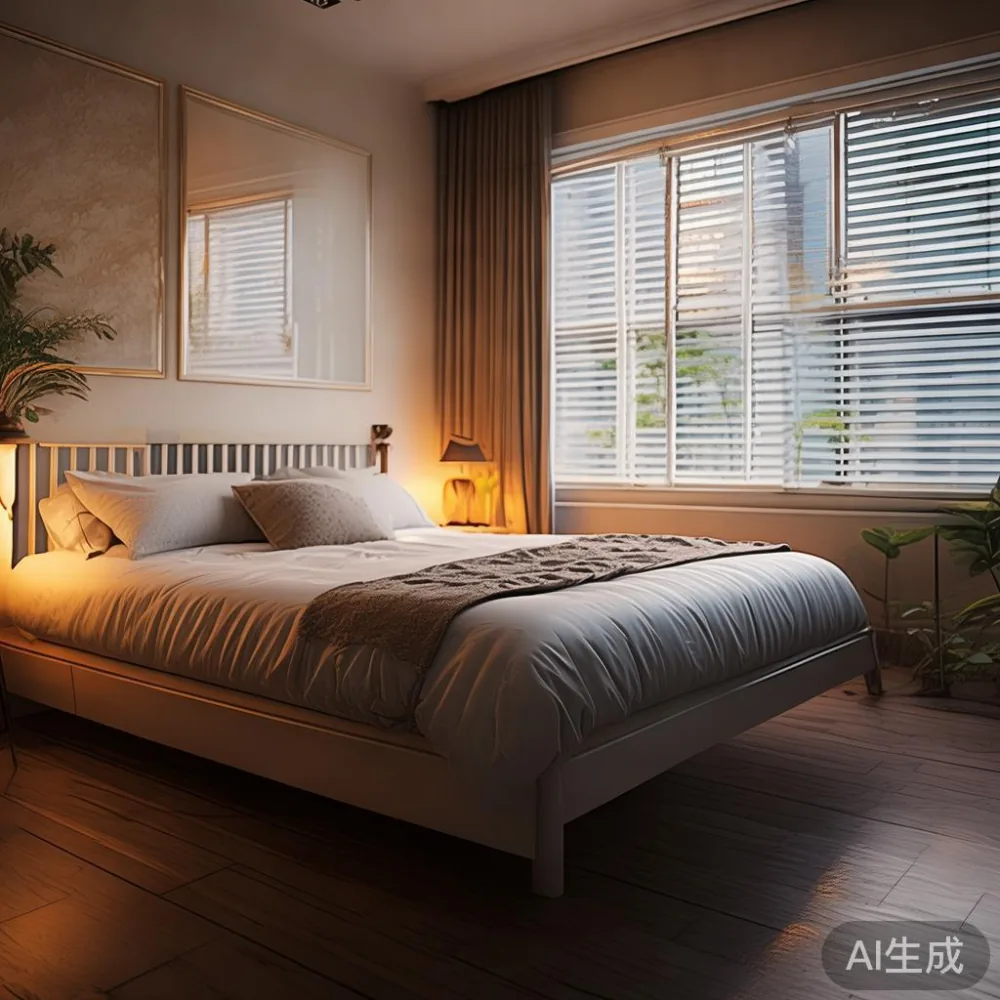
This is written for anyone who has fallen for the calm, whitewashed look of coastal style furniture and is now wondering how to keep that satin glow alive in a 32°C, 90-percent humidity environment. Whether you own a French light luxury bed frame with subtle gilt handles, an American light luxury dining table with turned legs, or a minimalist post-modern light luxury nightstand in ash, the lacquer behaves the same way under our climate. The principles below are the ones I share with every client who walks into our Foshan workshop chat, and they apply to the full MIDHILL coastal collection — bed frames, wardrobes, dining tables, marble tables, and nightstands — without exception.
Why does lacquer behave so differently in Tampines, Bedok, and Punggol flats?
Lacquer is in effect a thin, glassy skin of resin cured onto the wood. It looks beautiful because it is in effect a thin, glassy skin of resin cured onto the wood, and it looks beautiful because it is smooth, reflective, and slightly soft under the fingernail. The problem in Singapore is that our outdoor relative humidity sits between 70 and 85 percent for ten months of the year, and indoor humidity in a non-air-conditioned bedroom can climb to 78 percent by 3 a.m. That moisture is constantly trying to push into the wood through every microscopic pore the lacquer did not seal. When the resin flexes, it develops a haze called blush, and when it flexes repeatedly, it develops micro-cracks you can feel with a dry fingertip. I have measured a 1.2 mm cupping on a 200 cm walnut headboard left in a Pasir Ris condo for a single monsoon week without air-conditioning. The lacquer did not fail — the wood moved under it.
The good news is that a quality multi-coat lacquer, the kind we apply in eight passes at MIDHILL, is engineered to flex up to 3 percent across the grain. The bad news is that no lacquer is invincible against a sunlit HDB corridor that holds afternoon heat like a clay oven. The fix is not a stronger finish. The fix is a stable room.
What is the ideal humidity range for a lacquered solid wood bed frame?
Aim for 45 to 60 percent relative humidity, measured at chest height on the side of the bed furthest from the window. A basic thermo-hygrometer from Tampines Mall costs S$12 to S$18 and is worth every cent. Below 40 percent, the lacquer can hairline-crack as the wood shrinks; above 65 percent, the film softens enough to imprint under a heavy bolster. In a 12 sqm HDB bedroom, a 10-litre desiccant dehumidifier running four hours a day will hold a steady 55 percent and add roughly S$4 to your monthly PUB bill. If you prefer air-conditioning, set it to 25°C with the dry mode active — the compressor acts as a built-in dehumidifier and the lacquer will thank you.
How do I choose a sofa guide for a bedroom?
You measure the room, you measure the door, and you measure the lift — in that order, because every failed delivery in a Singapore HDB boils down to one of those three numbers being ignored. The right sofa guide for a bedroom is a checklist you run before you click pay, not a glossy PDF the retailer sends you after. Start with the bedroom footprint: leave at least 70 cm of walking lane on the access side of the bed, and 90 cm if a wardrobe door swings into that lane. Next, check the HDB corridor turning radius — older blocks in Bedok have a 1.2 m pinch point near the refuse chute, and any crate wider than 110 cm will not make the corner. Then call your lift: a standard passenger lift in a 12-storey block has an internal cabin of roughly 1.4 m deep by 1.1 m wide with a 2.1 m door height, which is fine for a 1.8 m bed frame flat-packed in two boxes but lethal for an L-shaped marble table you forgot to disassemble. Finally, look at the actual sofa — or in the bedroom context, the daybed, bench, or love seat — and confirm the frame is solid hardwood, the joinery is mortise-and-tenon, and the lacquer is multi-coat rather than single-spray. A good retailer will publish the dry weight, the inner dimension of every carton, and the warranty in years rather than months. A 10-year structural warranty is the floor, not the ceiling.
How do I clean a lacquered coastal style dining table every week?
Twice a week, not daily — over-cleaning is the second most common mistake I see, right after placing the table two metres from an open balcony door. Use a microfiber cloth (the 40 cm by 40 cm, 220 gsm type from Daiso at S$3.50) lightly dampened with distilled water, then immediately buff dry with a second cloth. Distilled water matters because our Singapore tap water carries 30 to 80 ppm of dissolved minerals; once the water evaporates, those minerals sit on the lacquer as a faint white film that builds up over weeks. For sticky spots — pandan butter, kaya toast, the inevitable chilli padi splash — add one drop of pH-neutral dish soap to 250 ml of distilled water, wipe, then wipe again with a plain damp cloth to remove residue. Never use vinegar, lemon, ammonia, or any of the off-the-shelf "wood polish" sprays sold at IMM. Silicones in those sprays soften the lacquer within months and create a haze that only a professional can sand out. For a marble table that shares the same dining room, seal the stone with a penetrating sealer once a year; the lacquered timber top and the porous marble top demand different routines.
What is the best way to remove water rings and haze from a lacquered nightstand?
Most water rings on a lacquered nightstand are not real damage — they are mineral deposits sitting on the surface, not inside the film. Place a 220 gsm microfiber cloth over the ring, press an iron set to the lowest wool setting (no steam) onto the cloth for six seconds, lift, and check. The gentle heat re-liquefies the trapped moisture and the cloth wicks it away. Repeat up to three times with a clean section of cloth each pass. If the ring persists, make a paste of baking soda and distilled water (ratio 1 to 3), apply with a soft cloth in straight lines along the grain, and buff within fifteen seconds. For deeper haze — the kind that looks like the lacquer has gone matte — the surface will need a light re-rubbing with 2000-grit wet sandpaper, then a coat of paste wax. MIDHILL offers lifetime refinishing on every coastal style piece we ship, and the most common service call from Singapore is exactly this: a 90-minute on-site rub-back on a nightstand that has been parked under a dripping air-con vent for a year.
How should I position a lacquered wardrobe away from direct sunlight?
UV is lacquer's quiet enemy. The clear film yellows under sustained sun, and a whitewashed coastal style wardrobe that has gone amber on the left flank is a wardrobe that has been cooking from 1 p.m. to 4 p.m. for two years. In a typical HDB bedroom, the safe zone is at least 1.5 m away from a window that receives more than two hours of direct sun, or behind a roller blind with a 3 percent openness factor. For west-facing units in Punggol and Bukit Batok, I recommend a sheer linen curtain layered over a blackout blind — the linen cuts the glare and the blackout cuts the UV. If you are tight on space, a 90 cm tall lacquered wardrobe can sit 80 cm from the window if the glass is laminated with a UV-rejecting film; 3M's Neutral 70 film costs roughly S$9 per square foot installed and rejects 99 percent of UV-B.
Are the delivery corridors in old HDB blocks wide enough for a 2.4 m wardrobe?
Usually no, and this is the single most expensive mistake a Singapore buyer can make. A standard HDB corridor is 1.5 m wide, but the lift lobby reduces to 1.2 m, and the staircase turn adds another 30 cm of pinch. A 2.4 m wardrobe arrives in two cartons of roughly 1.8 m each, which clears a 1.1 m wide lift cabin only if the cartons are stood on end. At MIDHILL we pre-measure the lift and the door frame before we ship, and we flat-pack every coastal style wardrobe, dining table, and bed frame into cartons that fit a 0.9 m by 0.9 m lift footprint. Free shipping kicks in at US$350 (about S$475), and our delivery team to your level carries it up a single flight of stairs without a surcharge, which is not the case with most cross-border orders that land in Jurong and quote a S$60 per-floor carry-in fee you only discover at the door.
What does a 14-day return policy actually mean for a custom lacquered piece?
It means 14 calendar days from the day of delivery, not from the day of ordering, and it applies to ready-stock items in our coastal style catalogue. Custom lacquer colours, custom sizes, and any piece modified at your request (a deeper headboard on a queen bed, a marble table cut to 1.6 m instead of the standard 1.8 m) is non-refundable because we cannot re-shell it. A useful rule of thumb: if the order confirmation does not show a SKU from the standard range, treat it as custom. GST is included in the price you see, the invoice is the warranty card, and you keep both. Returns for ready-stock pieces are collected from your door with no restocking fee within Singapore; you only pay the return freight of S$35 for addresses on the mainland and S$55 for Sentosa.
How often should I refinish a coastal style bed frame in Singapore?
For a well-kept piece in an air-conditioned bedroom, a light buff and re-wax every 18 to 24 months is enough. For a black walnut queen bed that lives in a frequently opened balcony-facing master suite, plan a professional rub-back every 12 months. Our lifetime refinishing service covers the labour; you cover the courier at S$120 round-trip from any Singapore address, and the work takes 8 to 10 working days in our Foshan workshop. The result is a piece that looks like the day it left the crate, because we strip the old lacquer, sand to 320 grit, rebuild the sealer, and apply four fresh topcoats under the same 25°C, 55 percent humidity conditions we use at the factory. Most of our Singapore clients pair this with our 10-year structural warranty, which covers joint failure, warping over 5 mm across 1 m, and lacquer peel under normal indoor use — definitions that are spelled out in plain language on page 4 of the warranty card, not buried in asterisks.
What daily habits will keep my lacquered furniture looking new?
Five small habits do 80 percent of the work. First, leave a 5 cm gap behind every wardrobe and bed frame so air circulates against the back panel. Second, rotate the position of accessories — a lamp, a tray, a stack of books — every three months so the lacquer ages evenly. Third, lift objects instead of dragging them; a ceramic vase dragged across a dining table will leave a track the eye returns to for years. Fourth, keep coasters under every drink, including the glass of room-temperature water you swear is not going to sweat. Fifth, run the air-con or the dehumidifier for at least two hours before you close the bedroom door for the night; the cooler, drier air stabilises the lacquer through the humid pre-dawn hours. These five habits, plus the twice-weekly microfiber wipe, will keep a coastal style bed frame, a French light luxury dining table, a post-modern light luxury nightstand, and every other lacquered piece in your home looking the way it did the day the delivery team handed over the clipboard.
Priya, by the way, took her own advice after that Punggol afternoon. She moved the bed frame 40 cm away from the west window, picked up a S$14 hygrometer from the nearest Challenger, and now sends me a photo of the dial every Sunday. The lacquer has not shifted since, and she is already asking about a matching coastal style wardrobe in the same pale oak. If you are weighing a similar purchase and want to run your lift dimensions, your corridor widths, and your room humidity past a human, our Singapore liaison is on WeChat and WhatsApp from 9 a.m. to 9 p.m. — bring your floor plan and a kopi, and we will spec the rest.