Buying a Coastal Style Sofa in Singapore Without Sitting On It: The Complete Checklist
Shopping for furniture in Singapore, particularly within the compact floor plans of HDB flats and private condos across Tampines, Bedok, and Punggol, often presents a familiar puzzle. You find the perfect sofa online, but the showroom is in Foshan, the display model is sold out, or there simply isn't a physical branch within a reasonable MRT ride. You are left making a multi-thousand-dollar decision based on photographs, dimensions, and written descriptions. This is the precise scenario where a rigorous pre-purchase checklist earns its weight. If your target is the breezy, light-filled look of coastal style furniture, where texture, hue, and proportion do most of the talking, you cannot afford to skip the verification steps below. Everything that follows is the protocol I run through before I commit to any sofa I cannot physically test, with specific attention to the realities of Singaporean homes, from lift doors to corridor turns to the 9% GST that will appear on your final invoice.
Measure Twice, Buy Once: The Singaporean Reality
The single most important step when buying any large piece of furniture sight-unseen is precise measurement, and in Singapore, this goes well beyond the dimensions of your living room. You must trace the entire journey from the delivery lorry to the sofa's final position. A standard three-seater coastal style sofa typically runs 210-230 cm in length, 85-95 cm in height, and 90-100 cm in depth. Cross-reference these against your living room layout, then against the obstacles the sofa must work through.
Start at the lift. Most HDB passenger lifts have an internal cabin of approximately 140 cm deep by 110 cm wide with a door opening of around 80 cm. Newer private condos in Punggol or the Punggol Waterway area sometimes feature larger 160 cm by 130 cm lifts, but never assume. A sofa with a 95 cm frame depth will fit, but only if the back cushions can be removed and the frame rotated diagonally. Check the manufacturer's stated box dimensions, because flat-packed or partially assembled frames can exceed the assembled product by 10-15 cm on each side.

Then measure your corridors. HDB common corridors in older Tampines blocks like Tampines 21 or Tampines GreenRidges run about 120-130 cm wide. Newer BTOs and condos offer 150 cm or more, but corridors frequently narrow at fire-rated door recesses. Account for turning radius. A sofa that fits a straight corridor will not survive a 90-degree turn at the lift lobby if the corridor is only 120 cm wide.
Last month, a colleague in Bedok Reservoir ordered a solid wood sofa frame he had been admiring for three weeks. He measured his living room twice. He forgot to measure the lift. On delivery day, the assembled frame was 218 cm long and 96 cm deep, and the lift internal width was 88 cm. The drivers spent 40 minutes trying angled approaches before giving up. The re-booking fee was SGD 80, the stair-climb surcharge was another SGD 120, and the frame arrived with two scuffed legs from the stairwell attempt. He told me afterwards that the SGD 200 in surprise costs hurt more than the damaged wood, because every cent could have been prevented with a SGD 0 tape measure.
Materials and Construction: The Feel of Quality You Cannot Touch
When you cannot press your palm into a cushion or flex the frame, the written description becomes your hands. A high-quality coastal style sofa will be built with materials that justify a four-figure price tag. Here is what to verify on the product page before you add to cart.
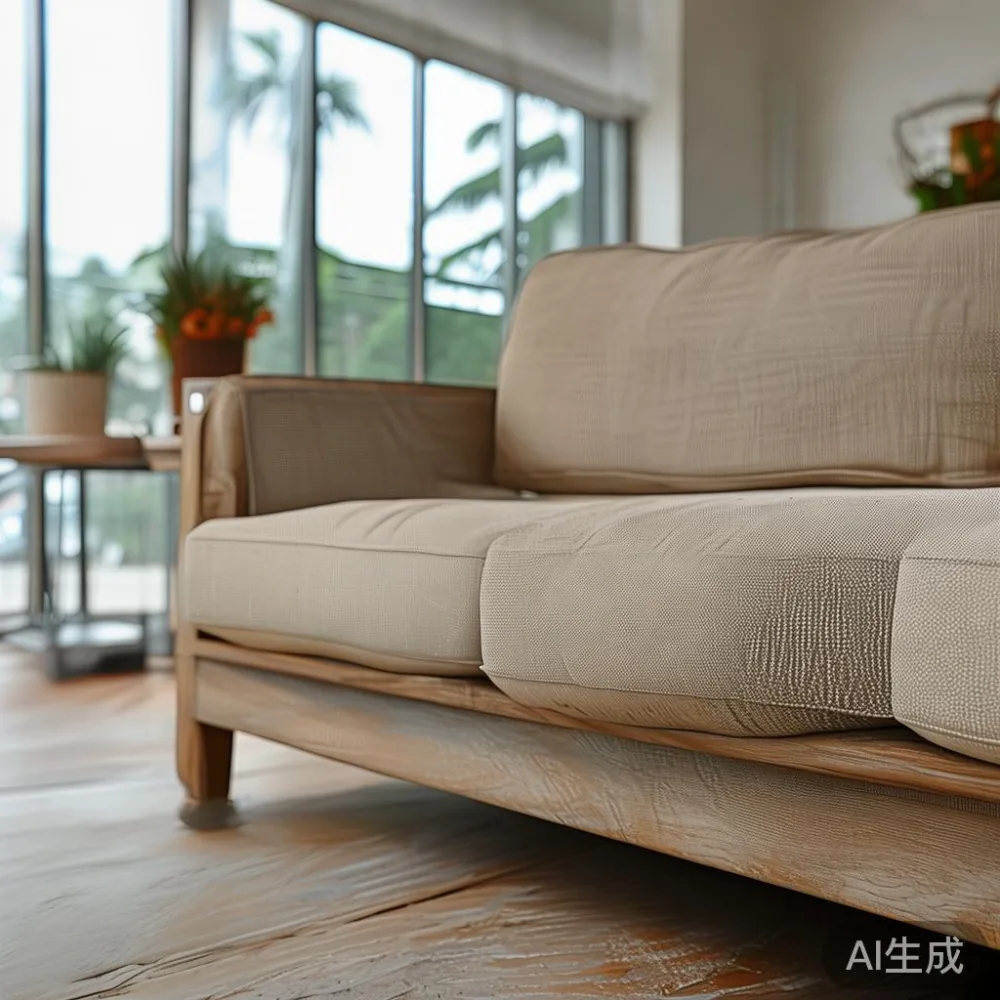
- Frame material: Solid wood sofa frames using rubberwood, beech, ash, or oak are the baseline of any premium build. Plywood or MDF frames can be acceptable for non-load-bearing panels but should never form the primary seat structure. Ask whether the frame is kiln-dried; unseasoned timber warps within 18-24 months in Singapore's humidity, which sits at 70-85% RH year-round.
- Joinery: Mortise-and-tenon joints, corner blocks, and dowel reinforcement signal serious construction. Staples and glue-only construction signal disposable furniture.
- Suspension: Sinuous S-springs are industry standard and acceptable for most users. Eight-way hand-tied springs cost more but deliver superior longevity. Webbing suspension is acceptable for occasional-use sofas only.
- Cushion fill: High-resilience foam wrapped in dacron or down offers the plush, sink-in feel suited to coastal aesthetics. Pure foam feels firm and hotel-lobby sterile. Pure down collapses within a year. A 60% foam, 40% down blend is the sweet spot for daily use.
- Fabric: For coastal style, look for linen, cotton-linen blends, or performance fabrics with a slubby weave. Avoid anything labelled as microfibre or faux linen if you want the relaxed, slightly rumpled drape coastal interiors depend on.
Reputable manufacturers publish this detail openly. MIDHILL, for instance, lists frame species, spring type, and foam density on every product page, alongside a 10-year structural warranty that covers the frame and spring system. When a brand is vague on these points, that is itself a signal worth reading.
The Colour and Texture of Coastal Style
Coastal style furniture lives or dies by colour accuracy, and screen representations are unreliable. Lighting conditions during photography, white balance on the photographer's camera, and the colour profile of your monitor can each shift a sandy beige into something closer to mustard or grey-mauve. Before purchasing, request a fabric swatch. Most serious coastal style suppliers will mail a 10 cm by 10 cm swatch for a nominal fee, often refundable against your final order. If a brand will not send a swatch, treat that as a red flag.
The classic coastal palette rests on four anchor tones. Soft whites in the RAL 9010 to RAL 9001 range provide the bright, sun-bleached base. Sandy beiges in the 080 70 10 to 060 60 20 NCS range give warmth without weight. Pale blues in the Dulux Ocean Swell or similar 10BB 73/039 family evoke water and sky. Gentle greys, particularly warm-tinted greys such as NCS S 2002-Y or Dulux Natural White, ground the palette without cooling it into starkness.
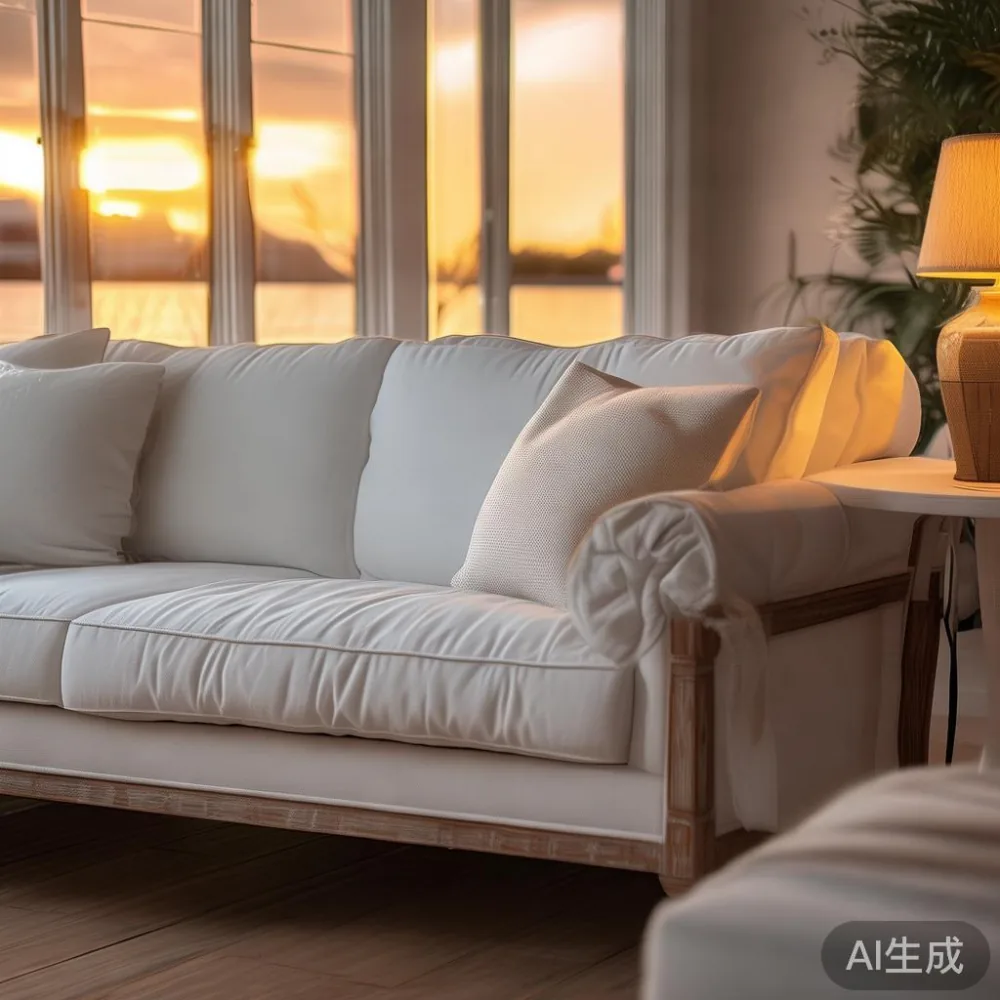
Texture is the second pillar. A coastal style sofa should read as inviting, slightly rumpled, and natural. Specific weave terms to look for in product descriptions include slub linen, brushed cotton, bouclé, washed linen, and chenille. Each of these produces a visibly irregular surface that catches light unevenly, creating the soft, lived-in quality that defines the look. A smooth, tightly woven polyester will photograph beautifully but will feel visually flat in your living room, which undermines the entire aesthetic.
Pair the sofa with complementary coastal pieces to complete the look. A solid wood bed frame in a whitewashed or natural oak finish extends the palette upward. A dining table in pale acacia or reclaimed teak anchors the adjacent space. A marble table with a pale veined top adds the watery, mineral accent coastal interiors crave. A wardrobe in a soft grey-green or warm white provides storage without visual weight. A nightstand in rattan or cane introduces the woven texture that ties the whole room together.
Is a side table worth the price?
Yes, a quality side table is worth every cent of its price tag when it is selected to match the sofa you have just verified frame, fabric, and finish for. A side table worth its price is one that solves a specific functional gap your new coastal style sofa creates, whether that gap is a missing surface for a cup of kopi, a reading lamp that the sofa's low back cannot accommodate, or a visual anchor that grounds the seating arrangement. Expect to pay SGD 280 to SGD 650 for a solid wood side table that genuinely complements a coastal style sofa, and consider anything below SGD 180 as a temporary placeholder rather than a long-term match.
The reason side tables command this price band is the same reason the sofa does: solid wood construction, joinery that holds, and a finish that does not peel after six months of Singapore humidity. A side table with engineered wood cores wrapped in thin veneer will check and lift within a year in an air-conditioned condo that sees daily use. A solid rubberwood or ash side table, finished with a multi-coat lacquer, will outlast the sofa beside it.
Consider scale when matching. A 220 cm sofa generally pairs with a side table of 45-55 cm in width and 50-60 cm in height. Tables lower than the sofa's seat height force you to reach down awkwardly. Tables that match seat height exactly read as a continuation of the sofa and look more considered. If your coastal style leans towards American light luxury, opt for side tables with subtle metal accents in brushed brass or matte black, slim profiles, and stone or marble tops. If it leans towards French light luxury, choose curved silhouettes, cabriole-inspired legs in pale wood, and a slightly distressed painted finish.
Understanding the Practicalities of Delivery, GST, and Returns
The hidden costs of buying furniture sight-unseen in Singapore are almost always logistical. Before you confirm any order, run through this checklist with the seller in writing.
- Delivery scope: Does the price include door-to-door delivery to your HDB unit, or only to your block's lift lobby? Stair-climb surcharges in Singapore typically range from SGD 60 to SGD 200 per floor after the ground level.
- Free shipping threshold: Many manufacturers including MIDHILL offer free shipping above a certain order value, commonly USD 350 or roughly SGD 470 at current exchange. Smaller orders may attract a SGD 40 to SGD 80 delivery fee.
- Delivery timeframe: For stocked coastal style pieces, expect 14-21 working days from order to doorstep. For made-to-order frames, expect 35-60 working days. Anything promising under 10 working days for a custom fabric is almost certainly an overseas drop-ship that will arrive damaged.
- 9% GST: From 1 January 2024, GST in Singapore sits at 9% and applies to all imported furniture regardless of order value. A SGD 3,000 sofa becomes SGD 3,270 with GST. Confirm whether the displayed price is GST-inclusive.
- Returns policy: Most direct-from-manufacturer brands offer a 14-day return window for non-custom pieces, often with the buyer paying return shipping of SGD 80 to SGD 200 depending on the piece. Read the fine print on custom fabric orders; many are non-returnable.
The phrase American return policy usa is sometimes used by international buyers researching whether a Singapore-friendly brand will accept returns back to its overseas warehouse. For a buyer in Singapore, this matters less than the local 14-day return window, but it is worth confirming whether the brand offers any post-purchase support such as lifetime refinishing for solid wood frames, a service that effectively extends the usable life of a coastal style sofa by decades.
The Post-Modern Light Luxury Finish: Reading Between the Marketing Lines
Coastal style has absorbed several overlapping design vocabularies over the past decade, and the term you see on a product page tells you a great deal about the proportions, finishes, and silhouettes to expect. American light luxury typically describes pieces with a hint of Hamptons formality: symmetrical profiles, slim rolled arms, tailored skirts or visible turned legs in warm oak, and fabrics in the cream-to-pale-grey spectrum. These pieces photograph clean, read as grown-up, and pair well with marble tables and brass accents.
French light luxury, by contrast, leans into curves, cabriole legs, and a slightly distressed or limed finish. Fabrics are often bouclé or washed linen in ivory or powder blue. Silhouettes feel softer, almost rococo-lite. A French light luxury coastal style sofa is unmistakable: it has a low back, scroll arms, and tapered legs in pale ash.
Post-modern light luxury is the most recent of the three and the hardest to define. It borrows the clean profiles of American light luxury but introduces unexpected contrasts: a chunky bouclé seat on a slim blackened steel base, a pale oak frame upholstered in saturated teal, or a rounded back paired with cylindrical metal feet. It suits compact Singapore condos particularly well, because the silhouettes stay light even when the fabrics are bold.
Whichever vocabulary your coastal style sofa speaks, the verification steps do not change. Measure your path, confirm the frame species and joinery, request a fabric swatch, calculate the landed cost including the 9% GST, and read the warranty terms in full. A 10-year structural warranty backed by a manufacturer with a verifiable track record is a strong signal. A lifetime refinishing commitment on solid wood sofa frames is an even stronger one. When MIDHILL puts both on the product page, the brand is effectively underwriting the sofa for the next two decades of your living room.
Why This Checklist Matters More in Singapore Than Anywhere Else
The reason this entire checklist exists is that returning a sofa in Singapore is materially harder than returning one in a ground-floor American home. The lift constraints, the stair-climb surcharges, the corridor turns, the humidity-driven warping risks, and the 9% GST that compounds the moment you re-order all combine to make a wrong purchase punishingly expensive. A four-figure mistake in a Tampines 4-room flat is not the same as a four-figure mistake in a Houston suburb with a ground-floor den and a wide garage door. The buffer between a good purchase and a regretted purchase is thinner here.
That is precisely why the verification steps above exist as a checklist rather than a vibe. Take the measurements. Confirm the materials. Request the swatch. Calculate the landed cost. Read the warranty. Phone the customer service line and ask one question that requires a human answer. If the brand picks up the phone, replies within 24 hours, and answers the question correctly, you have your answer about whether to proceed. If the brand only replies by automated chatbot and refuses to send a fabric swatch, walk away regardless of how compelling the photographs look.
A coastal style sofa is one of the larger single purchases most Singaporean households will make for the living room. Getting it right transforms the space. Getting it wrong means living with a SGD 3,000 mistake for the next decade. The checklist above exists so that, even when you cannot sit on the sofa before you buy it, you can still buy it with confidence.