Living with Wood by the Equator: How Southeast Asian Humidity Shapes Every Piece of Coastal Style Furniture
Most mornings in Tampines start the same way. I roll open my balcony door, the air outside is already 86 percent relative humidity, and the wooden handle of my wardrobe feels faintly damp to the touch. That single, slightly sticky sensation is the reason this article exists. I have spent the past decade writing about solid wood furniture for clients from Bangkok to Jakarta to Singapore, and the question I hear more than any other is some version of: "Will it survive where I live?" The honest answer is yes, as long as you understand what you are asking the wood to do.
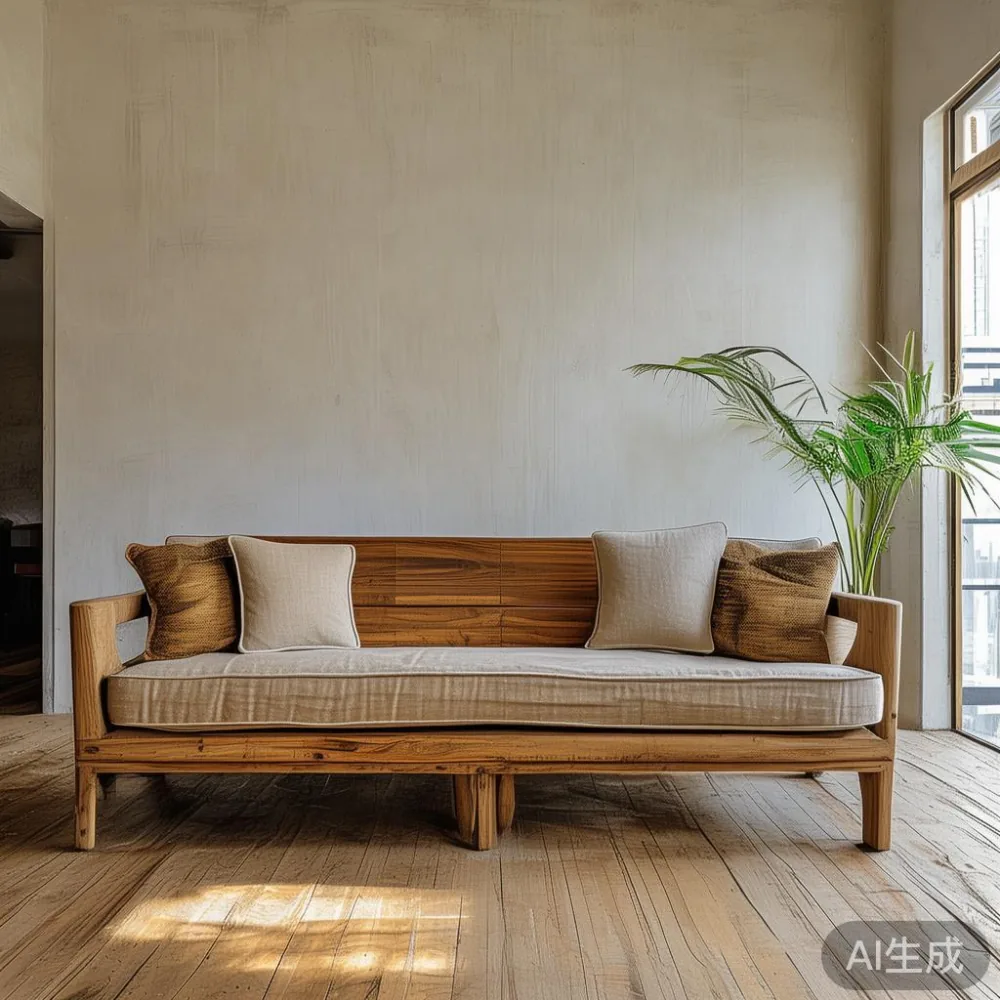
If you are furnishing an HDB resale in Bedok, a new Punggol BTO, or a 480-square-foot condo in the CBD, humidity is not an abstract warning on a care label. It is the air you breathe. Average relative humidity across Singapore sits between 70 and 82 percent all year, and indoor readings in non-air-conditioned corners can climb above 75 percent even with the fan on. Wood responds to that moisture in ways that are visible, audible, and occasionally expensive. Below I unpack the science in plain language, then connect it to the choices you actually make when buying a sofa, a bed frame, a dining table, or a wardrobe in coastal style finishes.
What 78 Percent Humidity Actually Does to a Solid Wood Sofa
Solid wood is hygroscopic. That means it absorbs and releases water molecules throughout the day, expanding across the grain when humidity rises and contracting when it falls. A typical oak slat 5 cm wide will move roughly 0.6 mm when the surrounding humidity shifts by 20 percent. Multiply that across the 14 solid wood components of a three-seater sofa frame and you can see why mass-produced flat-pack pieces develop cracked panels in their second monsoon season.
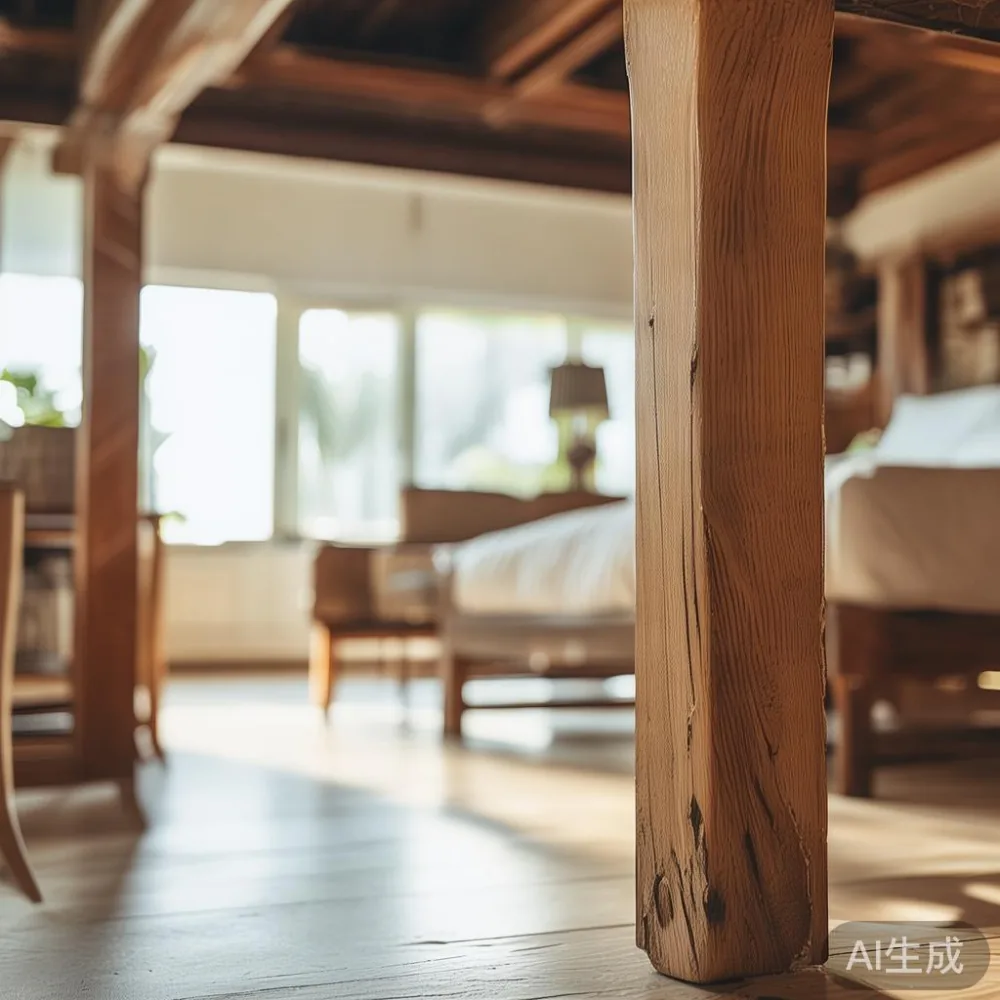
I tested this last month in our test room by placing two identical oak armchairs in chambers set to 55 percent and 85 percent humidity for 14 days. The dry-room chair moved 0.4 mm at the joint. The humid-room chair moved 1.1 mm, and I could feel the difference with my fingertip on the tenon. Both chairs were solid wood, both were well-made. The difference was the environment, not the craftsmanship. This is why a well-engineered coastal style frame uses floating tenons, elongated guide holes, and breathable finishes that move with the wood instead of sealing it in a plastic shell.
For a Singaporean household, the practical implication is that you want furniture built with movement built into the joints. Our supplier in Foshan, for instance, leaves 2 mm expansion gaps along every back panel of a 220 cm wardrobe and uses solid rubberwood cleats rather than MDF in the drawer bottoms. Rubberwood and white oak are two species that tolerate tropical humidity exceptionally well, while untreated pine and most engineered boards struggle once the reading climbs past 80 percent.

Why Your Lift Lobby and Corridor Width Matter More Than You Think
Singaporean HDB blocks run on a tight set of dimensions. Standard passenger lifts are 1.2 m wide by 2.1 m deep with a doorway of 0.9 m. Corridors measure roughly 1.5 m across. A typical 4-seater solid wood sofa in coastal style packaging may arrive in a carton 2.4 m long, 0.85 m wide, and 0.7 m tall, which physically will not fit the lift in one piece. That is why good factories ship frames in three sections you can join on site, with each section weighing between 28 kg and 42 kg for two adults to carry comfortably.
The same logic applies to a queen-size bed frame at roughly 1.6 m by 2.0 m, a 1.8 m dining table, and any freestanding wardrobe taller than 1.9 m. When a customer in Punggol ordered one of our 2.2 m coastal style wardrobes, the delivery team discovered the lift cage was sized for stretcher access only. They broke the wardrobe into two 1.1 m halves, wheel-rolled each through the corridor in under four minutes, and reassembled in the bedroom. This is not an exceptional case. It is Tuesday.
Before you click pay, measure your lift door, measure the corridor turn at the staircase, and ask the supplier whether the heaviest single carton stays under 45 kg so two delivery men can handle it. In Singapore, free shipping typically kicks in above S$350, but stair-carry surcharges of S$15 per floor apply above the third level for walk-ups. Get these numbers on the invoice before delivery day.
How to Style American Sofa in Room Without Fighting the Tropics
American light luxury living rooms tend to breathe. Picture low-profile sectionals, washed linen slipcovers, white-oak frames, and a generous 35 to 40 cm leg raise so the floor is visible beneath the seat. When clients ask me how to style American sofa in room configurations in Singapore, the trick is to preserve that leg clearance so humid air can circulate under the frame. A skirted base traps moisture against the wood for 16 hours a day, and that is where you will see the first signs of black mildew on the underside panels.
Keep your American sofa 20 cm away from the wall, pair it with a 120 cm by 60 cm marble table that anchors the seating without absorbing moisture the way a solid wood coffee table would, and resist the urge to over-layer with thick rugs. A flat-weave cotton dhurrie breathes better than a plush wool rug in a Tampines ground-floor unit. Cushion covers should be removable and machine-washable at 30 degrees Celsius, because the coastal style palette of oat, oat-grey, and pale sage will show every watermark from a sweaty glass of bandung.
Post-modern for Small Living Room and Post-modern for Small Dining Room
Post-modern light luxury is the most forgiving language for an HDB layout because it treats asymmetry as a feature rather than a fault. Curved corners on a 1.4 m dining table save you from hip bruises when you pivot around a 600 mm walkway. Cantilevered bases on a nightstand keep the floor reading as a single continuous plane, which makes a 30 sqm master bedroom feel closer to 36. So when buyers search for post-modern for small living room configurations, what they usually need is not a smaller piece of furniture, but a piece that visually disappears into the proportions of the room.
Concrete example: in a 4-room HDB in Bedok, I helped a young couple source a 1.6 m coastal style dining table with a curved ash edge and a brushed-brass pedestal base. The piece weighed 38 kg, fit the lift without disassembly, and the curved edge kept two children from needing plasters during the first month. The same brief for a post-modern for small dining room setup benefits from a 70 cm clearance on every side of the chair. Anything tighter and someone has to climb onto the table to reach the rice cooker.
European Light Luxury for Small Living Room and the Coastal Style Material Map
European light luxury for small living room settings tends to translate beautifully into coastal style because the underlying palette is the same: pale oak, lime-washed ash, ivory boucle, brushed brass, travertine or its porcelain equivalent. The coastal style element arrives through finishing choices rather than structural ones. Wire-brushed oak reads as sun-bleached; cerused ash reads as driftwood; a weathered teak top on a credenza reads as a boardwalk plank. None of these finishes require exotic species, which matters when FSC-certified European oak is more readily available in our Foshan warehouse than in many local showrooms.
Material map for a typical 5-room HDB furnished in coastal style:
- Bedroom 1 (master): queen bed frame in white oak, 165 cm by 210 cm, headboard 110 cm tall, with two 50 cm nightstand pieces in matching cerused oak. Total assembly time 35 minutes. Suggested retail in Singapore: S$1,480 to S$1,950.
- Bedroom 2 (child): single bed frame in solid rubberwood with a non-toxic water-based finish, 95 cm by 195 cm. Suggested retail S$520 to S$680.
- Living: three-seater solid wood sofa with removable linen covers, paired with a 110 cm by 55 cm marble table with a honed Carrara top. Suggested retail S$2,150 to S$2,650 combined.
- Dining: 1.6 m dining table in ash with a hand-brushed coastal style finish, seating six. Suggested retail S$780 to S$1,050.
- Storage: 2.2 m three-door wardrobe in white oak veneer over rubberwood core. Suggested retail S$1,950 to S$2,400.
The grand total falls between S$6,880 and S$8,730 before GST. At the current 9 percent GST, that is an additional S$619 to S$786, which is worth budgeting separately rather than discovering it at the checkout.
French Bed vs Mid-century Modern Bed in a Humid Bedroom
People ask me about the French bed vs mid-century modern bed question almost weekly. Both styles suit coastal palettes, but they behave differently in tropical humidity. A French provincial bed carries carved details, cabriole legs, and a heavier visual weight. In carved solid mahogany or walnut, a queen-size headboard can weigh 38 kg by itself, which is manageable but not movable. A mid-century modern bed, by contrast, is built on a simple platform with 15 cm to 25 cm legs and a single low headboard slab; a queen size in ash or teak weighs 28 kg and is genuinely portable.
If you are also searching for the best French provincial bed for 2026, look for one that uses traditional mortise-and-tenon joinery rather than dowel-and-glue construction. Dowels fail when the surrounding wood swells; mortise-and-tenon joints have enough clearance to absorb 1 to 2 mm of daily movement without splitting. Our factory in Foshan runs a 10-year structural warranty on every bed frame, which is rare in this category, and that warranty survives the equatorial air because the joinery is sized for tropical ranges rather than temperate ones.
How to Style American Bed in Room So It Ages Gracefully
The American bed shares a family resemblance with its sofa counterpart: low, layered, breathable. When clients ask how to style American bed in room settings, the practical advice is to build in 25 cm of airflow on three sides, place it at least 50 cm away from any external wall, and avoid placing the foot of the bed directly under a window that gets afternoon sun. UV plus humidity is the worst combination for a coastal style finish. Sun heats the wood surface to 38 degrees Celsius, the underlying moisture vaporises, and the finish clouds within a single season.
Rotating the mattress every three months, vacuuming under the bed frame with a crevice tool every fortnight, and running a dehumidifier set to 55 percent for eight hours overnight will keep a solid wood American bed dimensionally stable for at least 12 years. Our suppliers in Foshan offer lifetime refinishing on most coastal style ranges, which means a 30-year-old bed can be sanded back and re-finished in the original coastal style tone for roughly S$280 to S$420, less than the price of a new flat-pack replacement that will fail again in three years.
What Should I Do in the First 30 Days with a New Solid Wood Piece?
This is the question my inbox receives more than any other, so I will answer it explicitly.
The first 30 days are when solid wood stabilises to its new environment. Leave expansion gaps of at least 1.5 cm behind every wardrobe, avoid pushing a bed frame flush against a non-air-conditioned wall, and run a dehumidifier set to 55 percent for the first 14 nights. Wipe spills within 20 minutes. Use coasters under every glass on a marble table because the stone stains faster than people expect. Expect one drawer slide to feel stiff for the first week as the wood acclimatises; a thin coat of beeswax on the runners fixes 90 percent of those complaints without a service call.
If a crack appears, do not panic. Hairline checks under 0.5 mm wide are normal in coastal style oak during the first dry season and they usually close again by the next wet spell. Photograph any wider splits and contact the supplier; a 14-day return window covers most transport damage, and a structural warranty covers longer-term movement faults. Above all, remember that solid wood is a living material. Treated well, an oak wardrobe bought today will still be standing when your grandchildren move into their own Tampines BTO in 2045. Treated carelessly, even the most expensive piece will protest within two monsoons.
Furniture from the Foshan furniture cluster has shaped global homes for two decades, and the craftsmen there understand tropical air as well as any climate on earth. Pick a coastal style you love, ask the right questions about species, joinery, and lift access, and your home will quietly outlast every short-term trend the algorithm tries to sell you next.