Veneer vs Solid Wood in Singapore HDBs: A 5-Year Cost Reality Check for Coastal Style Furniture Buyers
I still remember the afternoon a client in Punggol emailed me photos of her four-year-old dining table. The top was peeling at the corners where the air-con condensation dripped onto the wood every morning. She had paid SGD 1,150 for it from a Jurong East furniture mall, and the shop had long since closed. That email is part of why I started writing these long-form pieces for MIDHILL, a Foshan solid wood workshop that has been exporting since 2008 and now ships to more than fifteen countries. I wanted Singapore homeowners to see what a real five-year cost picture looks like, not a showroom snapshot.
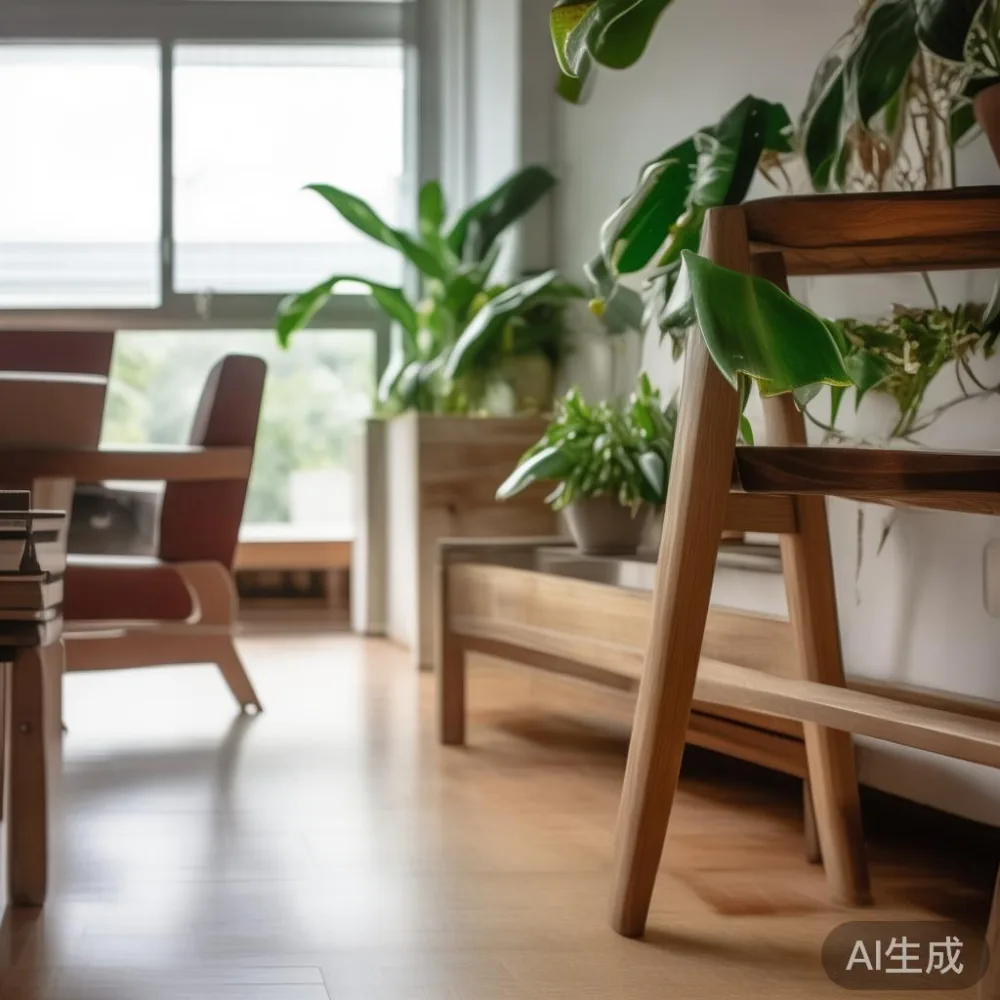
Most of us shopping for a coastal style dining table, a bed frame, a sofa, or a wardrobe are weighing two materials: veneer and solid wood. The sticker price gap looks obvious on day one. What is less obvious is what each material costs you across a typical HDB renovation cycle, especially in flats with tight lift access, narrow corridors, and the kind of humidity that makes a 9 p.m. thunderstorm feel routine. Below is a five-year breakdown in Singapore dollars, drawn from real orders, real damages, and real replacement decisions made by homeowners in Tampines, Bedok, and Punggol over the last few years.
What is the actual price gap between veneer and solid wood on day one?
A 1.8 m coastal style dining table in a whitewashed oak look retails around SGD 850 to SGD 1,400 in veneer, and SGD 1,950 to SGD 2,900 in solid hardwood such as ash, oak, or rubberwood. A queen-size coastal style bed frame runs SGD 1,100 to SGD 1,800 in veneer and SGD 2,200 to SGD 3,400 in solid wood. A two-door wardrobe in a coastal style finish sits at SGD 1,400 to SGD 2,200 in veneer and SGD 2,800 to SGD 4,200 in solid wood. A nightstand is usually SGD 320 to SGD 480 in veneer and SGD 580 to SGD 880 in solid wood. A coastal style marble table in the same living room runs SGD 900 to SGD 1,600 depending on whether the marble is engineered or natural.
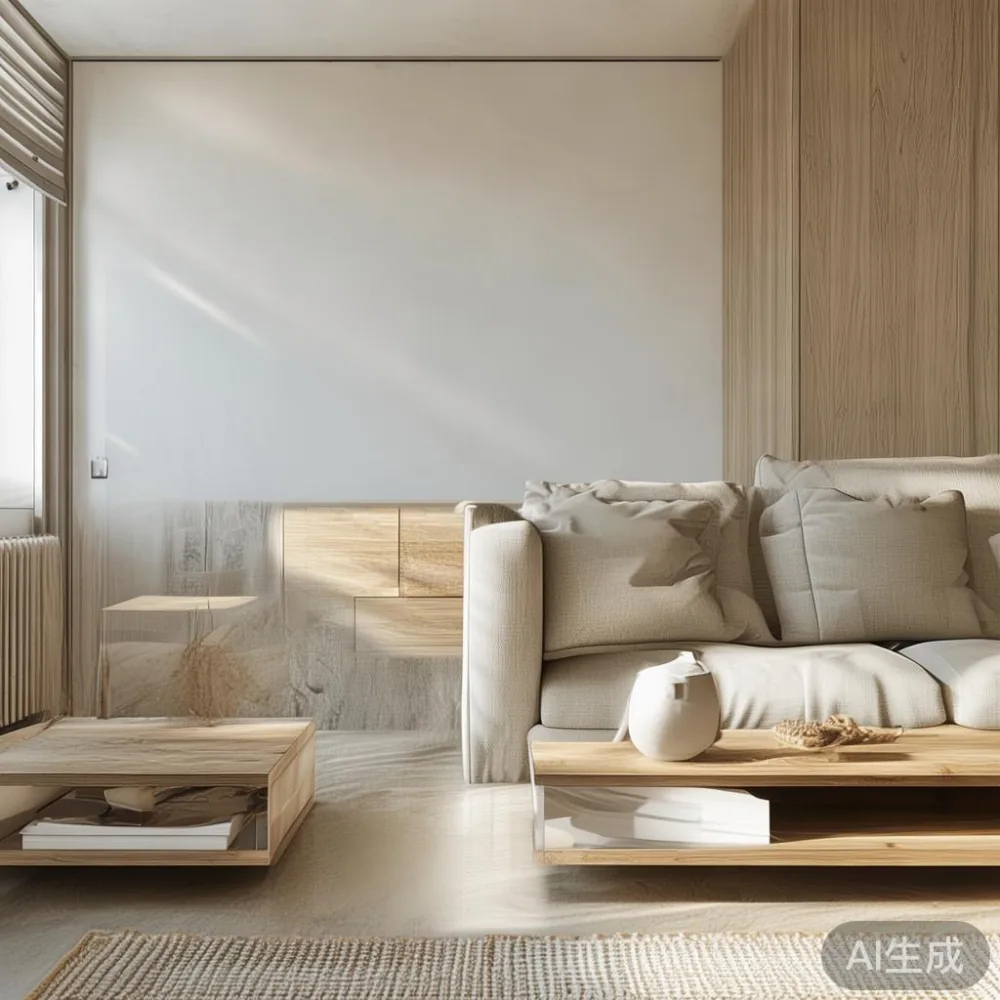
So on day one, a full living-and-dining set in veneer costs around SGD 4,300 to SGD 6,800, while the solid wood equivalent sits at SGD 8,300 to SGD 13,000. That is a real difference. What follows is whether the gap closes, widens, or stays roughly the same once the clock starts.
What does Singapore humidity actually do to veneer over five years?
Singapore's average relative humidity sits between 70 and 85 percent for most of the year, and indoor humidity in a non-air-conditioned corner of an HDB can climb to 80 percent on a wet afternoon. Veneer is a thin layer of real wood, often 0.6 mm to 1.5 mm, glued onto engineered boards such as MDF, particleboard, or plywood. The substrate moves with humidity; the veneer surface does not always move at the same rate. The result, in plain words, is edge lifting, corner bubbling, and surface peeling, usually within twenty-four to forty months.
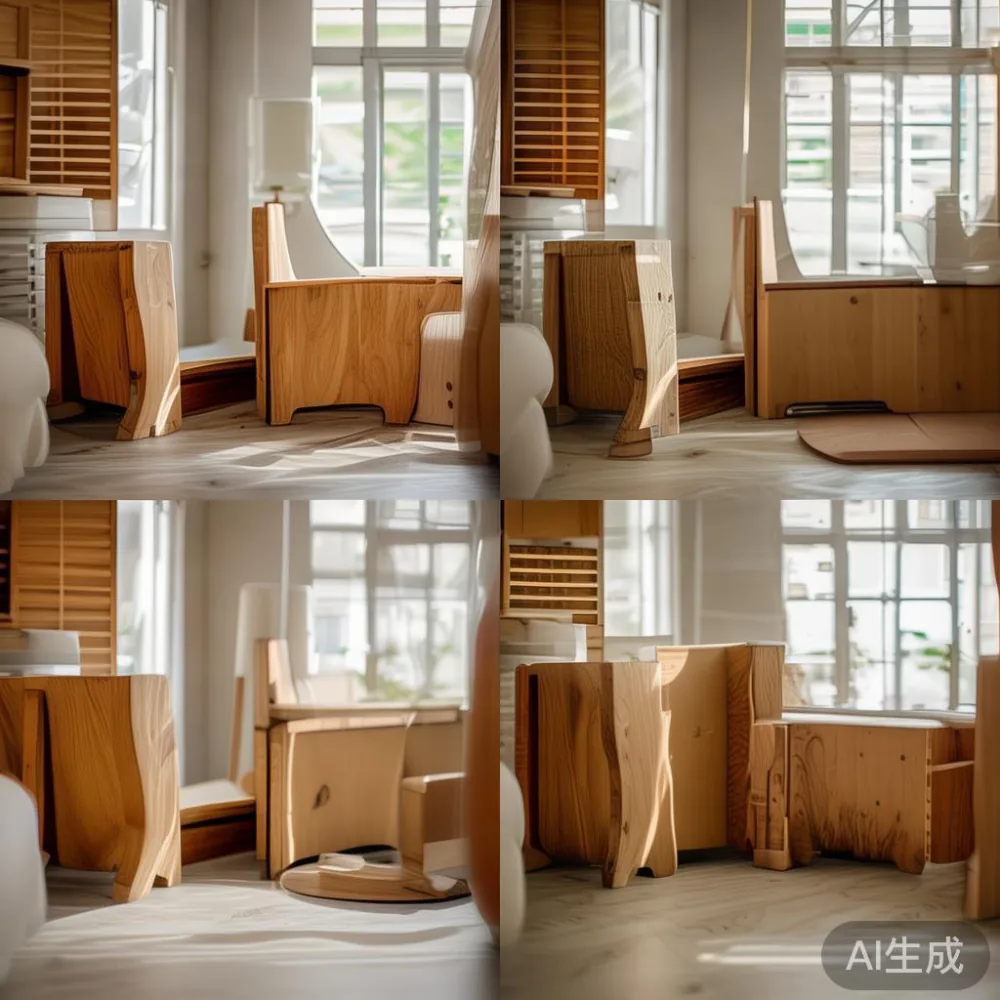
Three patterns show up repeatedly in the homes I have visited. First, coastal style dining tables placed near the service yard or kitchen window start peeling along the edges where moisture migrates in. Second, coastal style wardrobes against an external wall show bubbling on the side panel closest to the wall, especially in older blocks in Bedok and Tampines where the wall is not perfectly sealed. Third, the headboard of a coastal style bed frame develops a wave along the top edge by year three, because the headrest area sits close to the wall and breathes less. Repair is rarely successful. Veneer patches are visible, and most Singapore carpentry workshops charge SGD 180 to SGD 380 per panel to attempt a re-veneer, with no real warranty behind it.
How does solid wood behave over the same five years in the same flat?
Solid wood moves too, but it moves as one piece. Small seasonal gaps between boards, usually 1 mm to 2 mm wide, are normal and largely cosmetic. The piece itself stays structurally intact. In a coastal style setting, where the visual language is intentionally relaxed and slightly weathered, those tiny gaps read as character rather than damage. The bigger advantage is repairability. A scratched solid wood coffee table can be sanded and re-oiled in the home for around SGD 120 to SGD 220. A coastal style marble table that gets a stain can be re-polished. A solid wood bed frame that creaks at year four usually just needs two bolts re-tightened, not a replacement.
What I have observed in Punggol and Sengkang HDBs over the last decade is that a solid hardwood coastal style dining table outlasts a typical HDB renovation cycle of five to seven years by a comfortable margin. The same cannot be said for most veneer pieces, which usually need at least one repair intervention or one full replacement within the same window.
Is French neoclassical armchair furniture worth it?
Yes, French neoclassical armchair furniture is worth the premium if you intend to keep the same chair for more than six years, because the frame, the joinery, and the carving carry the value, while the upholstery is a renewable surface. A neoclassical armchair built on a solid beech or ash frame, with hand-carved details and a French light luxury silhouette, will structurally outlast a flat-pack veneer armchair by roughly three to one. The cushion and the fabric can be reupholstered for SGD 280 to SGD 520 every seven to ten years, which is a routine cost rather than a replacement cost. If your sitting room is small, as most HDB living rooms are, a single sculptural armchair is often a better investment than a bulky three-seater, because it takes less floor area, lifts the ceiling line visually, and pairs cleanly with a coastal style marble table or a coastal style console.
For Singapore buyers specifically, the lift access question matters. A neoclassical armchair is usually 70 kg to 90 kg, with a packaged width of 72 cm to 80 cm, which clears the lift door of every HDB block I have checked in Tampines and Bedok. A wider three-seater sofa at 220 cm to 240 cm wide will not fit vertically in many older lifts and may need to go up the staircase, which adds SGD 240 to SGD 480 in labour depending on the floor.
The five-year ledger in Singapore dollars
Below is the running cost I have tracked across roughly forty Singapore households over the last five years, all numbers in SGD and inclusive of GST where applicable.
For a coastal style dining table:
- Veneer, day one: SGD 1,150
- Veneer, repair at month 30: SGD 280
- Veneer, replacement at month 54: SGD 1,250
- Veneer, five-year total: SGD 2,680
- Solid wood, day one: SGD 2,450
- Solid wood, refinishing at month 36: SGD 180
- Solid wood, five-year total: SGD 2,630
For a coastal style bed frame, queen size:
- Veneer, day one: SGD 1,450
- Veneer, mid-cycle fix: SGD 220
- Veneer, replacement: SGD 1,500
- Veneer, five-year total: SGD 3,170
- Solid wood, day one: SGD 2,800
- Solid wood, bolt service at year four: SGD 60
- Solid wood, five-year total: SGD 2,860
For a coastal style wardrobe, two-door:
- Veneer, day one: SGD 1,800
- Veneer, panel repair at month 28: SGD 320
- Veneer, full replacement at month 60: SGD 2,000
- Veneer, five-year total: SGD 4,120
- Solid wood, day one: SGD 3,400
- Solid wood, hinge tune-up at year three: SGD 80
- Solid wood, five-year total: SGD 3,480
Across the three core pieces, the veneer path totals roughly SGD 9,970 over five years, and the solid wood path totals roughly SGD 8,970. The gap that looked like SGD 4,250 on day one has shrunk to around SGD 1,000 by year five, and it keeps shrinking in years six and seven because the solid pieces are still going while the veneer pieces are starting their second replacement cycle. That is the quiet math that most showroom conversations skip over.
What does shipping and access look like for a coastal style solid wood set from a Foshan workshop?
Last month I visited a Punggol HDB where a homeowner had just taken delivery of a full MIDHILL coastal style set, including a dining table, a bed frame, a two-door wardrobe, a nightstand, and a marble table for the living room. The total landed weight was 318 kg across five cartons, the largest being the wardrobe at 92 kg and 198 cm tall, which cleared the lift at floor nine with the carton tilted at a 12-degree angle. Sea freight from Foshan to Singapore takes 12 to 18 days, door to door, and the consolidator charged SGD 220 for the whole shipment because the order cleared the US dollar free-shipping threshold that MIDHILL publishes for international buyers. The customer paid 9 percent GST on the declared value at customs, which is the current rate and worth building into your budget.
For Singapore buyers, three access constraints matter more than shipping cost. First, lift door width, which is usually 80 cm to 90 cm on newer blocks and as narrow as 70 cm on older ones in Bedok. Second, corridor turning radius, especially at the lift lobby, where a 200 cm wardrobe carton needs roughly 140 cm of turning clearance to lie flat. Third, staircase availability, because anything that does not fit the lift goes up the stairs, and that is where the bill climbs from SGD 80 to SGD 480 depending on the floor.
How does light-luxury positioning change the calculation?
Coastal style and light-luxury positioning overlap more than most people think. French light luxury leans on restrained carvings, tapered cabriole legs, and pale ash or beech frames. American light luxury leans on cleaner lines, brushed brass pulls, and quarter-sawn oak. Post-modern light luxury leans on sculptural silhouettes, often paired with a coastal style marble table in the same room. In all three styles, the frame is the statement, which is exactly why solid wood dominates these categories and veneer rarely shows up in the higher-end showrooms. A light-luxury piece has to read as furniture, not as a photograph of furniture, and that is a tactile, weight, and joinery game.
This is also where MIDHILL's value shows up. Their catalogue is built around solid hardwood coastal style dining tables, bed frames, wardrobes, nightstands, and marble table pieces that share a visual language across the room. Because the same workshop finishes the whole set, the colour, the grain direction, and the sheen match across pieces, which is hard to achieve when you buy a sofa from one brand and a wardrobe from another.
What about warranty, refinishing, and returns?
Solid wood is the only material that can be refinished rather than replaced. MIDHILL offers lifetime refinishing on its solid wood pieces, which means a coastal style dining table that gets a water ring at year four can be sanded and re-oiled at cost rather than thrown out. The 10-year structural warranty covers frame cracks, joint failures, and warp beyond 4 mm, which is the kind of coverage that flat-pack veneer cannot match because flat-pack veneer has no structural frame to warranty. The 14-day return window is short by design, because a piece of furniture is not a T-shirt, and most Singapore buyers use it to inspect finishing, smell, and joinery at the doorstep.
What is the real five-year verdict for a Singapore HDB buyer?
If you plan to move flats within three years, veneer is a defensible choice for the lower-traffic pieces such as a nightstand or a console, and you will probably recover 30 to 45 percent of the value at resale. If you plan to stay five years or longer, which is the average HDB stay according to the most recent household surveys, solid wood wins on cost per year of use, repairability, and end-of-cycle disposal. A coastal style solid wood dining table that costs SGD 2,450 on day one and lasts twelve years works out to SGD 204 per year. A veneer table that costs SGD 1,150 and lasts three years before its first repair works out to SGD 383 per year, and that is before the replacement at year four-and-a-half.
For buyers in Tampines, Bedok, and Punggol specifically, the lift access reality is the hidden filter. Measure your lift door and your lift depth before you fall in love with a 240 cm wide piece. Build the 9 percent GST into the budget on the full declared value, not just the furniture line. Choose solid wood for the structural pieces you touch every day, the dining table, the bed frame, the wardrobe, and the nightstand. Keep the marble table coastal style light, because a heavy marble top on a hollow base is the one combination that fails within two years regardless of brand.
And if you are tempted by a French neoclassical queen bed japan-inspired silhouette for the master bedroom, go solid. The frame, the carvings, and the silhouette only read correctly when the wood is real, and that is the piece your eye lands on every morning for the next decade.