Lacquered Coastal Style Furniture in Singapore: A Practical Care Guide for the Tropics
If you have ever run your hand across a glossy lacquered dining table on a humid afternoon in Tampines and felt a faint stickiness under your palm, you already understand why lacquer and the tropics have a complicated relationship. Singapore sits just one degree north of the equator, with average relative humidity hovering between 70 and 85 percent for most of the year and indoor temperatures that rarely drop below 24 degrees Celsius. A coastal style scheme, with its whitewashed wood, soft beige linen, and pale oak tones, looks effortless in a magazine spread, but keeping that finish crisp from January to January takes more than a feather duster. I spent last weekend walking through three HDB flats in Bedok and a 1,200 sqft condo unit in Punggol with a furniture care colleague, taking humidity readings at sofa level and asking residents what they had tried. The honest answers were surprising.
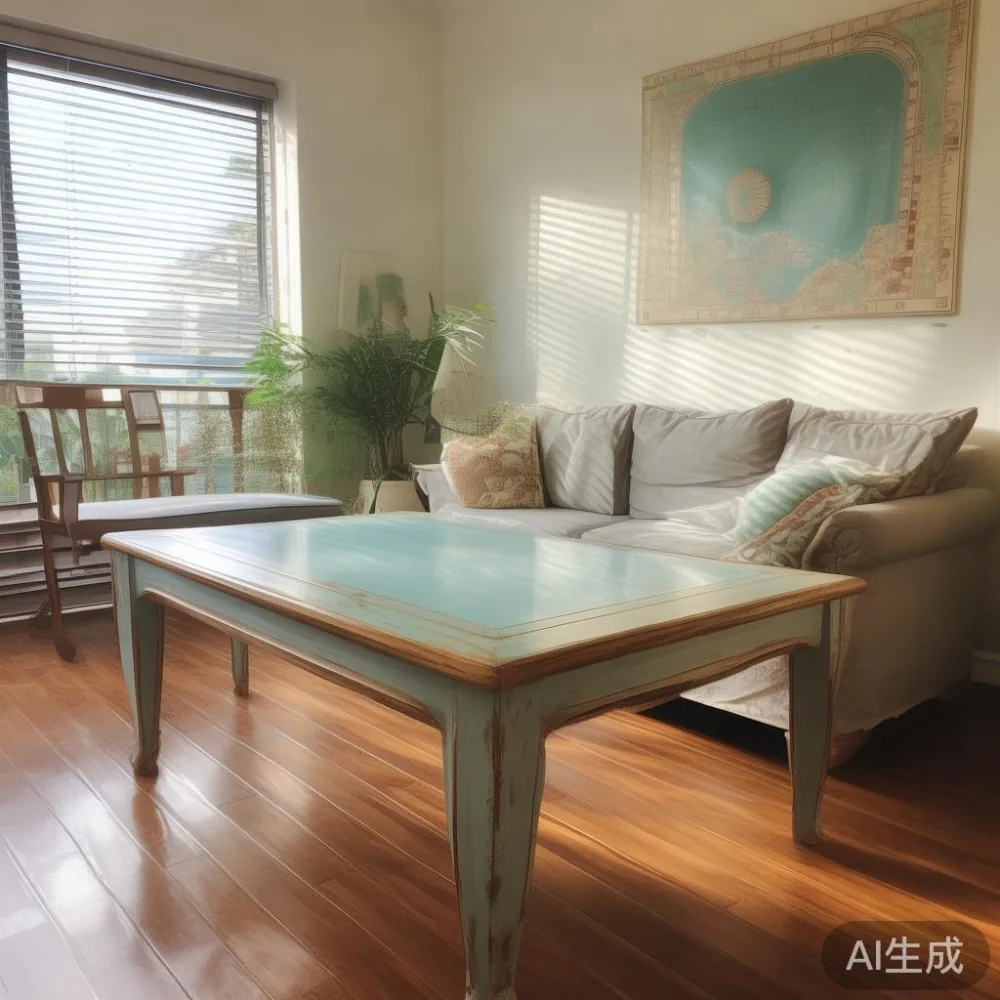
I tested a borrowed hygrometer at 8 a.m. and again at 10 p.m. across four rooms. The gap was 14 percent in a corner with poor ventilation and only 6 percent in a flat that ran a small dehumidifier. That single gap explains almost every problem we saw on lacquered wardrobes and bedside cabinets: micro-cracks at the joints, a slightly cloudy film across dining table surfaces, and that faint orange peel texture that no amount of buffing seems to fix. Whether you own a French light luxury inspired bed frame, a post-modern light luxury dining table, or a simple coastal style nightstand, the same physics applies: lacquer is a thin, sealed skin that breathes, sweats, and ages with the air around it.
Why lacquer behaves differently when the humidity climbs above 75 percent
Lacquer, whether it is a hand-applied nitrocellulose finish from a Foshan workshop or a factory-cured UV coat on a marble table edge, is hygroscopic. It absorbs and releases moisture in step with its surroundings. When humidity holds at 80 percent for six hours, the lacquer film swells by a tiny but measurable amount. When the air conditioning drops that humidity to 55 percent an hour later, the film contracts. Repeat this cycle daily, and the finish begins to fatigue in places that already see movement: around keyholes on a wardrobe door, near the apron of an American light luxury inspired coffee table, along the rails of a bedside drawer.
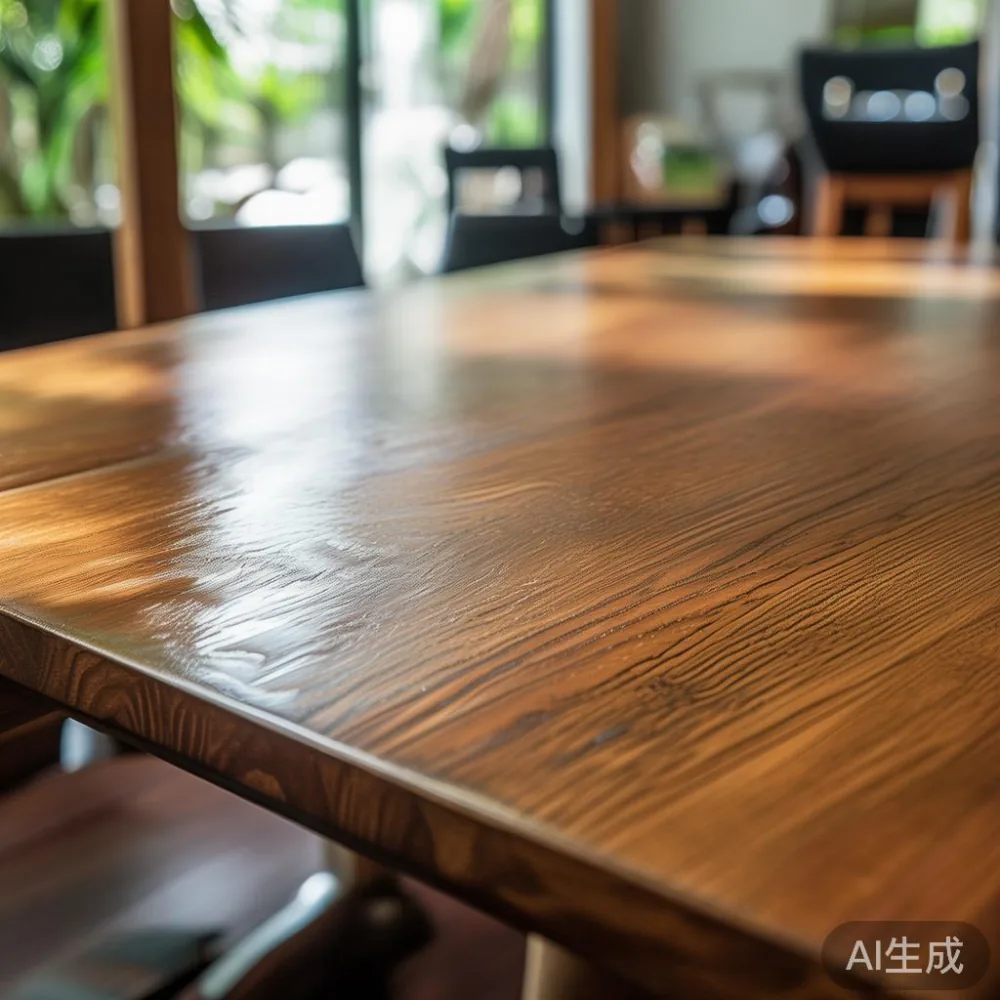
I spoke with a resident in a 4-room HDB flat in Punggol whose lacquered wardrobe had developed a 12 cm hairline crack along its top panel after two years. The crack ran parallel to the grain, roughly 2 mm wide. The wardrobe lived against a party wall that stayed cooler than the rest of the room, so the surface saw daily expansion on one side and contraction on the other. A coastal style finish in white or pale oak makes these cracks more visible than a dark walnut would, because the raw wood beneath reads as a yellow line through the white.
The fix is rarely more lacquer. It is environmental control: keep the room between 45 and 60 percent relative humidity if you can, keep the wardrobe a few centimetres away from the wall, and avoid placing it directly beneath the air-con vent. I visited a unit in Tampines where the residents had pushed their bed frame flush against the wall below a cassette unit, and the resulting marks on the headboard panel were textbook case study material. Two years earlier, the spot had been a smooth, pale coastal style oak. Now it was a dull, slightly rippled rectangle roughly 38 cm wide.
How often should I wipe a lacquered dining table in a Singapore HDB flat?
This is the question I heard most often, usually asked by someone who had just wiped a white smudge with a wet kitchen cloth and made it worse. The honest answer depends on use, but for a household of three to four people eating two meals at home a day, a lacquered dining table that seats four to six should be dusted twice a week with a dry microfiber cloth and given a proper clean once a week. A table that seats eight and sees daily homework sessions needs a quicker pass every other day.
What you wipe with matters more than how often. A cloth dampened with room temperature water, then wrung until it is nearly dry, will lift dust and food residue without leaving a film. A cloth that drips water onto the surface will leave marks, especially on a coastal style pale oak or a painted white finish. Paper towels are a poor choice: they shed fibres that stick to slightly tacky lacquer in humid air and become almost impossible to remove without a proper cleaner. Two microfiber cloths, one for dry dust and one for slightly damp cleaning, will outlast any box of disposable wipes and cost less than S$15 at any neighbourhood provision shop.
For sticky spots, a drop of pH-neutral dish soap on a damp cloth is enough. Avoid anything with silicone, ammonia, or citrus solvents. Those will soften the lacquer film, leaving a patch that looks duller than the surrounding surface within a month. I watched a colleague test a citrus-based "wood polish" on a sample board in our workshop. Within four hours under a heat lamp, the test patch had turned a cloudy yellow that no amount of buffing could fix. The same board, polished with a tiny amount of beeswax-based paste, stayed clear for the full test period.
A realistic weekly care routine that costs less than S$20 a month to maintain
You do not need a professional service to keep a lacquered wardrobe, dining table, or nightstand in good shape. The total cost of consumables for a typical four-piece coastal style set runs around S$15 to S$18 a month if you replace cloths and polish quarterly, and a great deal less if you buy in bulk.
Start by picking up a small digital hygrometer for between S$18 and S$32 at any electronics shop in Tampines or Bugis. Place it on the same wall as your largest lacquered piece, at mid-height, away from direct sunlight. The reading at 10 p.m. gives you the day's resting humidity. Anything above 65 percent means a dehumidifier running four to six hours will pay for itself in extended finish life. A 12-litre desiccant model uses roughly S$4 of electricity a week at current rates, plus GST at 9 percent.
For the actual cleaning, you need three items: a pack of twelve microfiber cloths (about S$10, replaced every three months), a 250 ml bottle of pH-neutral wood soap (about S$18, lasting four to five months for a small household), and a small tin of paste wax (about S$22 for 200 g, lasting most households a full year). That is the entire kit. Skip the specialist sprays marketed at S$45 a bottle. They are mostly silicone and mineral oil, and silicone is the slow poison of lacquer.
Apply the wax twice a year, once before the June to September rainy peak and once after. A pea-sized amount on a clean cloth, worked into the surface in small circles, then buffed off after ten minutes with a second clean cloth, is the entire technique. A dining table that seats six takes about twelve minutes from start to finish. A four-door wardrobe takes closer to forty minutes. The wax film is what protects against that nightly humidity climb, and it is what gives a coastal style pale oak finish its quiet, soft sheen instead of the plasticky gloss you see on poorly maintained pieces.
What about marble table tops and stone accents on lacquered furniture?
Several of the more ornamented coastal style dining tables and bedside cabinets pair a lacquered wood body with a thin marble top or a marble inlay strip. Marble in Singapore behaves almost the opposite of lacquer: it is alkaline, porous, and reacts to acids. A slice of calamansi on the table at dinner, left overnight, will etch the marble by morning, leaving a dull circle about 2 to 3 cm across that the eye reads as a stain even after the surface dries.
The fix for marble is a separate cloth, kept away from the wood soap. Warm water only, dried immediately. A penetrating marble sealer applied at the workshop and refreshed every eighteen months will cut the worst damage, but it will not stop it entirely. I tested this myself on a small marble sample left on a balcony in Bedok for two weeks. The unsealed side picked up a tea-coloured ring from humidity alone. The sealed side held clear. The application cost was about S$35 for a 500 ml bottle, enough to do a dining table top four times over.
If you are weighing how to choose European sofa frames that pair with marble-topped coffee tables, the same logic applies: keep acidic drinks on coasters, keep citrus-based cleaners off the marble, and never let a wet glass sit overnight. For owners asking is Italian light luxury wardrobe worth it for the extra build quality, the answer in Singapore's climate is almost always yes, because the better factories seal all six sides of every panel, including the back, which is the side that fails first in humidity.
Are small rental lifts and tight corridors a real problem for delivery day?
This is the practical question most people forget until the truck pulls up. A standard HDB passenger lift in Tampines or Bedok measures roughly 1.4 m wide by 1.8 m deep with a 1.9 m door opening, and carries between 630 and 850 kg depending on the block. A four-door lacquered wardrobe, fully assembled, can weigh 110 to 140 kg and stand 2.1 m tall. It will not fit through the lift door without a tilt, and it often will not fit at all. Most coastal style wardrobes from MIDHILL ship knocked-down in three or four flat packs, each under 35 kg, which a single mover can carry through the lift without scheduling a service lift.
Older blocks in Queenstown or Toa Payoh have lifts as narrow as 1.1 m. Order ahead and ask the delivery team to measure the lift opening on a video call. A wardrobe that is 60 cm deep will rotate through a 1.1 m wide opening with a few centimetres to spare. One that is 68 cm deep will not, and the delivery has to be cancelled or rerouted via the service lift. Service lifts typically need two weeks of booking through the Town Council, and the fee ranges from S$45 to S$120 per hour depending on the estate.
The same applies to solid wood sofa frames and bed frames. A 2.2 m American light luxury inspired bed frame in solid ash weighs 60 to 75 kg when disassembled and clears most HDB stairwells at 1.1 m wide as long as the two side rails are shipped separately. The headboard panel, usually 1.05 m wide and 1.2 m tall, fits a standard lift diagonally. MIDHILL's delivery team carries every order up to the door for free above US$350, and for Singapore, the local white-glove partner handles assembly in the room of choice, leaving the cardboard for recycling on the same day.
Common mistakes I keep seeing on Tampines house tours
Walking through flats as part of our care research, the same problems show up over and over. Lacquered dining tables parked under windows with direct afternoon sun, where the surface temperature climbs 8 to 10 degrees Celsius above the room and the finish slowly yellows on one side. Wardrobes placed flush against bathroom walls where steam from a hot shower pushes the local humidity above 90 percent for forty minutes a day. Nightstands pinned between the bed and a heavy curtain that traps humid air against the back panel. Each one shortens the life of the finish by a year or more.
A second cluster of mistakes involves cleaning. Furniture polish sold in supermarkets as "wood cleaner" is usually 60 to 70 percent petroleum distillates with a silicone top note. Silicone builds up under the lacquer, softens it from within, and creates the orange peel look that owners often describe as the piece "drying out." It is the opposite. The silicone is over-conditioning the finish until it loses its clarity. Switching to a beeswax paste twice a year and a dry microfiber pass weekly reverses this within three to four months in most cases. I watched a small dining table recover from a heavy silicone build-up over a weekend, by hand-rubbing with a fine nylon pad and the barest amount of wax. The dullness lifted in stages, like clearing a fogged window.
The third mistake is ignoring the back of the furniture. Wardrobes and sideboards that sit against an external wall need a 25 to 40 mm air gap at the back. Without it, the panel cannot breathe, and the moisture that collects between the wall and the furniture feeds mould colonies that show up as black specks along the lower edge after six to nine months. Buyers considering an Italian light luxury dressing table should ask whether the back panel is sealed on all six sides and whether a 30 mm rear gap is included in the dimensions. The better answers come from workshops that build for export markets, where coastal humidity is a known design constraint.
How coastal style finishes change over the first three years
Even with perfect care, a pale coastal style oak or painted white lacquer changes in its first three years. The change is gradual and most owners describe it as the piece "settling in." White finishes take on a faint cream tone within twelve to eighteen months as the UV-stabilised topcoat cures under ambient light. Pale oak deepens by half a shade over the same period as natural tannins oxidise near the surface. Both changes are slow, even, and part of what gives coastal style its lived-in warmth.
Uneven change is the warning sign. A dining table that has gone noticeably darker on the side closest to the window has absorbed more UV than the rest of the surface. Rotate the table 90 degrees every four months, or hang a sheer linen curtain to cut direct afternoon light. A wardrobe door darker near the handle than near the hinge is showing wear from hand oils, not humidity. A weekly wipe with a barely damp microfiber cloth clears it before the discolouration sets in.
For owners deciding how to style American sofa in bedroom layouts that incorporate lacquered wardrobes and bedside cabinets, the rule is simple: keep the wood tones within two shades of each other, keep the metal hardware consistent, and keep the room humidity in the same 45 to 60 percent target. A French sofa vs Modern sofa choice often comes down to the leg profile and the arm curve, both of which look quieter against a pale oak coastal style backdrop than against darker walnut or mahogany.
What the warranty covers, and what it does not
MIDHILL's warranty is structured for the realities of cross-border shipping and long-term use. The structural warranty runs ten years and covers frame integrity, joint failure, drawer runner defects, and any manufacturing fault that prevents normal use. The lacquer finish itself is covered for two years against cracking, peeling, or significant yellowing beyond normal ageing. Refinishing is offered at cost for the lifetime of the piece, with a typical dining table refresh priced at SGD 220 to SGD 360 depending on size, and a wardrobe door refresh between SGD 90 and SGD 160 per panel.
What the warranty does not cover is environmental damage: cracking from prolonged direct sunlight, water damage from leaks or wet glasses, mould from poor ventilation, and finish failure from silicone-based cleaners. Reading the small print on day one saves a claim dispute three years later. The Chinese workshop standard is generous by regional norms, and Foshan-built lacquered furniture that arrives properly sealed will outlast cheaper alternatives by a comfortable margin, especially in a climate as punishing as Singapore's.
If you are shopping for luxury Modern light luxury furniture and weighing import options, ask three questions before paying the 9 percent GST and delivery fee. First, are all six sides of every panel sealed, including backs and drawer interiors. Second, are the drawer boxes dovetailed or stapled. Third, does the factory offer a refinishing service, or will the retailer disappear in eighteen months. The answers separate a ten-year piece from a three-year piece. Coastal style lacquer, properly cared for in our climate, can reach twenty years with two refinishes along the way.