Coastal Solid Wood: Inside the Pricing Dynamics
Solid wood furniture looks simple until a supplier sends you three quotations for the same dining table. One is SGD 1,290, another SGD 2,450, and the third asks you to choose between oak, walnut, ash, or a mixed-material frame. The visible design may be nearly identical, yet the price gap can reach SGD 1,160. For homeowners in Tampines, Bedok, and Punggol, that difference matters because an HDB flat has finite space, a fixed household budget, and a delivery corridor that cannot safely accept an oversized carton.
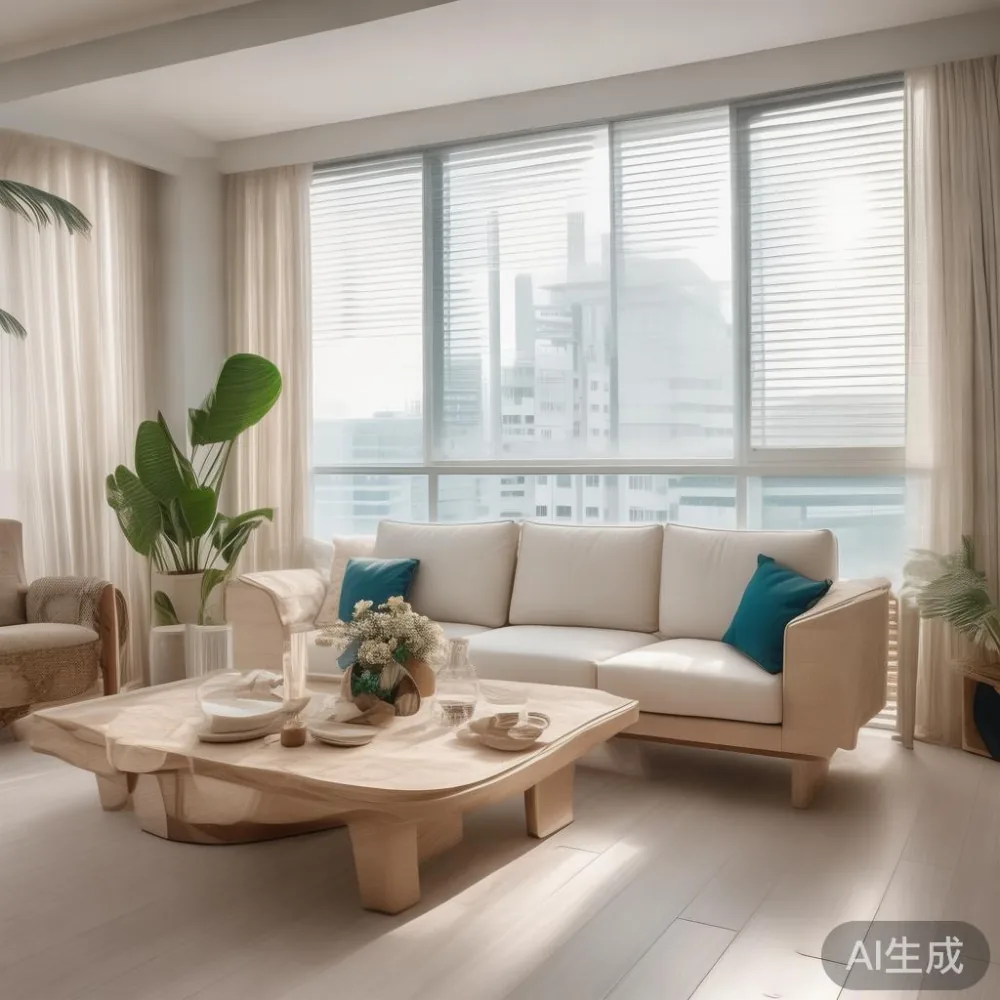
Price is not determined by a mysterious “luxury” label. It is driven by measurable factors: the species and grade of timber, whether every visible part is solid wood, the thickness and dimensions of the components, joinery, hardware, finish, design complexity, quality control, packaging, and delivery. Understanding these inputs helps you compare quotations on equal terms.
MIDHILL was established in 2008 and exports to more than 15 countries. Its approach is relevant here: a practical 10-year structural warranty and lifetime refinishing can affect the long-term cost of ownership, while free shipping on orders above US$350 and a 14-day return window reduce purchasing risk. Those policies do not make every piece inexpensive, but they show that price should be judged against the product and service included rather than by the smallest number alone.
Is a higher price caused by solid wood itself?
<Solid wood is one of the largest cost drivers, but “solid wood” is not one uniform material. It describes the construction of a component, not a single timber species, grade, or standard of cutting. A solid wood bed frame made from kiln-dried Asian hardwood may cost SGD 690, while a similar frame made from selected American white oak may cost SGD 1,590. A marble table may cost less than a solid wood dining table because the stone varies in thickness, vein pattern, and fabrication demand.
Timber is priced by species, moisture content, grade, dimensions, and yield. A 25 mm board is not interchangeable with a 40 mm board, and a wide laminated top uses more raw material than a narrow plank top. Select-grade timber with clearer figure reduces waste because fewer defects must be excluded. Lower-grade sections can still be strong and durable, but they may carry knots, sapwood, colour variation, or repaired areas.

Construction matters just as much. A drawer made from 12 mm solid wood with real dovetail joints requires different labour from one assembled from 9 mm panels and mechanical dowels. A cabinet carcass that begins as a rough box must be squared, joined, sanded, and finished; a good-looking mock-up cannot reveal whether tolerances will remain consistent after 14 days of transport.
Here, the product terms are less important than what they contain. A solid wood sofa may combine a kiln-dried hardwood frame, foam, webbing, fabric, and sprung cushions. A solid wood bed frame may have a slatted base, centre support legs, and a shaped headboard. A dining table may use solid timber for the top but engineered components for concealed supports. Ask for a bill of materials with thicknesses, timber species, and construction method rather than relying on a broad product name.
What does timber thickness and weight tell you about price?
Weight is a rough clue, not a quality certificate. A dining table with a 40 cm wide solid top can weigh 75 kg to 110 kg depending on timber and length. A bed frame may weigh 55 kg to 95 kg. These figures affect freight, handling, and installation, especially in Singapore HDB blocks with lift interiors of roughly 100 cm by 140 cm and corridors around 120 cm to 180 cm wide.
A 1,900 mm round dining table may be easier to manoeuvre than a 2,400 mm rectangular one, but the round version can use more timber around its perimeter. A 900 mm nightstand may be practical in a Bedok bedroom, yet a solid version weighing 22 kg needs a firm base and careful lifting. A 1,600 mm wardrobe may weigh 180 kg and require a two-person move. If its largest carton is 210 cm long, it will not turn a 90-degree corridor bend even if it fits the lift by a small margin.
Because Singapore buildings are designed around compact movement, access should be checked before ordering. Measure the lift door, lift car, landing, staircase, bedroom doorway, and the intended furniture position. Leave at least 10 cm of working clearance around large items. A corridor width of 120 cm may accept a 65 cm carton, while a 90 cm carton can still fail at a right-angle turn.
Heavier construction also influences service and delivery charges. One-piece tables reduce assembly but are difficult to carry. Knocked-down wardrobes can fit through narrower openings but need correct hardware and accurate assembly. Ask whether delivery is curbside, room-of-choice, or includes installation. A quotation of SGD 129 for delivery looks different when the crew carries the wardrobe to the bedroom and takes away the packaging.
Why do joinery and hardware create such large price differences?
Joinery determines how long the piece holds its shape under load. Mortise-and-tenon joints, dowelled drawer corners, and bridle joints can require more cutting and fitting than screws inserted into pre-drilled holes. Machine-assisted work can still produce consistent results, but the setup time, jigs, sanding, and correction involved affect the final price.
Hardware has a similarly visible cost. A soft-close drawer runner may add SGD 35 to SGD 120 per drawer, while concealed hinges may cost SGD 18 to SGD 75 per pair. Solid brass or metal handles may add SGD 24 to SGD 180 to a wardrobe. For a dining table, good hinges, locks, and leg connectors may add SGD 70 to SGD 240 in total. For a bed frame, the headboard and support system can add more than the timber selection alone.
Finish is another factor that shoppers often undervalue. A clear water-based coating may cost SGD 20 to SGD 70 per square metre to apply properly, while a multi-coat hand-rubbed finish can cost SGD 120 to SGD 280 per square metre. More layers can improve resistance, but only if each layer is prepared and cured correctly. The number of coats is not the only issue: colour matching, grain preparation, edge sealing, and controlled drying all contribute.
French light luxury, American light luxury, and post-modern light luxury are useful visual references, but they do not have fixed price tags. A French-inspired nightstand with tapered legs and restrained hardware should not be valued only by its silhouette. Ask whether the drawer runs smoothly after 1,000 cycles, the wardrobe hangs square on uneven walls, and the table top resists movement. These details are stronger indicators than decorative wording.
Is design complexity a major reason for the price?
Yes. Curves, angled legs, shaped arms, carved details, integrated charging, adjustable mechanisms, and hidden storage increase tooling and production time. A rectangular dining table can be relatively direct to build, while an oval top requires continuous shaping and more timber selection. A coastal style dining table with rounded corners and a softened apron may cost more than a sharply squared version even when both use the same species and top thickness.
For upholstered pieces, labour rises with each separate cushion, welt, seam, and tailored layer. A 220 cm solid wood sofa with three loose cushions can demand more hours in cutting and upholstery than a simpler three-seat model with one long bench cushion. The foam specification matters: seat density around 35 kg/m³ may feel firmer, while a layered cushion around 28 kg/m³ may create a softer initial impression. Neither density alone explains comfort; the suspension and foam geometry also matter.
Search phrases such as “best Modern sofa for 2026” and “best Mid-century modern sofa for 2026” point to a concern with current visual design, but the model name does not reveal frame quality. If you are comparing how to choose American sofa options, check the hardwood species, frame width, suspension system, cushion density, and removable covers. The same applies to how to choose American wardrobe: confirm carcass material, internal thicknesses, hinge type, hanging rail capacity, and installation method.
A marble table introduces another set of variables. Marble may cost SGD 1,080 to SGD 4,800 for a coffee or side table, depending on whether it is genuine stone, the slab thickness, edge profile, base, and fabrication. A 20 mm top is lighter than a 30 mm top, but both require careful support. Irregular veining may increase selection waste. An Italian light luxury dining table can also use marble; ask whether the “Italian” reference refers to design, manufacture, or stone origin, because each claim has a different cost basis.
How do quality control, packaging, and delivery affect the final SGD?
Quality control happens before a product leaves the factory, but the evidence may not appear in a photograph. Inspect joints, flush lines, drawer gaps, surface finish, and component labels. A tolerance of 2 mm to 3 mm on drawer gaps can indicate controlled assembly. Larger inconsistencies suggest that the piece was accepted to save time.
Export packaging is a cost that can be hidden. A coastal style wardrobe travelling to Punggol needs corner protection, moisture-resistant wrapping, foam around projecting parts, and a carton that can withstand a 1,000 km journey. Foam-in-place or custom timber crates may add SGD 90 to SGD 420 for a large wardrobe. Delivering one intact carton to a Singapore landing can cost SGD 180 to SGD 560 before lift access or installation is considered.
Most Singapore orders should be planned around 7 to 21 delivery days after production, depending on stock, finish, and destination. Custom sizes may take 25 to 45 days. These ranges make timing part of the purchasing decision. A rushed order can add SGD 120 to SGD 500, while ordering during a promotional period may reduce cost without reducing material quality.
MY OWN EXPERIENCE WITH THE PRICE DIFFERENCE
Last month I visited a supplier and compared two tables that looked almost identical online. Both had rounded corners and a 25 mm top. The SGD 1,190 version weighed 46 kg and used 18 mm aprons with concealed screw fixings. The SGD 1,880 version weighed 68 kg, used 28 mm aprons, and showed exposed joinery. When I lifted one lower rail from each table, the heavier model felt substantially more resistant to racking. That inspection showed why comparable appearance does not create comparable prices.
In another check, my colleague measured a 1,700 mm wardrobe carton against an HDB lift at 91 cm wide and 136 cm deep. The carton was 79 cm wide but 218 cm long, so it entered the lift yet could not pivot towards the bedroom. A removable wardrobe section solved the issue. Without a real access check, the customer might blame the cabinet for damage after delivery.
What should a fair solid wood price include?
A fair quotation should state the timber species, component thicknesses, dimensions, joinery, hardware, finish, delivery scope, and warranty in writing. If one table is quoted at SGD 1,690 and another at SGD 2,190, compare the specifications. One may include a 40 mm top, brass hardware, a hand-rubbed finish, and room-of-choice delivery; the other may use 20 mm timber, standard hinges, and curbside freight.
Check total landed cost, including GST. Singapore’s GST is currently 9%. A SGD 1,690 item before GST becomes SGD 1,842.10. Add local delivery of SGD 120, bringing it to SGD 1,962.10. A lower-priced item may therefore cost more after accessories or delivery. Conversely, a higher quotation may offer better access, stronger components, and fewer future repairs.
Warranty terms affect value too. A 10-year structural warranty can cover failures in properly used frames and joinery for 10 years, while lifetime refinishing can make scratches and colour changes manageable over a 20-year furniture cycle. That is a different proposition from replacing a low-cost piece after 3 years. It is not fair to count a warranty as cash in the showroom, but it should be considered when comparing expected ownership cost.
How can Singapore buyers compare quotations without wasting money?
Start with a dimensioned brief. For a dining table, record the room, seating count, clear aisle, and preferred top size. For a bed frame, record mattress dimensions and whether the headboard must fit against an HDB wall. For a wardrobe, record the opening, internal rail space, and lift limits. Product labels are only the starting point.
Request a specification sheet for every quotation. Check that a solid wood dining table identifies the top, legs, apron, and any concealed structural parts. For a solid wood bed frame, ask about slat spacing, centre supports, and floor clearance. For a nightstand, verify drawer construction and dimensions. A light luxury coffee table should also disclose whether its shelf is solid timber, plywood, or another material, because a 12 mm shelf changes the price and load capacity.
Ask for delivery in writing, including the number of cartons, carton dimensions, estimated weight, delivery days, and lift-fee policy. Keep the final measurements beside the building measurements. Confirm the 14-day return terms and what happens if a custom-finished piece arrives scratched.
Look for balance rather than a single low number. A dining table near SGD 1,500 to SGD 3,500 can suit many Singapore budgets, but the specification should justify every difference. A wardrobe near SGD 1,800 to SGD 5,000 may require installation. A solid wood sofa near SGD 2,400 to SGD 6,800 may include stronger suspension and better upholstery.
Finally, remember the coastal style intent. Pale timber, visible grain, rounded edges, and easy-clean finishes affect both appearance and price. The aim is not simply to spend more, but to direct the budget towards timber thickness, sound construction, accurate delivery, and service that supports a long furniture life.