Caring for a Lacquered Surface in a Tropical Climate: A Singapore Buyer's Guide to Coastal-Style Solid Wood Furniture
I keep a small notebook of climate-related complaints from customers, and the latest entry came from a flat owner in Punggol Waterway Woodcress who emailed me last Tuesday. She had bought a 1.8 m x 2.0 m coastal-style solid wood bed frame with a hand-rubbed matte lacquer finish, and within four months of delivery she was seeing faint white halos where her bolster pillow rested every night. The culprit was not the brand, the timber, or the joinery. It was the combination of an enclosed master bedroom, a daily eight-hour air-conditioning cycle, and a relative humidity that swings from 95% at 3 a.m. to 48% by 4 p.m. Singapore sits one degree north of the equator, our HDB blocks are concrete-and-rebar heat sinks, and our bedroom doors are usually left ajar so the cat can roam. A lacquered surface that performs beautifully in Foshan's 28°C to 32°C dry season will behave differently in a Tampines 4-room flat during the Northeast Monsoon. This guide is what I walked her through, and what I now share with anyone investing in lacquered coastal-style pieces from a maker such as MIDHILL, whose ten-year structural warranty and lifetime refinishing service makes long-term care a real conversation rather than a sales slogan.
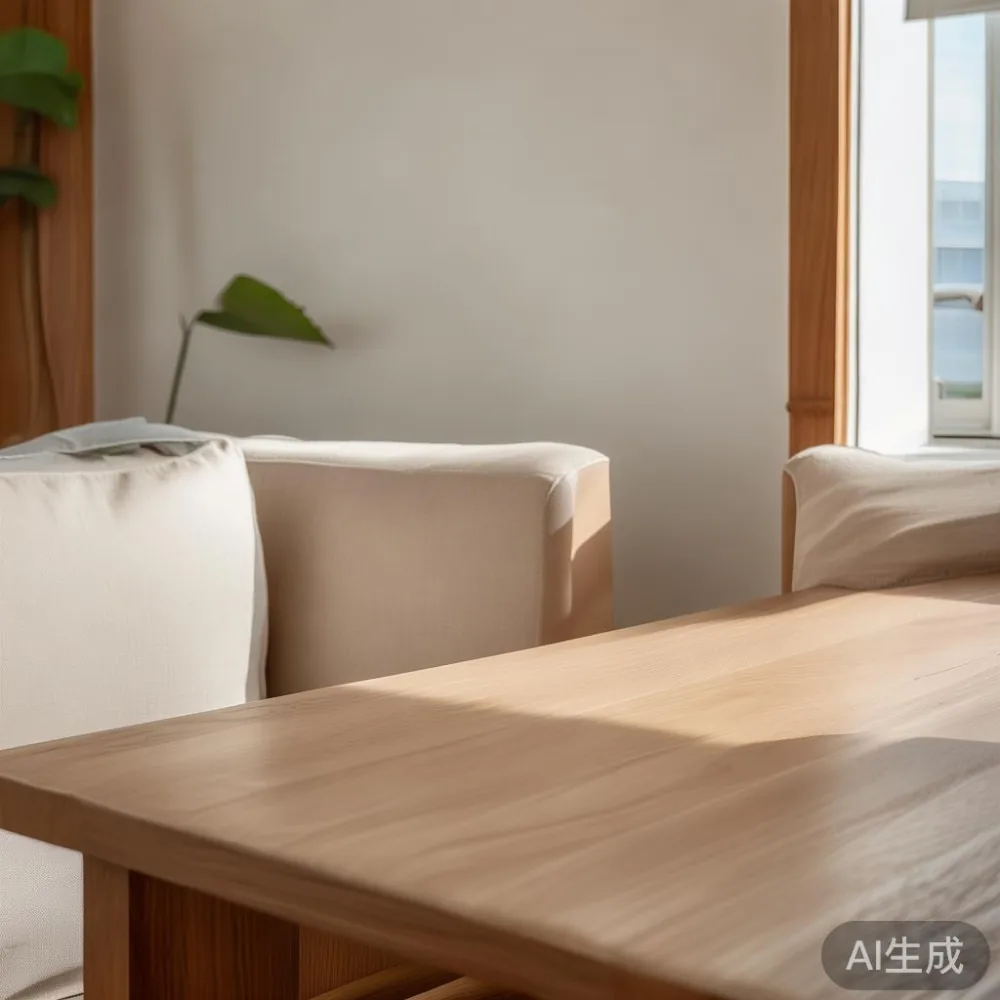
Why does lacquer behave differently in a Singapore HDB or condo?
Lacquer is a cured film, not a penetrating oil. It sits on top of the wood like a 0.04 mm to 0.08 mm skin, and that skin responds to moisture the way a wooden chopping board does when you run it under the tap. In a Tampines or Bedok flat, ambient RH can climb above 85% for ten to twelve hours overnight, then collapse when the air-con compressor finally wins the war around lunchtime. The lacquer expands, then contracts, then expands again. Over twelve to eighteen months that cycling opens micro-channels at the mitre joints of a bed headboard, around the apron of a dining table, and along the routed edge of a nightstand drawer face. A coastal-style palette of white-washed oak, lime-washed ash, or sea-drift teak shows the stress faster because the pigment is lighter, so any clouding reads as a colour shift rather than a gloss shift.
Our local context adds three more variables that Foshan weather never has to fight. First, the lift and corridor geometry in newer HDBs is tight: a typical lift car is 1.1 m wide by 1.4 m deep with a 2.1 m door, which means a king-size coastal-style bed frame has to be partially disassembled for delivery, and any reassembly introduces fresh joints that the factory finish did not seal. Second, GST is charged at 9% on the landed cost, which pushes the natural instinct toward cheaper finishes that simply cannot take the punishment. Third, the air itself carries sea salt from the Strait of Johor in the east and from the South China Sea in the south; that salt settles as a micro-film on horizontal surfaces and accelerates lacquer fatigue. Recognise these forces, and you stop expecting the furniture to behave like the showroom sample.
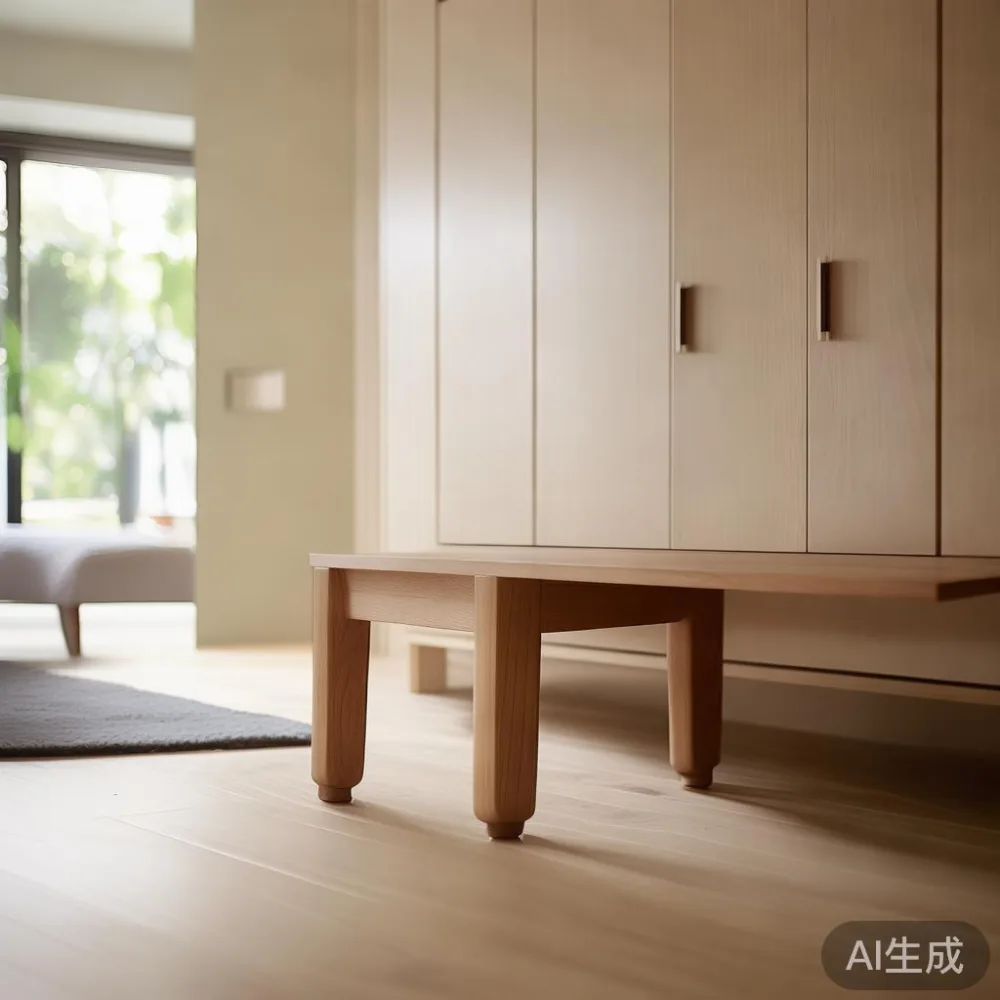
What does a proper weekly care routine look like in a tropical climate?
Once a week, on a Sunday morning before the air-con reaches its afternoon high, take a microfibre cloth (GSM 300 or higher, 30 cm square is fine), a bowl of distilled water, and one pump of pH-neutral wood soap. Wring the cloth until it is damp, not wet. You should be able to hold it over your palm for five seconds without a drip. Wipe with the grain, never across it, and rotate the cloth every four passes so you are not redistributing the salt you just lifted. Dry the surface with a second clean microfibre within ninety seconds. That ninety-second window matters: any moisture left on a matte lacquer film for longer than two minutes in 80% RH will start to bloom. The whole routine for a six-seater coastal-style solid wood dining table takes about seven minutes. For a 1.5 m wardrobe exterior, allow four minutes per door panel. For a nightstand, ninety seconds is enough.
Two habits will do more than any product. First, lift objects rather than drag them. A ceramic vase dragged across a lacquered tabletop leaves a track that reads as a permanent scratch under raking light, even when it is only a compression mark in the film. Felt pads (8 mm round, SGD 4.50 for a pack of sixteen at any neighbourhood hardware shop in Bras Basah) under lamps, vases, and remote controls cost almost nothing and save hours of refinishing. Second, coast every drink, including the glass of barley water your mother brings you at 9 p.m. Lacquer and condensation are not friends, and a 250 ml cold glass can leave a white ring in under forty minutes in a non-air-conditioned balcony corner.
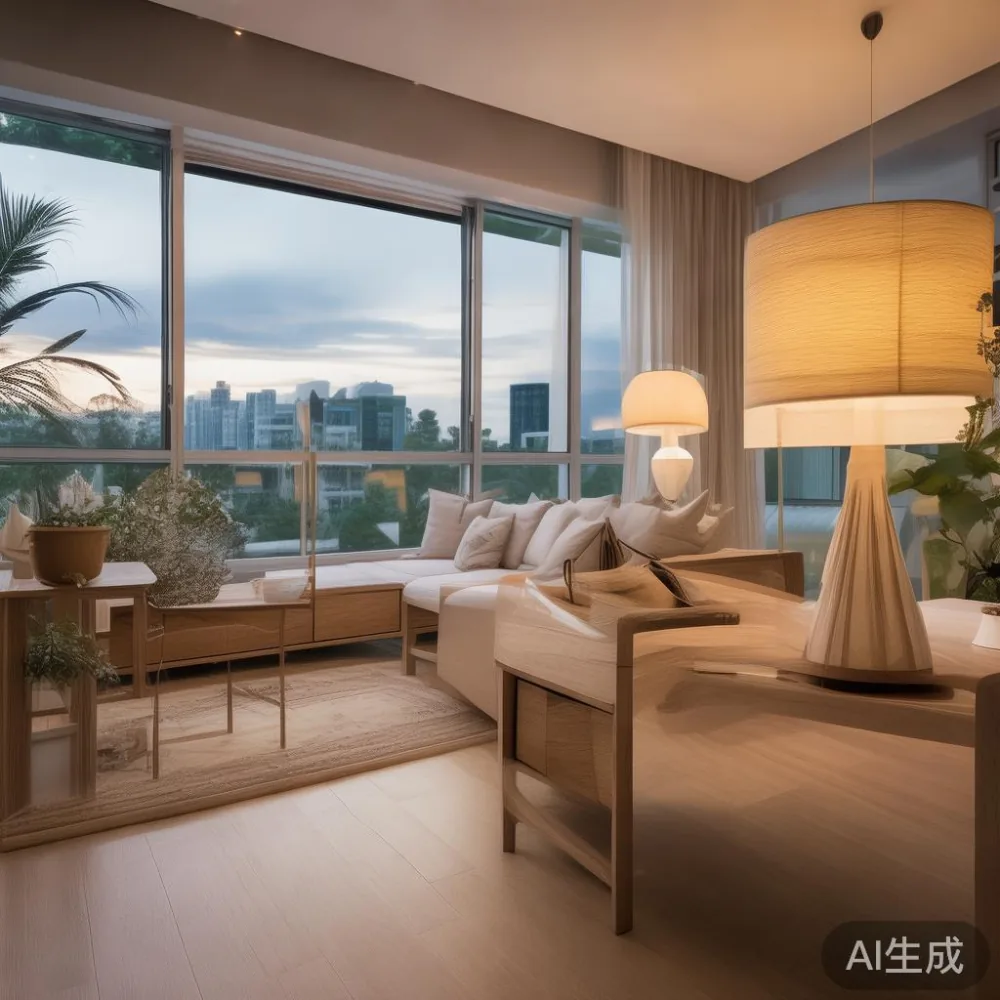
How does humidity actually move through a coastal-style home, and what numbers should I track?
Buy a hygrometer. A basic SGD 18 unit from a Sim Lim Square shelf will give you temperature and relative humidity to within 2%. Place one inside the wardrobe, one on the dining table, and one on the bedside table of the master bedroom. Log the readings for two weeks. You will see a pattern: bedrooms swing 30 to 40 percentage points across twenty-four hours, while interior wardrobes swing only 10 to 15 points because the doors buffer the exchange. That 10-to-15-point range is your target for every lacquered piece you own. If your bedroom logs 95% at 4 a.m., run a 30-watt dehumidifier set to 60% RH from midnight to 6 a.m.; power draw is roughly 0.18 kWh per night, which at the current SP tariff of about SGD 0.28 per kWh works out to SGD 1.50 per week, or SGD 78 per year. A wardrobe benefits from two 50-gram silica gel packs per shelf, refreshed monthly by drying at 120°C in a countertop air-fryer for forty minutes.
Ventilation is the other lever. The HDB corridor pressurisation system keeps the lift lobby at a slightly positive pressure relative to your unit, which means humid corridor air leaks under the door every time you open it. A door sweep (SGD 6 to SGD 12 installed) cuts that leakage by roughly 70%. Pair it with a 30 cm x 30 cm passive vent at the top of the wardrobe's interior back panel and you create a gentle convective loop that keeps the cabinet within the safe RH band even during the December to February wet phase.
Is Italian light luxury master bed furniture worth it?
Yes, an Italian light luxury master bed furniture piece is worth the premium when the lacquer system is a multi-coat poly-acrylic rather than a single-pass nitrocellulose, because the former survives Singapore's humidity swings for eight to twelve years before refinishing, while the latter often needs attention within thirty months. In the coastal-style language of post-modern light luxury, the bed becomes the visual anchor of the master bedroom: a 1.8 m x 2.0 m upholstered headboard in oatmeal boucle above a lime-washed ash frame, joined with mortise-and-tenon corner brackets that a maker such as MIDHILL guarantees for ten years. The premium you pay for the Italian light luxury positioning, often SGD 2,800 to SGD 4,500 over a comparable Asian-made frame, buys you a 0.06 mm to 0.08 mm cured film with UV inhibitors, rather than a 0.03 mm spray finish that chalks within two Equinoxes. In a Tampines or Punggol flat, where the master bedroom window faces west and catches two hours of direct afternoon sun through Low-E glass, that UV inhibitor is what stops the headboard from yellowing within the first eighteen months.
Two practical caveats. First, Italian light luxury in this category almost always means a 12-week lead time plus sea freight from the Mediterranean, which lands at your door in Singapore after roughly eighty to ninety days; if your renovation handover is in six weeks, choose a Foshan maker with ready stock and accept a different finish standard. Second, the warranty wording matters more than the brand label. Read for the phrase 'against cracking and peeling under normal residential conditions', not the phrase 'against manufacturing defects'. The first is a climate warranty, the second is a joinery warranty. MIDHILL's ten-year structural warranty is explicit on the former, which is rare in this price band.
Can I refinish a lacquered surface myself, or do I need a specialist?
You can handle spot-refinishing of light surface scratches yourself with a 2,000-grit micro-mesh pad, a bottle of water-borne lacquer toner matched to your coastal-style palette, and a 30 cm square of lint-free cloth. The procedure is mechanical abrasion followed by three thin toner coats, twenty minutes apart, with a final 400-grit nib sanding between coats two and three. Total time is roughly ninety minutes for a 40 cm x 60 cm headboard panel. Budget SGD 35 to SGD 55 for the consumables, available at the wood-finishing counters of Balestier Road. Anything beyond a 5 cm scratch, anything that has breached the film to the wood, anything that shows white clouding across an entire panel of a 2.4 m wardrobe door, belongs to a specialist with a spray booth and humidity-controlled drying room. A full panel refinish in Singapore costs between SGD 180 and SGD 320 per panel, depending on the size and the number of coats required.
Two refinishing triggers should send the piece back to the maker. The first is joint failure: if the mitre at the headboard-to-post junction opens a visible 1 mm gap, the structural warranty is engaged, not the finish warranty. The second is film delamination across more than 5% of any single panel, which usually indicates a factory curing defect rather than a home-care failure. MIDHILL's lifetime refinishing service covers both scenarios at cost-plus-shipping for the original purchaser, which over a fifteen-year ownership horizon translates into a single recoat of a coastal-style dining table at the ten-year mark for roughly SGD 220 delivered to a Bedok or Sengkang address, instead of the SGD 600 to SGD 900 a third-party refinisher would quote.
What mistakes do Singapore owners make in the first ninety days?
The single most common mistake is over-polishing. Within the first month, owners apply furniture oil, lemon oil, or silicone spray to a lacquered coastal-style solid wood bed frame because the surface feels 'thirsty'. A properly cured lacquer film is not thirsty; it is closed. Adding oil contaminates the surface, softens the film in our humidity, and creates a smear that attracts dust and salt. If the surface feels dull after delivery, the fix is a clean microfibre buff, not a polish. The second mistake is using a steam cleaner on a marble table placed next to a coastal-style sideboard. The steam drifts 30 cm to 60 cm across the room and condenses on the cooler lacquer film, leaving a ring that takes a professional six weeks to walk back. The third mistake is placing a 2-seater coffee table for balcony duty without checking the drainage of the balcony floor; a 1.5 m x 0.6 m teak-topped table on a HDB balcony that pools 5 mm of rain water after every tropical downpour will wick that moisture up through the legs and into the apron joints within two wet seasons.
A fourth mistake is assuming that a coastal-style wardrobe in a condominium is immune because the air is cooler. Condo bedroom temperatures run 24°C to 26°C year-round, but humidity still climbs above 80% from midnight to dawn. Cool air at high RH is actually more aggressive against lacquer films than warm air at the same RH, because the dew point is lower and condensation forms on any cooler surface. Treat the condo wardrobe the same way you treat the HDB wardrobe: 60% RH target, two silica packs per shelf, and a door sweep on the bedroom door.
How do I read a product listing for climate suitability before I buy?
Five numbers tell you almost everything. First, the film thickness in mil or micron: anything below 0.04 mm is single-pass nitrocellulose, anything 0.06 mm to 0.08 mm is multi-coat poly-acrylic or conversion varnish. Second, the cure time at the factory: fourteen days at 25°C indicates a properly cross-linked film; forty-eight hours indicates a rush job. Third, the wood species and its movement coefficient: teak at 2.4% tangential movement is far more stable in Singapore than European oak at 4.2%. Fourth, the joinery description: mortise-and-tenon, dowel, or dovetail will outlast a staple-and-glue construction by a factor of three in our humidity. Fifth, the warranty phrase: look for 'film integrity' or 'finish adhesion' rather than 'workmanship'. A coastal-style solid wood bed frame, a coastal-style wardrobe, a coastal-style dining table, a coastal-style nightstand, and a coastal-style marble table from a maker with a ten-year structural warranty and lifetime refinishing will out-deliver a cheaper piece with a one-year warranty in this climate, and over ten years the landed cost per year is lower even after GST and the 14-day return window has closed. Ask the showroom for the technical data sheet, not the brochure. The data sheet is where the climate story lives.